 Connexion
Coding Agent VMs on NixOS with Microvm.nix
1 février 2026 à 08:02

So we’ve been noting how the Trump administration has been helping Larry Ellison wage war on Netflix’s proposed merger with Warner Brothers. Not because they care about antitrust (that’s always been a lie), but because they want Larry Ellison to be able to dominate media and create a safe space for unpopular right wing ideology.
After Warner Brothers balked at Larry’s competing bid and a hostile takeover attempt, Larry tried to sue Warner Brothers. With that not going anywhere, Larry and MAGA have since joined forces to try and attack the Netflix merger across right wing media, falsely claiming that “woke” Netflix is attempting a “cultural takeover” that must be stopped for the good of humanity.

With hearings on the Netflix merger looming, MAGA has ramped up those attacks with the help of some usual allies. That includes the right wing think tank the Heritage Foundation, which has apparently been circulating a bogus study around DC claiming that Netflix and Warner Brothers are “engineering millions of Americans into a predisposition to accept preferred leftwing ideological dogma”:
“Without ever saying Warner Bros or bid rival Paramount by name, the Oversight Project’s analysis, titled Fedflix: Netflix, The Federal Government, and the New Propaganda State, insists that “relevant federal agencies must scrutinize with extreme intensity any potential Netflix acquisitions of other media and entertainment companies to take into account the full ramifications of the impacts on American society and the health of the Constitutional Republic.”
Again, the goal here is to ensure that Larry Ellison can buy Netflix (and HBO and CNN). Larry, as we’ve seen vividly with his acquisitions of CBS and TikTok, is buying up new and old media to create a propaganda safe space for America’s increasingly unhinged and anti-democratic extraction class. Like Elon Musk’s acquisition of Twitter, the goal is propaganda and information control.
And like any good propagandists, MAGA has tried to invert reality, and is increasingly trying to claim it’s Netflix that covertly wants to create a left-wing propaganda empire that spreads gayness and woke:
“With its subtitle of “The Weaponization of Entertainment for Partisan Propaganda,” the report is tailored for the MAGA base. Full of talking points and and mentions of Stranger Things, the Lena Dunham-produced Orgasm Inc: The Story of OneTaste, the controversial Cuties docu from 2020, and the Obamas-produced American Factory, the 47-page report takes repeated swipes at any expansion of the streamer and its library of “leftwing and progressive” content.”
Of course that’s nonsense. Netflix has demonstrated that they’re primarily an opportunist, and will show whatever grabs eyeballs and makes them money (from gay military dramas that upset the pentagon to washed up anti-trans comedian hacks). And they’re certain to debase themselves further to please the Trump administration in order to gain approval of their merger.
That’s not to say that the Netflix Warner Brothers merger will be good for anybody. Most media consolidation is generally terrible for labor and consumers as we’ve seen with the AT&T–>Warner Brothers–>Discovery mergers. They almost always result in massive debt loads, tons of layoffs, higher prices, and lower quality product.
Enter an old MAGA playbook: try to convince a bunch of useful idiots that the authoritarian corporatist MAGA coalition somehow really loves antitrust reform and is looking out for the little guy, despite a long track record of coddling corporate power and monopoly control.
That’s again the game plan here by Heritage and administration mouthpieces like Brendan Carr; pretend you’re obstructing the Netflix deal for ethical and antitrust reasons, when you’re really just trying to help Larry Ellison engage in the exact sort of competitive and ideological domination you’re whining about.
Among the folks helping this project along is former Trump DOJ “antitrust enforcer” Makan Delrahim, who is now Paramount’s Chief Legal Officer. Delrahim played a starring role during the first Trump term in rubber stamping the hugely problematic Sprint T-Mobile merger, and attempting to block the AT&T Time Warner deal (to the benefit of Rupert Murdoch, who opposed the tie up).
And now here we are again, with many of the same folks joining forces to try and scuttle Netflix’s latest merger, simply to ensure their preferred, anti-democratic billionaire wins the prize.
Ideally, again, you’d block all media consolidation.
Since that’s clearly not happening under the corporation-coddling Trump administration, activists — and the two or three Democratic lawmakers who actually care about media reform — are probably better served by aligning themselves with Netflix. It’s most definitely a lesser of two evils scenario, with, as the chaos at CBS shows, greater Larry Ellison control of media being the worst possible outcome.
In any case, expect right wing propagandists and right wing media to start really lighting into Netflix in the weeks and months to come. You know, because they just really love truth and freedom and hate consolidated corporate power.
In 1958, the American free-market economist Leonard E Read published his famous essay I, Pencil, in which he made his point about the interconnected nature of free market economics by following everything, and we mean Everything, that went into the manufacture of the humble writing instrument.
I thought about the essay last week when I wrote a piece about a new Chinese microcontroller with an integrated driver for small motors, because a commenter asked me why I was featuring a non-American part. As a Brit I remarked that it would look a bit silly were I were to only feature parts made in dear old Blighty — yes, we do still make some semiconductors! — and it made more sense to feature cool parts wherever I found them. But it left me musing about the nature of semiconductors, and whether it’s possible for any of them to truly only come from one country. So here follows a much more functional I, Chip than Read’s original, trying to work out just where your integrated circuit really comes from. It almost certainly takes great liberties with the details of the processes involved, but the countries of manufacture and extraction are accurate.
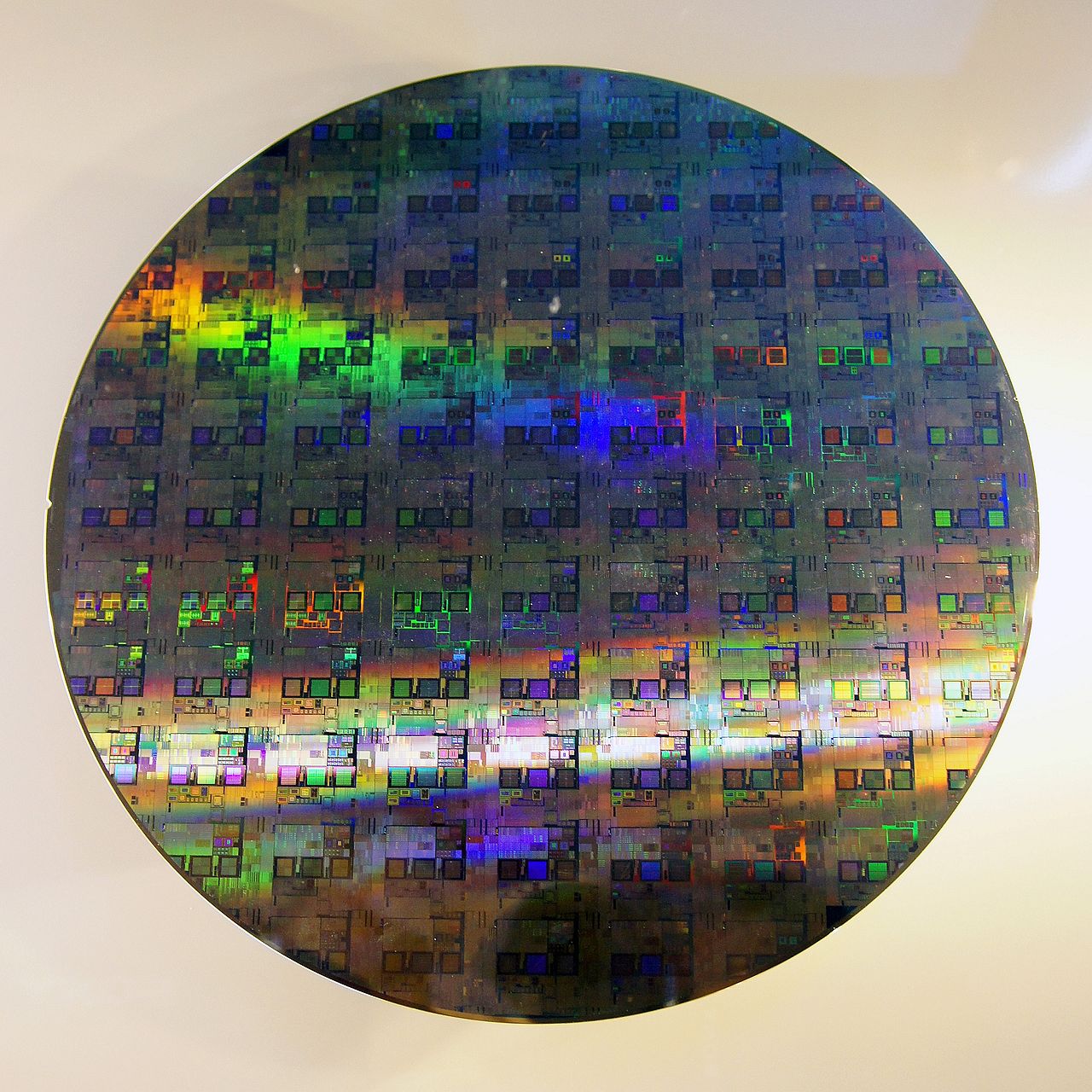
An integrated circuit, or silicon chip, is as its name suggests, made of silicon. Silicon is all around us in rocks and minerals, as silicon dioxide, which we know in impure form as sand. The world’s largest producer of silicon metal is China, followed by Russia, then Brazil. So if China and Russia are off the table then somewhere in Brazil, a Korean-made continuous bucket excavator scoops up some sand from a quarry. That sand is taken to a smelting plant and fed with some carbon, probably petroleum coke as a by-product from a Brazilian oil refinery, into a Taiwanese-made submerged-arc furnace. The smelting plant produces ingots of impure silicon, which are shipped to a wafer plant in Taiwan. There they pass through a German-made zone refining process to produce the ultra-pure silicon which is split into wafers. Taiwan is a global centre for semiconductor foundries so the wafers could be shipped locally, but our chip is going to be made in the USA. They’re packed in a carton made from Canadian wood pulp, and placed in a container on a Korean-made ship bound for an American port. There it’s unloaded by a German-made container handling crane, and placed on a truck for transport to the foundry. The truck is American, made in the great state of Washington.
Our integrated circuit is the chip itself, but in most cases it’s not just the bare chip. It’s supplied potted in an epoxy case, and with its contacts brought out to some kind of pins. The epoxy is a petrochemical product, while the lead frame is either stamped or chemically etched from metal sheet and plated.
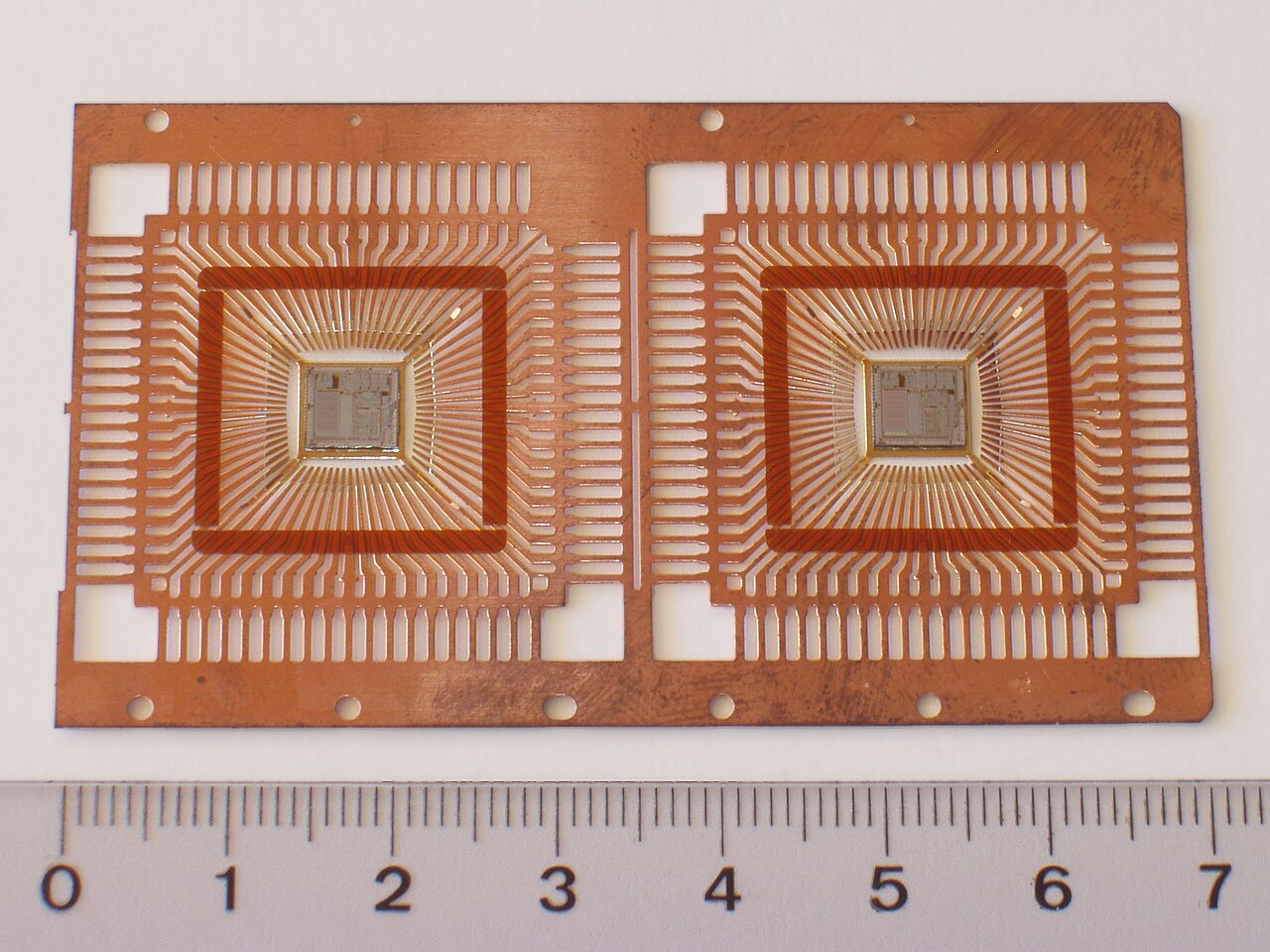
So, somewhere in the Chilean Atacama desert, an American-made dragline excavator is digging out copper ore from the bottom of a huge pit. The ore is loaded into Japanese-made dump trucks, from where it’s driven to a rail head and loaded into ore carrier cars. The American-made locomotives take it to a refining plant where machinery installed by a Finnish company smelts and refines it into copper ingots. These are shipped to Sweden aboard a German-made ship, unloaded by a German-made crane, and delivered to a specialised metal refiner on a Swedish-made truck.
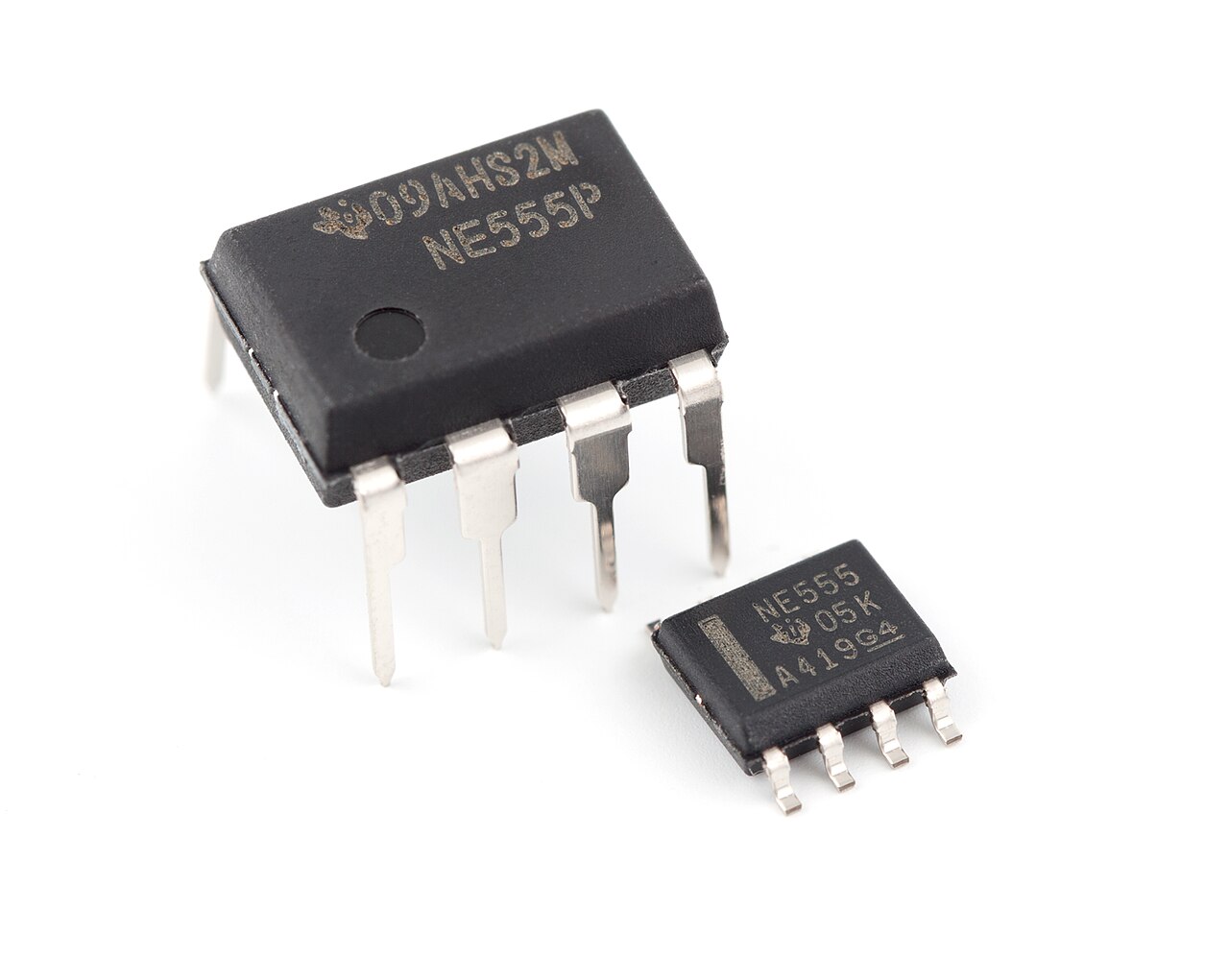
Meanwhile underground in Ontario, Canada, Swedish-made machinery scoops up nickel ore and loads it onto a Swedish-made mine truck. At the nickel refining plant, which is Canadian-made, the sulphur and iron impurities are removed, and the resulting nickel ingots travel by rail behind a Canadian-made (but American designed) locomotive to a port, where an American made crane loads them into an Italian-made ship bound for Sweden. Another German crane and Swedish truck deliver it to the metal refiner, where a Swedish-made plant is used to create a copper-nickel alloy. A German-made rolling plant then turns the alloy into a thin sheet, shipped in a roll inside a container on a Japanese-made container ship bound for the USA. Eventually after another round of cranes, trains, and trucks, all American this time, it arrives at the company who makes lead frames. They use a Japanese-made machine to stamp the sheet alloy and create the frames themselves. An American-made truck delivers them to the chip foundry.
At a petrochemical plant in China, bulk epoxy resin, plasticisers, pigments, and other products are manufactured. They are supplied in drums, which are shipped on a Chinese-made container ship to an American port where American cranes and trucks do the job of delivering them to an epoxy formulation company. There they are mixed in carefully-selected proportions to produce American-made epoxy semiconductor moulding compound, which is delivered to the chip foundry on an American-made truck.
The foundry now has the silicon wafers, lead frames, and epoxy it needs to make an integrated circuit. There are many other chemicals used in its process, but for simplicity we’ll take those three as being the parts which make an IC. What they don’t yet have is an integrated circuit to make. For that there’s a team of high-end engineers in a smart air-conditioned office of an American semiconductor company in California. They are integrated circuit designers, but they don’t design everything. Instead they buy in much of the circuit as intellectual property, which can come from a variety of different countries. Banging the drum as a Brit I’m sure you’ll all know that ARM cores come from Cambridge here in the UK, just to name the most obvious example. So British, German, Dutch, American, and Canadian IP is combined using American software and the knowledge of American engineers, and the resulting design is sent to the foundry.
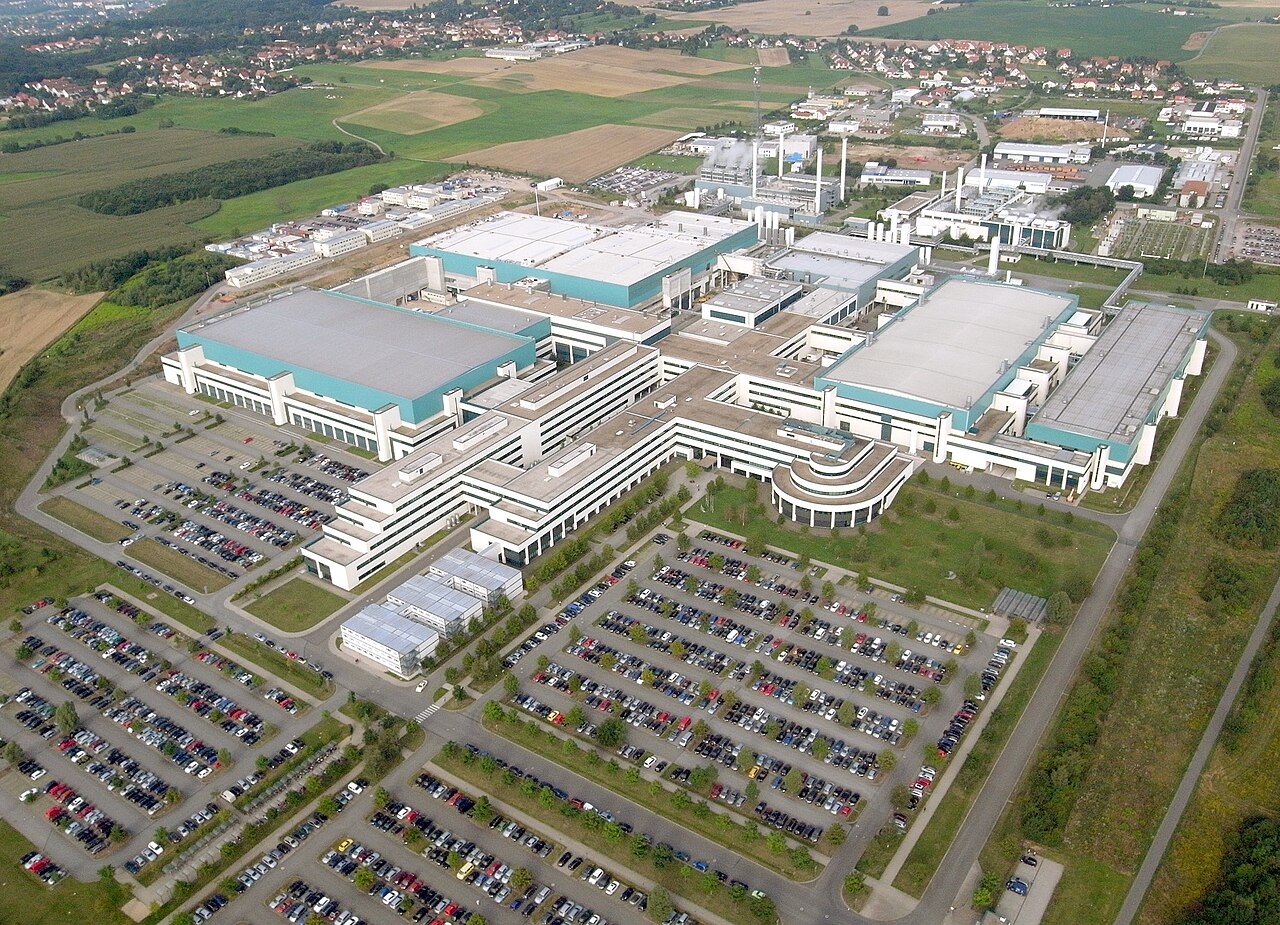
The process machinery of an integrated circuit foundry lies probably at the most bleeding edge of human technology. The machines this foundry uses are mostly from Eindhoven in the Netherlands, but they are joined by American, German, Japanese, and even British ones. Even then, those machines themselves contain high-precision parts from all those countries and more, so that Dutch machine is also in part American and German too.
Whatever magic the semiconductor foundry does is performed, and at the loading bay appear cartons made from Canadian wood pulp containing reels made from Chinese bulk polymer, that have hundreds of packaged American-made integrated circuits in them. Some of them are shipped on an American truck to an airport, from where they cross the Atlantic in the hold of a pan-European-manufactured jet aircraft to be shipped from the British airport in a German-made truck to an electronics distributor in Northamptonshire. I place an order, and the next day a Polish bloke driving an American-badged van that was made in Turkey delivers a few of them to my door.
The above path from a dusty quarry in Brazil to my front door in Oxfordshire is excessively simplified, and were you to really try to find every possible global contribution it’s likely there would be few countries left out and this document would be hundreds of pages long. I hope mining engineers, metallurgists, chemists, and semiconductor process engineers will forgive me for any omissions or errors. What I hope it does illustrate though is how connected the world of manufacturing is, and how many sources come together to produce a single product. Read’s 1958 pencil is alive and well..
Header image: Mister rf, CC BY-SA 4.0.
Todd Haynes’ gay romance movie De Noche is back in production with Pedro Pascal set to play the lead.
The movie fell into purgatory last year when Joaquin Phoenix exited.
Now, MK2 Films has taken over financing for the film, with production starting in March 2026, as per Variety.
Pascal will star as a detective opposite Danny Ramirez, who plays a boarding school teacher, against the backdrop of 1930s Los Angeles.
READ MORE: Pedro Pascal and sister Lux discuss beauty of playing trans roles in rare joint interview
The screenplay was written with Haynes’ collaborator Jon Raymond.
Pascal’s and Ramirez’s characters are set to have an unexpected love affair, all while being targeted by the corrupt LA political machine.
It will see them forced to flee to Mexico.
Haynes said of the film: “This story, with Pedro Pascal and Danny Ramirez in the two leads, arises out of an era – all too relevant to our own – of domestic corruption, racial exploitation and global terror.
“But it emerges as a testament to the inexplicable powers of desire and love to survive and overcome even the most crippling of human barriers.”
Share your thoughts! Let us know in the comments below, and remember to keep the conversation respectful.
The post Pedro Pascal gay romance movie with Danny Ramirez back in production appeared first on PinkNews | Latest lesbian, gay, bi and trans news | LGBTQ+ news.
Microsoft Copilot saved civil servants 19 minutes daily on routine tasks, according to Department for Work and Pensions (DWP) research comparing users to a control group of non-users.…
Survivors Guild is a survivors-like bullet heaven built for 1–4 players chaos and teamwork on Steam Deck, Linux, and Windows PC. Thanks to the creative momentum of developer... Continue reading
This post Survivors Guild horde mayhem feels perfect appeared first on Linux Game Consortium - News, Reviews, and Steam Deck Gaming.
