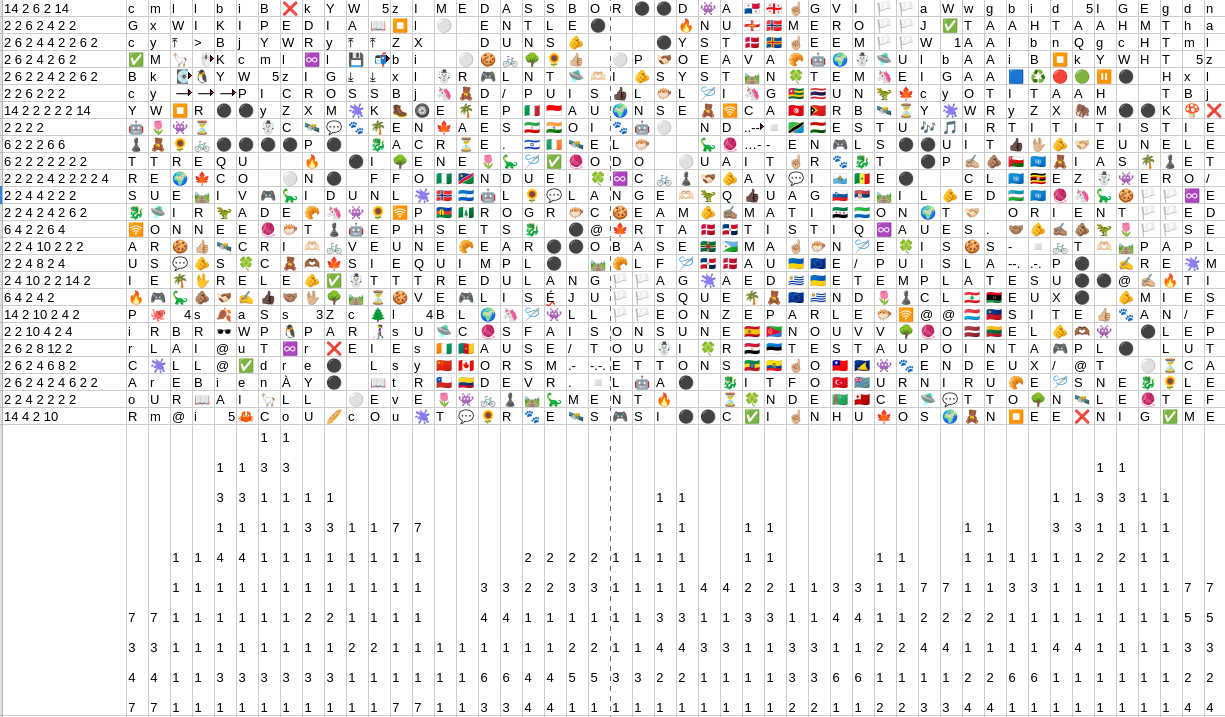
ANGERS (TICsanté) - L'Institut de cancérologie de l'Ouest (ICO) prévoit, en 2026, de structurer son entrepôt de données en santé (EDS) et de lancer une plateforme de génétique constitutionnelle, ont rapporté la directrice générale adjointe de l'établissement, Viviane Joalland, et son directeur des affaires financières, Nicolas Bukovec, au cours d'un entretien accordé le 13 janvier à APMnews/TICsanté.
Two bills in Florida advanced out of committee last week that would give the state attorney general more power to investigate and press felony charges against health care professionals who provide gender-affirming care in the state, including against therapists who discuss gender issues with minor patients and pharmacists who fill prescriptions that may be used as gender-affirming care.
Last week, the Criminal Justice Subcommittee passed H.B. 743 in a 12-5 vote, Florida Politics reports. The bill would allow state Attorney General James Uthmeier to sue health care practitioners for up to $100,000 per violation for providing gender-affirming care to minors. Mainstream medical organizations support gender-affirming care for trans kids because it has been shown to be life-saving and safe.
S.B. 1010 would make it a felony for doctors, school counselors, or psychologists to advise minors on gender-affirming care or “aid or abet” another health care professional in helping minors get gender-affirming care. The bill gained near-unanimous support from the state senate’s Committee on Children, Families, and Elder Affairs, according to the Florida Phoenix.
If that version of the bill passes, medical professionals could get a $100,000 fine per violation and up to five years in prison.
“We have to uphold the principles and standards that made this country great, biblical, constitutional law, and order at all costs. And sometimes that stings,” state Rep. Taylor Yarkowsky said at last week’s hearing.
The bill’s sponsor, state Rep. Lauren Melo (R), stressed that pharmacists would be punished under her bill, something she says is necessary because, she claimed, health care professionals are “committing fraud” by prescribing gender-affirming care medications but recording the purpose of the medications as something other than gender-affirming care.
“What we’re seeing is there’s coding that’s actually being used that is becoming the problem, and hundreds of thousands of dollars is spent per child for them to transition and codes are being misrepresented where they are saying that it’s an indoctrination disorder instead of saying it’s a gender identity disorder,” she said.
Democrats stressed that the bill could have unintentional side effects. State Rep. Kelly Skidmore (D) said that the bill is not about gender-affirming care but is being pushed by state Attorney General Uthmeier to expand his power.
“It is about giving one individual and maybe his successors authority that they don’t deserve and they cannot manage,” she said, referring to Uthmeier’s involvement in the Hope Florida scandal, where state Republicans are accused of laundering money and committing fraud. “They’ve proven that they cannot be trusted. This is a terrible bill.”
State Rep. Mike Gottlieb (D) said that doctors might be scared from prescribing hormonal medications to people with severe menstrual symptoms lest a pharmacist misinterpret the reason for the prescription.
“You’re going to see doctors not wanting to prescribe those kinds of medications because they’re now subject to a $100,000 penalty,” he said. “We’re really not considering what we’re doing and some of the collateral harms that it’s having.”
Behavioral health care professional Savannah Thompson told WUSF that the bill would make it more difficult for doctors to even talk to trans patients.
“This could increase the feelings of fear from my clients who are under 18, but it also can increase the likelihood that these professionals won’t be able to talk with their clients, honestly and openly, to give them the care and the support that they deserve and need,” she said.
Subscribe to the LGBTQ Nation newsletter and be the first to know about the latest headlines shaping LGBTQ+ communities worldwide.
Outdoor sports brand Patagonia has sued drag queen and environmental activist Pattie Gonia for trademark infringement.
On 21 January, the clothing company took action against Pattie Gonia, whose name out of drag is Wyn Wiley, citing alleged trademark infringement.
The brand’s press release states: “While we wish we didn’t have to do this – and actively engaged with Pattie for several years to avoid this – it has become necessary to protect the brand we have spent the last 50 years building.”
Patagonia’s statement claimed that the legal action against the drag queen is due to her failing to stick to a previously made agreement, with the retailer claiming that in late 2024, the drag star began “selling ‘Pattie Gonia’ branded apparel online and continued to create and use versions of our logo”.
Pattie Gonia speaking outside of the Capitol building. (Getty)
It goes on to claim that the drag queen filed a trademark application seeking the exclusive rights to use the name as a brand in September 2025, which it noted would “pose long-term threats to Patagonia’s brand and our activism”.
Patagonia has requested a nominal sum of $1 million in damages and seeks to prevent the activist from further infringing merchandise or obtaining federal “Pattie Gonia” trademarks.
Pattie Gonia is yet to respond to the lawsuit.
The statement adds: “For these reasons Pattie Gonia’s use of a near-copy of our name commercially – including as a brand for environmental advocacy – and her trademark application seeking to obtain the exclusive right to use that name going forward, pose long-term threats to Patagonia’s brand and our activism.”
“He had one problem,” Trump said. “At a certain age, about 86, 87, he started getting, what do they call it?”
According to the reporter, Ben Terris, Trump pointed to his forehead and looked towards White House Press Secretary Karoline Leavitt.
“Alzheimer’s,” she said.
“Like an Alzheimer’s thing,” Trump continued. “Well, I don’t have it.”
Terris then asked Trump if Alzheimer’s is a topic that’s on his mind.
“No, I don’t think about it at all. You know why?” he said. “Because whatever it is, my attitude is whatever.”
Terris also talked to Trump’s clinical psychologist niece, Mary Trump, who described watching her grandfather – Donald Trump’s father – succumb to the disease. She said that the symptoms started slowly and then advanced quickly.
“One of the first times I noticed it was at some event where he was being honored,” she said. “And I looked at him and saw this deer-in-the-headlights look, like he had no idea where he was.”
She said that she sees the same thing happening to her uncle.
“Sometimes it does not seem like he’s oriented to time and place,” she said. “And on occasion, I do see that deer-in-the-headlights look.”
Although there are a few hobbies that have low-cost entry points, amateur astronomy is not generally among them. A tabletop Dobsonian might cost a few hundred dollars, and that is just the entry point for an ever-increasing set of telescopes, mounts, trackers, lasers, and other pieces of equipment that it’s possible to build or buy. [Thomas] is deep into astronomy now, has a high-quality, remotely controllable telescope, and wanted to make it more accessible to his friends and others, so he built a system that lets the telescope stream on Twitch and lets his Twitch viewers control what it’s looking at.
The project began with overcoming the $4000 telescope’s practical limitations, most notably an annoyingly short Wi-Fi range and closed software. [Thomas] built a wireless bridge with a Raspberry Pi to extend connectivity, and then built a headless streaming system using OBS Studio inside a Proxmox container. This was a major hurdle as OBS doesn’t have particularly good support for headless operation.
The next step was reverse engineering the proprietary software the telescope uses for control. [Thomas] was able to probe network traffic on the Android app and uncovered undocumented REST and WebSocket APIs. From there, he gained full control over targeting, parking, initialization, and image capture. This allowed him to automate telescope behavior through Python scripts rather than relying on the official Android app.
To make the telescope interactive, he built a Twitch-integrated control system that enables viewers to vote on celestial targets, issue commands, and view live telemetry, including stacking progress, exposure data, and target coordinates. A custom HTML/CSS/JavaScript overlay displays real-time status, and there’s a custom loading screen when the telescope is moving to a new target. He also added ambient music and atmospheric effects, so the stream isn’t silent.
If [Thomas]’s stream is your first entry point into astronomy and you find that you need to explore it more on your own, there are plenty of paths to build your way into the hobby, especially with Dobsonian telescopes, which can be built by hand, including the mirrors.
Le 17 janvier 2026 était publié un journal au titre cryptique « Le grand secret de LinuxFr.org ». Son contenu se limite à pointer un tableau (le voici au format Markdown ou en image) et huit vers énigmatiques par un piètre rimailleur. Et pour renforcer l’aspect mékeskidi, une prédiction à propos d’un second secret.
Comment en est-on arrivé là ? Quel rapport avec LinuxFr.org ? Quel est ce grand secret ? Et le second ? Y avait-il des éléments cachés dans des éléments cachés dans des éléments cachés ? Voilà ce qui sera détaillé dans la suite.
Avertissement : évidemment si vous allez lire la suite, vous gâchez le plaisir de la recherche de la réponse par vous-même. Si vous lisez cette dépêche longtemps après sa publication, la résolution devrait rester inchangée.
Je suis, entre autres choses, un amateur de jeux de société, de jeux de rôle, de petits jeux quotidiens (comme Sutom (MIT) ou Le Mot (GPL v3) ou ClueBySam (gratuit, code propriétaire), de petits jeux de réflexion comme GNOME Sudoku (GPLv3+), habitué à recourir à dcode.fr (CC By) pour coder/décoder sur divers jeux (ou à CyberChef (Apache 2) pour des choses plus orientées sécurité) ou de participer à de longues séries d’énigmes genre calendrier de l’Avent (dernièrement celles du ChocoCervo (gratuit à but caritatif, code propriétaire) ou celles de Professeur Zwolle (payant et code propriétaire).
Dans la dernière édition de ce dernier, qui s’est terminée mi-novembre 2025, il y avait une grille codée à résoudre et j’avais adoré le principe de cette énigme à tiroirs. Je me suis demandé qu’elle serait la difficulté à en faire une similaire, voire en augmentant la densité de l’information stockée dans la grille. Bref début décembre 2025, j’ai commencé à remplir une grille (entre diverses résolutions de calendriers de l’Avent orientés énigmes/jeux ou bien sécurité).
Mi-décembre j’avais obtenu le résultat quasi final, mais j’avais du mal à résoudre moi-même l’énigme, donc il fallait réduire sa difficulté et ma motivation a baissé avec une fin d’année compliquée. Et début 2026, en rediscutant avec des amis de l’énigme en préparation, la motivation est revenue, j’ai fini de retester en une soirée, découvert une typo qui a nécessité des corrections de dernière minute, et le lendemain, tout était prêt pour la publication.
La publication
J’avais produit mon beau tableau Markdown pour publier directement sur LinuxFr.org (c’était un peu l’idée initiale). J’admire donc le résultat de mon copier-coller. Et le résultat est illisible, car le tableau est assez grand avec 26 lignes et 51 colonnes. Et surtout la dernière ligne contient du texte assez large dans chaque colonne, si on n’affiche pas le texte verticalement. Ce que ne permet pas LinuxFr.org. Bon, de toute façon, c’est nettement plus facile à résoudre dans un tableur genre LibreOffice (MPL 2.0) et j’ai d’ailleurs rapidement suggéré de l’utiliser en réglant la largeur des colonnes sauf la première à 0,7 cm par exemple, et d’ajuster l’affichage du texte en vertical pour la dernière ligne. Voir par exemple le rendu en image.
Vient ensuite le petit poème (que je vais amputer involontairement initialement en le terminant par « mater » au lieu de « materas », nuisant à la rime certes, mais sans effet sur la résolution) :
Il y aura du blanc, il y aura du noir.
Criards sont ⚫ et ⚪, parce qu’ils braillent.
Qu’un fond de la même couleur leur aille.
Similitude des drapeaux, vers un espoir ?
Bariolés ils finiront néanmoins blancs.
Tout comme la ponctuation qui n’en est pas.
Mêmes six dans une colonne, des éléments
D’autres parties à chercher, ensuite materas.
Normalement, avec le titre, le tableau bariolé cryptique plein de symboles et les vers bizarres, le lectorat comprend qu’il s’agit d’une énigme à résoudre, pour découvrir un « grand secret du site » donc. Voire un second secret.
La résolution
Le picross
La variété dans le tableau est le signe qu’il y a différentes choses à trouver, donc on peut commencer de différentes façons.
Les amateurs de jeu ont sans doute déjà reconnu un picross (Wikipédia nous dira qu’il est « connu sous de nombreux autres noms : Crucipixel ; Edel ; FigurePic ; gameLO; Grafilogika ; Griddlers ; Hanjie ; Illust-Logic ; Japanese Crosswords ; Japanilaiset Ristikot ; Japanese Puzzels ; Kare Karala! ; Logic Art ; Logic Square ; Logicolor ; Logigraphe ; Logik-Puzzles ; Logimage ; Nonograms ; Oekaki Logic ; Oekaki-Mate ; Paint by numbers ; Paint Logic ; Pic-a-Pix ; Pikurosu ; Pixel Puzzles ; Puzzle Giapponese ; Puzzle Japones ; Shchor Uftor ; Tsunami ; Pictopix. »). Pour les autres, j’avais donné un indice avec « Une façon de commencer est de regarder ce qui est lisible et qui flèche la résolution. » Dans le coin supérieur gauche, on voit les mots WIKIPEDIA et PICROSS qui sont pointés par des flèches.
W
I
K
I
P
E
D
I
A
📖
⤒
⤒
B
j
Y
W
R
y
⤒
⤒
🦙
🖱️
K
c
m
l
♾️
l
💾
📬
💽
🐧
Y
W
5
z
I
G
⤓
⤓
⟶
⟶
⟶
P
I
C
R
O
S
S
Un autre indice était le vers « Il y aura du blanc, il y aura du noir. ». Effectivement on va avoir besoin de cases noires et blanches (plutôt gris clair et foncé pour pouvoir lire le contenu en pratique), et pas que pour le picross. On va aussi s’aider de « ⚫ et ⚪ (…) Qu’un fond de la même couleur leur aille. » (donc les ronds noirs sont des cases noires et les ronds blancs des cases blanches. Et enfin on va s’aider de « drapeaux (…) ils finiront néanmoins blancs », donc les drapeaux sont des cases blanches, et de « Tout comme la ponctuation », dont la « ponctuation » (voire plus loin, mais on parle ici des cases contenant des points et des tirets) est aussi sur des cases blanches.
Ne reste plus qu’à résoudre le picross. Et on découvre un QR-code 50x25 (en fait 25x25 les cases étant dédoublées). Il a été produit ainsi avec le paquet go-qrcode (licence Expat), -t pour la sortie texte, -s pour la taille, -d pour éviter la bordure :
qrcode -t -d -s 33"1 Le site " > qrcode.txt
Ce qui donne un 33x33 mais 25x25 sans le cadre. Avec une petite moulinette de 48 lignes assez basique nommée pycross-me.py je l’ai converti en un picross. Et une dernière commande vient remplacer les blancs (espaces) par des @ et les noirs par des espaces pour faciliter la lecture dans un tableau ensuite.
Bref ce qu’il fallait trouver dans cette sous-partie était « 1 Le site ».
Le coin en haut à gauche
La partie blanche était celle contenant WIKIPEDIA et PICROSS précédemment évoquée, plus quelques émojis pour décorer (dont un lama déchaîné et un manchot, et divers moyens de stockage d’information).
On ne conservant que la partie noire dans cette partie on a ce qui suit :
c
m
l
l
b
i
B
❌
k
Y
W
5
z
G
x
⏹️
c
y
B
j
Y
W
R
y
Z
✅
M
K
c
m
l
♾️
l
b
B
k
Y
W
5
z
I
G
x
c
y
B
Y
W
⏹️
R
⚫
⚫
y
Z
X
M
K
🥾
On peut noter que c’est une des rares zones comportant des minuscules. Et la raison est qu’on peut y lire la phrase cmllbiBkYW5zIGxlcyBjYWRyZXMK répétée deux fois, qui est nettement plus lisible si on devine qu’il s’agit d’un codage base64 :
$ echo cmllbiBkYW5zIGxlcyBjYWRyZXMKcmllbiBkYW5zIGxlcyBjYWRyZXMK|base64 -d
rien dans les cadres
rien dans les cadres
Bref ça ne sert à rien.
Le coin en bas à gauche
D’abord la partie en blanc :
B
R
🕶️
W
P
🐧
P
A
R
👩🦯
A
I
E
I
L
L
L
E
B
📖
R
📖
A
I
🦙
L
L
⚪
E
On a donc une dame avec une canne blanche, des lunettes noires, deux fois Braille, un « WP (pour Wikipédia) pareil » (que pour Picross), et les habituels manchot et lama déchaîné. Bref c’est un indice pour une autre partie, mais pas de réponse en vue si je puis dire.
Alors la partie en noir :
P
🐙
4
s
🍂
a
S
s
3
Z
c
🌲
l
i
R
s
r
L
@
u
T
♾️
r
❌
E
C
@
✅
d
r
e
⚫
s
A
r
i
e
n
À
Y
⚫
t
o
U
v
R
m
@
i
5
🦀
C
o
U
🥖
c
O
u
Une fois les émojis décoratifs retirés, on peut lire « P4s aSs3Z cl4iR sUr L (sic) @uTrEs C@dres y A rien À Y tRoUvER m@i5 CoUcOu » (la fôte n’était pas voulue) pour « Pas assez clair sur les autres cadres ? Y a rien à trouver, mais coucou. »
Le coin en haut à droite
D’abord la partie en blanc :
T
A
A
H
T
A
A
H
M
A
A
H
A
A
H
A
A
O
T
I
T
A
A
H
🎶
🎵
I
R
T
I
T
I
T
Qu’il faut lire comme du code morse avec des tirets longs dits « taah » et des points courts dits « ti » (et des notes de musique pour suggérer les sons).
taah taah -> M taah taah taah -> O ti taah ti -> R ti ti ti -> S ti -> E
Super, on a « morse » codé en morse. Et on n’a rien appris.
Puis la partie en noir :
a
W
w
g
b
i
d
5
I
G
E
g
d
J
✅
h
W
1
l
b
n
Q
g
c
m
l
b
i
B
⏹️
k
Y
W
5
I
G
🟦
🔴
🟢
⏸️
H
x
c
y
B
Y
W
R
y
Z
X
🦣
M
⚫
K
🍄
Encore des minuscules et encore du base64.
echo aWwgbid5IGEgdnJhaW1lbnQgcmllbiBkYW5zIGxlcyBjYWRyZXMK|base64 -d
il n’y a vraiment rien dans les cadres
Le cœur de la grille
Dans la partie en blanc, on peut lire (après remise en forme) « message pour l’intelligence naturelle ou artificielle qui lira cette phrase ce n’est pas ce qu’il faut avec les blancs voir plutôt les non-lettres sinosn (sic) » (la typo est involontaire).
Dans la partie en noir, on peut lire (après remise en forme) :
D’abord vient le numéro d’un système avant le systemd.
Puis une pause car besoin d’espace.
Ensuite une lettre qui ne doit pas être confondue avec le zéro.
Suivi d’un langage de programmation orienté données et statistiques.
Arrive une arobase mais plus simple.
Puis la première lettre du langage de templates utilisé jusqu’en deux-mille onze > par le site.
Décidons une nouvelle pause.
Tout est au point, alors mettons-en deux.
Les réponses étant 5 (System V), espace, o, r, a, t (Templeet), espace, :.
L’élément est donc « 5 orat : ».
Le braille
On aurait pu faire le braille dès le début, sans résoudre le picross. Il était indiqué par « ⚫ et ⚪, parce qu’ils braillent. »
Les ronds noirs (avec l’aide des ronds blancs pour savoir où sont situés les 3 lignes et 2 colonnes codant un caractère braille) permettent de lire de haut en bas et de gauche à droite le message « 3 aux contribu » (la première zone code un chiffre, la seconde est entièrement blanche donc vide donc espace, et les suivantes codent des lettres).
Le morse
On aurait pu faire le morse dès le début, sans résoudre le picross. Le vers parle de « ponctuation qui n’en est pas » et il faut donc y voir du morse dans les parties comportant des points et des tirets. On peut déchiffrer « 2 vit grâce » (la première zone code un chiffre, la seconde est◽donc espace, et les suivantes codent des lettres).
Les drapeaux
On aurait pu faire les drapeaux dès le début, sans résoudre le picross. Le vers parle de « Similitude des drapeaux ». Il faut remarquer que dans le premier groupe de six ils ont en commun un partage en 4. Le second groupe ne comporte que des drapeaux blancs, donc espace. Et chacun des autres groupes va coder une lettre, la première lettre commune des pays concernés. Le message à trouver était donc « 4 tions du lect ».
Les six
On aurait pu faire les six dès le début, sans résoudre le picross. Les derniers vers non encore utilisés sont
Mêmes six dans une colonne, des éléments
D’autres parties à chercher, ensuite materas.
Une petite observation montre qu’il existe une colonne avec six fois le caractère Unicode☝🏼. On cherche donc des mains et des doigts. Et si leurs emplacements dessinent les lettres v, o, u et s. Le message à trouver était donc « 6 vous »
La solution
Le grand secret
Les six éléments trouvés et remis dans l’ordre donne la phrase suivante : « Le site vit grâce aux contributions du lectorat : vous ». Ce qui est effectivement le grand secret de LinuxFr.org, site qui vit par et pour vous. Il figure d’ailleurs en première phrase sur la page pour proposer un contenu.
Et voici une visualisation de la solution complète de la grille :
Un second secret ?
Au moment où j’ai écrit le journal, je me suis dit que la résolution pourrait être longue et difficile, qu’une personne seule aurait dû mal à la faire, qu’elle aurait besoin de l’aide, des suggestions, des pistes, des idées, des erreurs, des indices et de la motivation apportée par d’autres personnes. Que sur un site contributif les personnes allaient s’entraider et se nourrir des questions/réponses des autres via les commentaires. Et c’est bien, selon moi, le second grand secret derrière LinuxFr.org. Je ne pouvais que pressentir les commentaires qui viendraient par la suite sous le journal d’annonce de l’énigme.
A posteriori
De la création d’énigme
Voici mes quelques impressions retour sur la création d’une telle énigme :
je voulais le plus petit QRcode possible pour avoir une petite grille, mais au final elle n’est pas si petite que cela, et cela veut dire des tests longs et pénibles, des soucis d’affichage sur le site à la publication, et une plus grande difficulté pour résoudre ;
je suis satisfait de la quantité d’informations que j’ai pu glisser dans la grille : toutes les cases sont utiles à l’exception des émojis servant de diversions pour la partie « les six ». Et cela inclus des indices glissés pour suggérer le picross, le braille et le morse, ainsi que des fausses pistes ;
l'Unicode et les emojis offrent vraiment plein de possibilités pour des énigmes basées sur du texte et des symboles ;
il reste plus de typos que l’on pense, parce que c’est difficile/pénible à relire. Celle trouvée la veille de la publication aurait pu obliger à tout décaler dans la grille, ce qui aurait pu être très pénible (j’ai pu m’en sortir avec un changement singulier/pluriel qui a limité le décalage à une seule phrase). Et de fait il en reste après les publications (il faut dire qu’il n’y a pas eu d’équipe de bêta-test, personne n’était au courant de la publication) ;
la capacité à être résolue a été un souci : je connaissais le QRcode, mais il ne pouvait servir directement de picross. J’ai donc rajouté des zones pour le braille, les drapeaux et le morse avec des couleurs définies, pour qu’il soit faisable. Et ensuite il faut tout retester depuis le début pour vérifier. La quantité de zones ajoutées augmente ou diminue la difficulté de la partie picross ;
je n’avais pas conçu en amont plus que « qrcode pour faire un picross » et en ajoutant les autres parties au fur et à mesure, on se retrouve à devoir revoir des cases (c’est complètement le cas de la partie « les six » qui a consisté à trouver où je pourrais dessiner mes lettres et à remplacer des cases déjà remplies d’autres émojis ;
à défaut de pouvoir tout recréer/régénérer automatiquement, il est important de garder des notes de ce qui a été fait, des différentes énigmes et des solutions, ça évite de devoir re-résoudre plusieurs fois, et ça aide pour écrire la solution in extenso ensuite ;
c’est assez fun de construire les différentes parties, de mettre des indices, des fausses pistes, des blagues semi-privées sur le manchot et le lama déchaîné, ou les dinosaures parce que tout le monde aime les dinosaures ;
il y a une certaine fébrilité à la publication (y aura-t-il de l’intérêt ou pas ? Y aura-t-il des résolutions complètes ou non ? Y aura-t-il de l’entraide ?), puis une attente (ça fait déjà 5min que c’est publié et personne n’a tout résolu encore ? Bon 10 min maintenant. Et après quelques heures ?) et enfin un petit jeu sur comment donner des indices sans donner les réponses directement (c’est clairement la meilleure partie, les échanges par commentaires interposés sur le site, et avec Bookynette & Echarp via Signal (AGPLv3).
Et ensuite ?
Ce n’est pas la première fois que j’organise un jeu de ce type sur le site, il y a eu plusieurs fois des chasses aux œufs durant des vacances autour de Pâques (en 2020 et 2021). C’est la première fois que cela prend cette forme d’une énigme mystérieuse. Peut-être qu’il y en aura d’autres ainsi, peut-être pas, cela dépend de vos retours, de la motivation et de l’inspiration. Et de l’envie éventuelle de tester d’autres formes (un escape game ? Quelque chose basé sur le site lui-même ? Ou bien en dehors en utilisant des ressources libres genre OpenStreetMap ou OpenFoodFacts ?). De faire quelque chose en partenariat avec l’April, qui a déjà fait un jeu de l’oie et un espace game ?
Pour ma part, je préfère plutôt le comportement qu’il décrit en premier : en maintenant le bouton « down », la page défile un peu, pause brièvement, puis, si on maintient la touche, défile jusqu’à ce qu’on lâche la touche.
C’est un cas où une même action au même endroit a plusieurs suites possibles, en fonction du contexte et parfois c’est bien implémenté.
Dans son exemple, ça laisse une marge de manœuvre à l’utilisateur pour ne défiler que d’un « cran » (généralement 3 lignes) : autant qu’un cran d’une molette de souris. En élément que l’on configure, auquel on est habitué, et qui peut avoir son utilité.
Un truc que j’aime, c’est quand on tape quelque chose dans un formulaire Web, et qu’on ferme la page, parfois la page nous demande de confirmer parce qu’on va perdre le formulaire.
Dans Firefox c’est implémenté de telle sorte que si l’on clique sur la croix pour fermer l’onglet, le popup de confirmation apparaît. Mais un re-clic sur la même croix, outrepasse le popup et équivaut à un « non », ou « tant pis ».
Dans d’autres logiciels, le popup est bloquant : il bloque le reste de l’interface. il faut traîner son pointeur jusqu’au popup, le valider, puis ça ferme l’onglet.
Ici Firefox nous avertit, et nous sauve la mise dans le cas où c’était une fausse manip. Mais si ce n’était pas une fausse manip, ben il suffit de recliquer exactement au même endroit, là où la souris se trouve déjà. C’est plus simple, moins bloquant, tout en préservant la fonction de garde-fou.
Bien-sûr, cliquer sur le popup fonctionne aussi.
Bref, une petite fonction sympa qui fait gagner un peu de temps, et améliore le « workflow » global.
Encore une fois, le genre de choses où Apple était à la pointe il y a 10 ans, mais que aujourd’hui ils sont en train de tout casser, tout détruire… Et à mon avis, c’est parce qu’ils travaillent :
– sur des produits qu’ils n’utilisent pas eux-mêmes au quotidien, en tout cas pas comme le client lambda l’attend
– sans réfléchir au delà de leur façon de faire, et sans respecter des codes tacites de l’IU/UX (un peu comme les boutons radio et les checkbox : les premiers sont ronds, le seconds, carrés : ne changez pas ça car ça tue des chatons).
– sans entendre ni écouter les clients
The Trump administration has been forced to partially abandon its attempt to obtain the personal medical records of thousands of young transgender patients.
Families and patients in Los Angeles, California, secured a major win last week after the Department of Justice agreed to stop pursuing the documents containing the personal information of over 3,000 patients.
The US government announced in July last year that it had sent more than 20 subpoenas to clinics across the country over what it called an investigation into “healthcare fraud.”
Attorney general Pam Bondi said at the time that it had demanded details, such as the names, birth dates, social security numbers, and addresses, of trans young people and their parents/guardians in order to quell what she described as “a warped ideology.”
The Department of Justice has attempted to obtain the medical records of over 20 hospitals providing gender-affirming care. (Getty)
The department agreed to rescind subpoenas against the Children’s Hospital of Los Angeles (CHLA) last Thursday (20 January) after seven families with trans children sued the department in November. The DOJ has not entirely abandoned every legal effort to seek information, but it has retreated from the personal identifying parts of the subpoena following that litigation.
Plaintiffs argued ahead of the ruling that the Justice Department had not given sufficient evidence to justify its investigation and was requesting private information without “any probable cause.”
“It was basically a fishing expedition,” Khadijah Silver, director of Gender Justice & Health Equity at Lawyers for Good Government, which represented the families, said. “Without any probable cause, they did not have the authority to be seeking medical information.”
Under the federal court ruling, the DoJ has agreed to withdraw its requests for documents identifying parents or patients, according to Cal Matters.
Silver said that the plaintiffs are seeking to dismiss the case entirely, adding: “This is one piece of a large, very important puzzle, but it does allow our clients to hold on to their basic legal right to medical privacy.”
Trump administration targets gender-affirming care for trans youth
A similar federal court ruling blocking the DoJ’s subpoena against Children’s National Hospital in Washington DC was held in the same week, arguing the demands constituted “overreach untethered to any lawful purpose.”
“The Government seeks to fulfil its policy agenda through compliance born of fear. Moreover, in the view of the court, the subpoena is a classic impermissible fishing expedition,” US district judge Julie Robin wrote in the ruling.
Both CHLA and Children’s National Hospital were forced to shutter their gender-affirming care programmes for trans youngsters last year.
They are among a handful of hospitals who, over the past year, have closed their trans youth care programs over “legal and financial risks” despite residing in states that legally permit treatment.
One of the hospitals facing pressure from the US government, Boston Children’s Hospital, refused to close its services, saying in August that it firmly believes its gender-affirming care programmes are vital.
“The belief that all children deserve the opportunity to live, grow, and thrive with love and support is foundational to who we are and what we do,” a spokesperson said.
Share your story! Do you have an important, exciting or uplifting story to tell? Email us at news@pinknews.co.uk
Oh wow, une astuce pour connecter un Raspberry à un ordinateur en utilisant uniquement de l'USB (donc sans câble réseau). C'est très drôle, et je vois arriver dans ma tête deux ou trois idées sympathiques ...
This story was produced with the support of MISTR, a telehealth platform offering free online access to PrEP, DoxyPEP, STI testing, Hepatitis C testing and treatment and long-term HIV care across the U.S. MISTR did not have any editorial input into the content of this story.
In 2015, on the patio of Nowhere Bar, a queer nightclub in Louisville, Kentucky, music pulsed and bodies pressed as 23-year-old Lucas Pearson moved through the flashing lights and a blur of grinding limbs.
“I just randomly started talking to this guy,” he recalls. “He had this little spoon on a necklace, scooped out a hit of white powder, and handed it to me.”
Pearson sniffed it. Euphoria washed over him, time began to slow, and the dancing bodies faded into a soft haze. For more than 10 minutes, Pearson felt “entirely present.” His social anxiety, depression, and any sadness he was feeling melted away.
While Pearson wouldn’t use ketamine again for the next five years, he says the feeling of ease the drug gave him was always “in the back of [his] mind.” So when he tried it for a second time in 2020 at a farm in upstate Kentucky, he liked the way it felt to disassociate from his childhood trauma.
“We got really messed up that night on it, and I was like, ‘I love this. I’ve missed this,’” Pearson told Uncloseted Media. “‘And I’m ready for some more.’”
Over the next three years, Pearson began using every day. Working remotely in the health care industry, no one checked in on him as long as he got his work done. He used ketamine at nightclubs, social events, game nights with friends, and, eventually, at home alone.
“I was actively hooked on it,” he says. “I didn’t wanna do much of anything other than find that dissociating feeling. I just kept chasing it.”
While evidence suggests that most psychedelics have a lower risk of addiction than other drugs, ketamine is an exception, in part because it affects dopamine levels. In a 2007 bulletin from the Multidisciplinary Association for Psychedelic Studies, one researcher noted that after ketamine was invented in 1962, it developed a “reputation for insidiously trapping those who really knew better.” As a dissociative drug, ketamine induces a sense of detachment from one’s body, producing a trance-like state marked by pain relief, amnesia, euphoria, and a distortion of reality.
Despite declines in the use of other recreational drugs such as cocaine, ecstasy, and nitrous oxide, ketamine use continues to rise, with one study finding that use increased by 81.8% from 2015 to 2019 and rose another 40% from 2021 to 2022. That increase is driven in part by ketamine’s growing legitimacy as a treatment for depression, anxiety, OCD, trauma, and even addiction.
As a result, ketamine clinics have proliferated across the U.S. with relatively few guardrails. At least a thousand clinics now offer off-label ketamine treatments outside of FDA-approved protections. Many commercial providers advertise same-day appointments and “almost immediate results.”
Alex Belser, a psychologist who studies psychedelic use in the queer community, says ketamine use has become pervasive among gay men. A 2025 study found that gay and lesbian adults in the U.S. are almost four times more likely to use ketamine than their heterosexual counterparts, and a 2011 study from the U.K. found that queer men were over three times more likely than queer women to use the drug.
Belser thinks ketamine use is so popular among gay men in part because of the high rates of loneliness, rejection, and trauma they experience. “Ketamine is not inherently good or bad. When used thoughtfully with integrity, with good protocols, it can be a really helpful medicine. But if left unregulated, with the amount of access and normalization we have, it can lead to addiction, harm, isolatio,n and bad outcomes,” he says.
Belser believes health misinformation is fueling a misunderstanding among gay men about the actual harm the drug can cause. “The medical and clinical communities have failed people by not adequately telling them that ketamine can lead to addiction and problematic outcomes,” he says. “It can serve people, but it can also damage people.”
‘Happy People Don’t Do Ketamine’
Part of the appeal of ketamine is that dissociative feelings can relieve depressive symptoms, making it alluring to those who have trauma or mental health disorders. While properly regulated treatment works for some people, psychiatrist Owen Bowden-Jones says that he senses “the vast majority [of those addicted] are using it to self-medicate for emotional distress.”
“I always wanted to numb out my past,” says Pearson. “For the longest time, I saw ketamine as a possible way out.”
Pearson, now 33, was raised in a conservative and religious family. When he came out as gay to his mom at 16, he cried so much that he couldn’t speak and had to write it on a piece of paper and hand it to her.
“She stormed out of the house and ended up calling every member of the family and outing me. So that was really painful,” he says. “My whole childhood, I did not feel like I could be who I knew I was.”
“So when I picked up drugs, it was definitely a thought in my mind: This life that I lived as a child, I don’t want to feel it anymore,” he says. “I just want to numb it.”
One study shows that gay men are over three times as likely to develop PTSD compared to their heterosexual counterparts. Trauma can be one event or a “long string of daily hurts, such as … homophobia, bullying, and time spent in the closet,” according to Chris Tompkins, a licensed family therapist who works with gay men. Research shows that people who experience trauma are more likely to have addiction issues.
J, a 33-year-old marketing researcher based in Los Angeles, says his ketamine use began casually in his early 20s in New York’s queer nightlife scene, where the drug circulated freely. What started as an occasional escape intensified during the pandemic, when isolation, depression, and easy access turned ketamine into a daily habit.
“There’s a pretty fair connection between feelings of not being normal and my ketamine addiction,” J told Uncloseted Media. “I was bullied for being more feminine. My sexuality was a subject of speculation, and that forced me to close down. So something like a dissociative drug is appealing because it either allows me to continue those blocks or to bring down the barriers.”
“There was a night when I had done K for the first time in a while, and the next couple of days, I felt so good,” he says. “I felt like my depression had lifted, and that feeling of doubt and fear I’d had throughout my life was totally gone.”
After that night, J, who asked to use a first initial to protect his identity, started using ketamine daily to chase the feeling of euphoria and relief. He got a prescription for ketamine treatment therapy, but he says it wasn’t enough.
“There were days when I would go do an infusion of ketamine, and I would do more at home on my own. If I have the ability to escape feelings, to numb feelings, I will go after that.”
Many ketamine clinics in the U.S. advertise ketamine therapy as a cure-all. For example, the online clinic Better U promises that ketamine therapy will help you say goodbye to “Trauma,” “Chronic Stress,” “Depression and Anxiety,” “OCD,” “PTSD,” and “Grief.”
What the clinic doesn’t note on its landing page is the possibility of addiction, which is what happened to J. While a common dose of ketamine is between 30 and 75 mg, J began using multiple grams a day. He spent thousands of dollars a month on ketamine and began structuring his life around the drug. “It stopped being about going out or having fun,” he says. “It just became what I did day in and day out.”
“Happy people don’t do ketamine,” Tasha, who is in recovery from a six-year-long addiction, told Uncloseted Media. She first tried the drug for fun at 17, but it became a problem after her father died when she was 26. At her peak, she was taking six to nine grams every day and up to 24 grams over the weekends.
“The wheels just fell off,” she says. “It’s an escapism drug—of course, people with more trauma will do it more. You want to forget about everything, so you take it, and then it stops becoming fun, and you don’t want to see your friends anymore. You just stay in your home behind closed doors sniffing K to get out of your head.”
The Physical Consequences of Ketamine
Tasha didn’t know that chronic ketamine use can cause inflammation, ulceration, and damage or scarring to the bladder, liver, kidneys, and gallbladder. After using it for six years, she checked herself into the intensive care unit.
“I was just writhing in pain from K cramps, like a sharp stabbing pain under your ribs,” she says. “The trouble is, nothing works to fix them. The only thing that helps is doing more K. I had no idea it was so painful,” says Tasha, adding that she’s seen four people die from ketamine addiction in the last three years.
“There were times in my use where I would be screaming in bed in the worst agony I’ve ever felt in my life,” J says. “The only thing that made the pain better was using more drugs. It got to the point that I needed to have some amount of K in my system to function.”
“There is a massive explosion of ketamine use and addiction,” Mo Belal, a consultant urological surgeon and an expert on the severe bladder and kidney damage caused by chronic ketamine abuse, told Uncloseted Media. “The trouble is, it’s impossible to treat bladder and kidney damage when people are still using.”
Belal says that for those seeking treatment, there are no specific ketamine rehabilitation programs in the U.S. “Addiction and pain management services need to be involved in healing from ketamine abuse, because the drug’s effects often require specialized support.”
Belal says that during a one-hour rehab session, someone experiencing severe ketamine-related bladder pain might need to leave every 20 minutes, making it difficult for the patient to stay engaged.
“We need more awareness,” he says. “We need more centers for ketamine rehabilitation.”
Education and Awareness
While there is some research about the effects of ketamine, Belser could not point to any studies that focus on how the drug intersects with gay men experiencing trauma. “The community of ketamine researchers and prescribers has been naive historically in understanding the habit-forming properties of ketamine,” he says. “What are the effects of ketamine use, good or bad, for gay men experiencing trauma, lifelong discrimination, and family rejection? We don’t know, because critical research hasn’t been funded.”
The Drug Enforcement Administration classifies ketamine’s abuse potential as moderate to low, a designation that may contribute to limited public education about its risks, including dependence and long-term side effects. Many people who encounter ketamine on the dance floor think it’s a healthy alternative to alcohol because they believe it’s non-addictive and it doesn’t give you a hangover.
“I did think that it was pretty safe when I was using, and I didn’t think it was going to be addictive,” Pearson says.
Pearson, who has been clean for two years, says it wasn’t until he reached out to a friend who had recovered from ketamine use that he began getting clean. “I saw how happy my friend was in recovery, how normal his life felt. … And I knew that was the life I wanted.”
Similarly, for J, he felt alone in his ketamine addiction. It wasn’t until he found a queer-centered substance rehab program in LA that he felt some hope.
“It helped patch some of the missing pieces to my experiences in treatment before,” he says. “I think that relapse is a part of every addict’s story and every recovery story. But I think my relapses indicated that I still had some unresolved trauma and deep wounds that I hadn’t been aware of yet. And I think being around queer people in recovery has been helpful for me to feel a lot more comfortable with myself.”
Today, J is in therapy, continuing to break down the walls of his childhood trauma. Pearson is in a 12-step program after doing intensive therapy in his first few months of sobriety to help “clear up a lot of traumatic things that happened” in his past.
“I finally realized how far I’d drifted from everyone in my life—my friends, my family, even myself,” Pearson says. “I was chasing this feeling of disappearance, and it almost cost me everything. If I hadn’t stopped when I did, I don’t think I’d still be here. Getting sober gave me my life back, and I don’t ever want to lose that again.”
This story talks about addiction and substance use. If you or someone you know needs help, resources can be found here.
Subscribe to the LGBTQ Nation newsletter and be the first to know about the latest headlines shaping LGBTQ+ communities worldwide.
Everyone and their uncle is talking about The Traitors after its delightfully deceptive season finale this weekend, but did you know it’s loosely based on an old psychological exercise invented in the Soviet Union in the ’80s?
Warning: This contains spoilers for the season finale of The Traitors UK. Reader discretion is advised.
The reality TV show, which sees 22 people from across the UK participate in a weeks-long social deduction game to work out who amongst them is secretly a “Traitor”, aired the acclaimed finale to its tense fourth season on Friday (23 January).
Contestants and this season’s surviving Traitors, Stephen Libby and Rachel Duffy, bagged £95,750 during Friday night’s conclusion, which was watched by over 9.6 million people according to the BBC.
The Traitors’ finale contestants. (Getty)
Based on the Dutch series De Verraders, the BBC show and its celebrity off-shoot has seen critical acclaim since it first began in 2022, raking in multiple awards.
While it takes its own unique spin on the social deduction formula, the game’s format is actually based on a Soviet-era experiment that dates all the way back to the 1980s.
The Russian social experiment that became known as ‘Mafia’
In the late 1980s, Moscow State University psychology student, Dimitry Davidoff, had a problem. Juggling his course work and a teaching job, the young academic struggled to present his research in a palatable or unique way, and had increasingly little time to work on doing so.
Working to earn his degree in the heart of Russia during an intense transitional period for the Soviet Union, Davidoff’s student years were practically submerged in the politics of deception.
Flash-forward to a snowy November evening in 1987 Moscow – just months after the 1986 Chernobyl nuclear disaster – the budding psychologist combined his work and created a social experiment to try with his students.
The Traitors returned for season four, with a huge twist. (BBC)
“I asked a couple of students to go outside and agree on a secret discussion topic for the class, then move us into discussing your topic without us noticing,” he told Vulture. “They would come back and try to manipulate the group into talking about it.”
The task wasn’t particularly engaging to begin with. Students tasked with changing the topic failed to sway the group. This, however, gave the professor his self-described “eureka moment.” What if no one knew who was trying to change the topic?
The aim of the experiment, inspired by the work of 1920s psychologist Lev Vygotsky, was to prove that a few people with perfect information can almost always triumph against numerous people with incomplete information. Davidoff later described the experiment as an example of the “uninformed majority versus the informed minority.”
It became incredibly popular amongst his students, who began sharing it with friends and family until it spread into a global phenomenon known as Mafia or Werewolf.
‘No man has a good enough memory to be a successful liar’
Mafia’s structure is simple; there are two teams, traitors and innocents. Each round consists of a day and night phase. During the day, innocents are tasked with voting out all the traitors, and during the night, traitors are tasked with eliminating all the innocents. The only catch – the traitors know who the innocents are, but the innocents don’t know who the traitors are.
It is widely considered one of the most fundamental social deduction games of the entire genre, with off-shoots like Blood on the Clocktower or Secret Hitler using Mafia’s core structure.
Davidoff noted that the game became exceptionally popular in Silicon Valley during the mid 1990s, which helped launch it into the cultural zeitgeist.
“As time went on and the year 2000 came, there was a Mafia story every week,” he said. “An African village was cut off from electricity, so the people played Mafia through the crisis. A Christian camp in Pennsylvania gets busted because of naked Mafia games.”
It eventually went on to spawn the series of international reality TV shows known as The Traitors. Davidoff said that while he found the show entertaining, it was “disappointing” to see how the mechanics of the game had been used.
Asked if he had any tips for fans and players to seek out any Traitors, he said: “I think Abraham Lincoln said, ‘no man has a good enough memory to be a successful liar,’ so lie as little as you can.
“But, really, there are no secrets to this game. That’s the whole point of Mafia and why it is special. Nothing from outside the game can really help you in Mafia – no knowledge, no skill, no experience.”
Share your story! Do you have an important, exciting or uplifting story to tell? Email us at news@pinknews.co.uk
Another IndieGala Pixel Puzzles Bundle just launched – a PC Steam game bundle of 7 Steam keys, each activating one Steam Pixel Puzzles DLC for $3.99 total!
Pour montrer que le gouvernement veut sortir de la dépendance aux outils numériques américains, le ministre de la Fonction publique, David Amiel, annonce la généralisation de l’utilisation de l’outil Visio de La Suite numérique et l’abandon des licences Zoom du CNRS. L’outil de visioconférence « Visio » de la plateforme La Suite numérique devra être […]
Former Minneapolis City Council president Andrea Jenkins was moving slowly through the Washington Hilton in Washington, D.C., navigating toward a bank of elevators on her mobility scooter, when she reached for a small whistle hanging around her neck and lifted it for The Advocate to see.
The European Commission is now investigating whether X properly assessed risks before deploying its Grok artificial intelligence tool, following its use to generate sexually explicit images. [...]
Even agents checking other agents can still get it wrong
Agents may be the next big thing in AI, but they have limits beyond which they will make mistakes, so exercise extreme caution, a recent research paper says.…
Ahead of tomorrow's official availability of new Intel Core Ultra Series 3 "Panther Lake" laptops, the review embargo lifted on Panther Lake and its much anticipated Arc B390 graphics. There have been several Windows 11 reviews of Panther Lake out today, but what about Linux?..
Vous avez envie de disposer d’un agent IA capable de vous répondre sur de nombreux canaux de communication et d’accéder à vos données ? Le projet ClawdBot (licence MIT) pourrait répondre à vos besoins… mais attention à bien savoir ce que vous faites avec ce genre d’outils. ClawdBot n’est pas un nouveau projet (il date […]
Alex Pretti infirmier, américain, avait 37 ans. Il a été tué le 24 janvier 2026 par la police fédérale de l'immigration (ICE). Deux semaines seulement après le meurtre de Renee Good, elle aussi a...
La Ville de Strasbourg a annoncé lundi 26 janvier avoir déposé plainte à la suite des dégradations survenues en marge de la manifestation des agriculteurs contre l’accord avec le Mercosur.
AI adoption in the workplace stalled in the fourth quarter of 2025, but those who have already started using it are making increased use of it, according to a survey by pollster Gallup. Don't let that fool you into thinking AI is taking over work, though: frequent AI users are still a tiny minority of overall workers.…
Cloudflare has shared more details about a recent 25-minute Border Gateway Protocol (BGP) route leak affecting IPv6 traffic, which caused measurable congestion, packet loss, and approximately 12 Gbps of dropped traffic. [...]

 Connexion