Yes, Don Lemon is problematic and divisive. He has provoked audiences, colleagues, and critics alike. He tested CNN’s patience for years. None of that is in dispute, and none of it explains, excuses, or justifies what has unfolded on Friday.
But the research also revealed that transfeminine individuals on estradiol therapy experience a higher incidence of acne than their cisgender peers, demonstrating that androgen-dominant therapies alone (those employing male hormones) aren’t the sole cause of acne in trans individuals.
The findings highlight the need for proactive acne monitoring and management for both transmasc and transfeminine individuals receiving gender-affirming hormone therapy, the authors say.
Using electronic health record data from four Kaiser Permanente regions, researchers conducted a study including nearly 281,000 individuals without baseline acne. That number covered just over 20,000 trans patients: 11,234 transmasculine individuals and 9,486 transfeminine individuals, or about 7% of the total group.
Each trans cohort was matched with cisgender men and women by age, race and ethnicity, region, and enrollment year. Participants were followed for up to five years after the earliest documentation of transgender status, with acne incidence assessed throughout the study period.
At five years, cumulative acne incidence was substantially higher among transmasc individuals (15.8%) compared with matched cisgender men (3.8%) and cisgender women (10.5%).
Acne risk for that group peaked during the first year following testosterone initiation, when transmasc individuals had more than an eightfold higher risk than cisgender men, and a nearly threefold higher risk than cisgender women.
Although risk declined after the first year, it remained significantly elevated throughout the five-year follow-up period.
But transfeminine individuals initiating estradiol therapy also demonstrated altered acne risk patterns.
Their overall acne incidence at five years was 6.0%, higher than that observed in matched cisgender men (2.9%) but lower than that in cisgender women (8.4%).
After estradiol initiation, transfeminine individuals had a modestly increased acne risk compared with cisgender men, while remaining at lower risk than cisgender women.
Patterns for moderate to severe acne, determined by prolonged oral antibiotic use, or use of isotretinoin — a potent, oral retinoid derived from vitamin A used to treat severe acne that hasn’t responded to other treatments — mirrored those observed for overall acne incidence.
However, exploratory analyses suggested differences in acne-related care utilization by transgender status, underscoring potential gaps in dermatologic management.
Androgen exposure likely explains the pronounced acne risk among transmasculine individuals receiving testosterone, particularly during early treatment, the authors note, but the development of acne in transfeminine individuals receiving estradiol highlights that acne isn’t limited to therapies associated with testosterone.
The authors encourage clinicians prescribing gender-affirming hormone therapy to monitor for acne development, especially during the first year of testosterone therapy, and to recognize that transfeminine individuals may also require dermatologic assessment following estradiol initiation.
“If you’re noticing more breakouts on T, you’re not doing anything wrong,” the Trans Health HQ posted to its Instagram account last month. “Acne is one of the most common early changes on testosterone.”
Lying means dying, at least for one falsehood-peddling government AI. A Microsoft-powered chatbot that New York City rolled out to help business owners answer frequently asked questions – but was often wrong – has been silenced as the city grapples with a $12 billion budget shortfall.…
Ivanti has patched two critical zero-day vulnerabilities in its Endpoint Manager Mobile (EPMM) product that are already being exploited, continuing a grim run of January security incidents for enterprise IT vendors.…
Catherine O’Hara, who died Friday at age 71, was beloved by LGBTQ+ audiences for many roles over her long career. Here we look at her five (arguably) most iconic ones. In addition to these, you might want to check out her performances as the forgetful mom in the Home Alone franchise, as a hostile Mr. Softee driver in Martin Scorsese’s urban nightmare comedy After Hours, and as a variety of characters on SCTV.
➡️ Conservative groups are taking another shot at overturning marriage equality, and this time their argument is that recognizing same-sex marriages is bad for children.
Journalist Don Lemon walked toward the microphones Friday afternoon with his husband, Tim Malone, by his side, the two holding hands as Lemon prepared to address reporters outside a federal courthouse in Los Angeles.
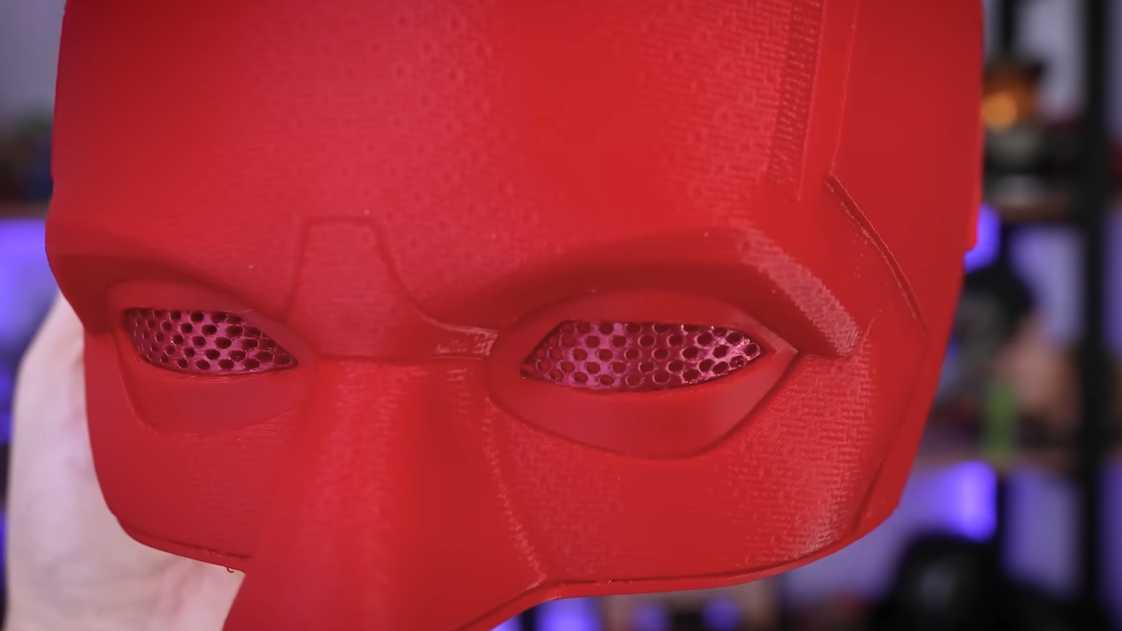
Need a plastic mesh in a custom pattern? 3D print it, no problem. But what if one needs a curved plastic mesh? That’s considerably harder to 3D print, but [Uncle Jessy]’s figured out a simple approach: 3D print the mesh flat, then break out a mold and a heat gun.
Of course, there are a few gotchas, but [Uncle Jessy] shares his tips for getting the most reliable results. The important part is to design and 3D print a mold that represents the final desired shape. Then print the mesh, and fit it into a frame. Heat things up with a heat gun, and press into the mold to deform the mesh while it’s still soft. It’s much easier seen than explained, so take a few moments to check out the video, embedded below the page break.
Custom eye inserts become a breeze.
Because the plastic in a mesh is so thin, [Uncle Jessy] says to keep the heat low and slow. The goal is to have the mesh stretch and deform, not melt.
Speaking of heat, when thermoforming, one usually needs to make the mold out of heat-resistant material. But the thermal mass of a mesh is so small that it really doesn’t matter much — there just isn’t enough heat trapped in the mesh to really damage a mold. As long as the mold is reasonably dense, there’s no need to go overboard with making it heat resistant.
The whole process takes a little practice, but since the meshes are so fast to print and use so little plastic it’s easy to experiment a little.
As for the meshes themselves, a simple way to print a mesh is just to print a disc with no top or bottom layers, only infill. Set the infill pattern to honeycomb, for example, for an easy hexagon mesh. We’ve seen a variant of this “exposed infill” idea used to create a desiccant container, and using it to print a mesh pattern easily is a neat trick, too.
Why might one need to reshape a mesh into a curve? Perhaps to custom-fit a costume piece, or make custom eye inserts for masks, as shown here. In any case, it’s a good technique to keep in the back of one’s mind, and if you put it to good use, drop us a tip!

 Connexion
 Yes, Don Lemon is problematic and divisive. He has provoked audiences, colleagues, and critics alike. He tested CNN’s patience for years. None of that is in dispute, and none of it explains, excuses, or justifies what has unfolded on Friday.