
 Connexion
Vue lecture
Trump to hyperscalers: your datacenters, your power bill
As communities push back on utility costs, White House tells Big Tech to fund their own AI expansion
The Trump administration continues its AI push, working to defuse public opposition to datacenter energy and water consumption - while dangling a promise to exempt hyperscalers from chip tariffs to help them stock their facilities with GPUs and accelerators.…
Familiar Findings launches as desktop magic
Familiar Findings launches, and the charming creature collection game is out now on Linux, Mac, and Windows PC. Thanks to the ongoing creative talents of Cliffa Games, which feels... Continue reading
This post Familiar Findings launches as desktop magic appeared first on Linux Game Consortium - News, Reviews, and Steam Deck Gaming.
Football referee assaulted at home one week after proposing to boyfriend at match
German football referee Pascal Kaiser was assaulted at his home, just a week after proposing to his boyfriend on the pitch.
Kaiser proposed to his partner, Moritz, at Cologne’s RheinEnergieStadion in front of almost 50,000 spectators ahead of a match between FC Köln and VfL Wolfsburg.
The proposal was widely shared online, sadly leading Kaiser to receive threats. French newspaper L’Équipe reported that some of these threats referenced his home address, which Kaiser reported to police, who advised there was no immediate threat.
However, just 20 minutes after speaking with police, while in his garden smoking, three men attacked Kaiser, leaving him with an injury to his right eye.
Carla Antonelli, Spain’s first openly transgender senator, took to Instagram to share an image of Kaiser’s injured face.
The LGBTQ+ activist’s captioned read: “Terrible message, if you make yourself visible we’ll put you in the closet: Referee Pascal Kaiser, who proposed to his partner before the Cologne-Wolfsburg match, was assaulted at his home. It is known that prior to the assault, the address of Pascal Kaiser’s house had leaked on social media and received direct threats. Police intervened after the attack and Pascal Kaiser is now in a safe place under police protection.”
FC Köln has since released a statement which read: “FC Köln condemns the attack on Pascal Kaiser and wishes him a speedy recovery!
“The sheer hatred behind this cowardly attack confirms in a horrific way just how important our commitment as the FC family is against any form of violence.
“As 1. FC Köln, we stand by our conviction for acceptance, diversity, and equality — in sport and in society, on the pitch and in everyday life.
“LIVE THE WAY YOU ARE!”
Kaiser, who came out as bisexual in 2021, making him one of a few openly LGBTQ+ referees in professional football, used the proposal to emphasise the need for queer visibility in football.
The self-proclaimed LGBTQ+ activist said during the proposal that he wanted people to see “a man loving a man in football”.
Kaiser previously told German press: “Since coming out, I’ve been much more open on the pitch. I don’t hide anything anymore, and that makes me stronger, not weaker. We have to dare to be fully present.”
Share your thoughts! Let us know in the comments below, and remember to keep the conversation respectful.
The post Football referee assaulted at home one week after proposing to boyfriend at match appeared first on PinkNews | Latest lesbian, gay, bi and trans news | LGBTQ+ news.
Trump admin removes Pride flag from Stonewall monument in “deliberate act of erasure”

The National Park Service (NPS) has removed the rainbow flag from the Stonewall National Monument, saying it did so in adherence with “government-wide guidance.”
The NPS confirmed the removal of the flag to Gay City News, explaining that “only the U.S. flag and other congressionally or departmentally authorized flags are flown on NPS-managed flagpoles, with limited exceptions.”
Related
The biggest advertising day of the year once rippled with rainbow references. Not this year.
“Any changes to flag displays are made to ensure consistency with that guidance,” the statement continued. “Stonewall National Monument continues to preserve and interpret the site’s historic significance through exhibits and programs.”
Of course, the site is significant for the uprising that took place there in 1969, which became a major catalyst for the global LGBTQ+ rights movement.
Never Miss a Beat
Subscribe to our newsletter to stay ahead of the latest LGBTQ+ political news and insights.
Subscribe to our Newsletter today
The New York City monument is the first U.S. National Monument dedicated to LGBTQ+ rights, having been designated as such in 2016 by then-President Barack Obama. It then became tradition for the monument, located in a park across the street from the Stonewall Inn, to be adorned with various Pride flags, including the trans flag. Until Trump took office, NPS funded the installation of these flags.
Local queer leaders slammed the flag’s removal in a joint statement. “This is a deliberate act of erasure,” said Manhattan Borough President Brad Hoylman-Sigal (D), state Senator Erik Bottcher (D), and former Assemblymember Deborah Glick (D). “The Pride Flag is history, resistance, and Pride born at Stonewall itself. Taking it down does not diminish our community. It exposes an administration afraid of visibility and truth. Our history will not be erased, and our Pride is not theirs to take down.”
The move comes after the administration has already spent the past year trying to erase pieces of Stonewall history.
Last February, NPS removed all mentions of transgender people from its webpage on Stonewall to comply with Trump’s executive orders prohibiting any federal recognition of trans people in any aspect of civic life. It subsequently removed references to bisexual people, too.
Numerous federal webpages began removing mentions of trans people and gender identity after a January 29 directive from the Office of Personnel Management (OPM) telling federal agencies to “end federal funding of gender ideology” in programming, policies, and outward-facing media. The directive reflects Republicans’ larger crusade against diversity, equity, and inclusion (DEI) efforts by government bodies and private businesses.
Steven Love Menendez, an NPS flag caretaker, told Gay City News that removing the Pride flag is “a hateful and petty act from a hateful administration.”
“They have no idea what the meaning of love and community is. They are hellbent on harming as many marginalized groups as they possibly can. They have no compassion, kindness, or soul.”
He wondered why the Pride flag would not count as a “limited exception” for a monument focused on LGBTQ+ rights, given the administration’s guidance says that exemptions to its rules include flags that “provide historical context.”
Before the most recent Pride flag’s removal, the administration had already banned the Trans Pride flag and the Progress Pride flag from flying at the monument. The first Trump administration also directed efforts at keeping the Pride flag away from Stonewall.
Subscribe to the LGBTQ Nation newsletter and be the first to know about the latest headlines shaping LGBTQ+ communities worldwide.
Loi Duplomb 2, le retour
The Khronos Group celebrate 25 years of open standards

Read the full article on GamingOnLinux.
How and When the Memory Chip Shortage Will End

If it feels these days as if everything in technology is about AI, that’s because it is. And nowhere is that more true than in the market for computer memory. Demand, and profitability, for the type of DRAM used to feed GPUs and other accelerators in AI data centers is so huge that it’s diverting away supply of memory for other uses and causing prices to skyrocket. According to Counterpoint Research, DRAM prices have risen 80-90 precent so far this quarter.
The largest AI hardware companies say they have secured their chips out as far as 2028, but that leaves everybody else—makers of PCs, consumer gizmos, and everything else that needs to temporarily store a billion bits—scrambling to deal with scarce supply and inflated prices.
How did the electronics industry get into this mess, and more importantly, how will it get out? IEEE Spectrum asked economists and memory experts to explain. They say today’s situation is the result of a collision between the DRAM industry’s historic boom and bust cycle and an AI hardware infrastructure build-out that’s without precedent in its scale. And, barring some major collapse in the AI sector, it will take years for new capacity and new technology to bring supply in line with demand. Prices might stay high even then.
To understand both ends of the tale, you need to know the main culprit in the supply and demand swing, high-bandwidth memory, or HBM.
What is HBM?
HBM is the DRAM industry’s attempt to short-circuit the slowing pace of Moore’s Law by using 3D chip packaging technology. Each HBM chip is made up of as many as 12 thinned-down DRAM chips called dies. Each die contains a number of vertical connections called through silicon vias (TSVs). The dies are piled atop each other and connected by arrays of microscopic solder balls aligned to the TSVs. This DRAM tower—well, at about 750 micrometers thick, it’s more of a brutalist office-block than a tower—is then stacked atop what’s called the base die, which shuttles bits between the memory dies and the processor.
This complex piece of technology is then set within a millimeter of a GPU or other AI accelerator, to which it is linked by as many as 2,048 micrometer-scale connections. HBMs are attached on two sides of the processor, and the GPU and memory are packaged together as a single unit.
The idea behind such a tight, highly-connected squeeze with the GPU is to knock down what’s called the memory wall. That’s the barrier in energy and time of bringing the terabytes per second of data needed to run large language models into the GPU. Memory bandwidth is a key limiter to how fast LLMs can run.
As a technology, HBM has been around for more than 10 years, and DRAM makers have been busy boosting its capability.
As the size of AI models has grown, so has HBM’s importance to the GPU. But that’s come at a cost. SemiAnalysis estimates that HBM generally costs three times as much as other types of memory and constitutes 50 percent or more of the cost of the packaged GPU.
Origins of the memory chip shortage
Memory and storage industry watchers agree that DRAM is a highly cyclical industry with huge booms and devastating busts. With new fabs costing US $15 billion or more, firms are extremely reluctant to expand and may only have the cash to do so during boom times, explains Thomas Coughlin, a storage and memory expert and president of Coughlin Associates. But building such a fab and getting it up and running can take 18 months or more, practically ensuring that new capacity arrives well past the initial surge in demand, flooding the market and depressing prices.
The origins of today’s cycle, says Coughlin, go all the way back to the chip supply panic surrounding the COVID-19 pandemic . To avoid supply-chain stumbles and support the rapid shift to remote work, hyperscalers—data center giants like Amazon, Google, and Microsoft—bought up huge inventories of memory and storage, boosting prices, he notes.
But then supply became more regular and data center expansion fell off in 2022, causing memory and storage prices to plummet. This recession continued into 2023, and even resulted in big memory and storage companies such as Samsung cutting production by 50 percent to try and keep prices from going below the costs of manufacturing, says Coughlin. It was a rare and fairly desperate move, because companies typically have to run plants at full capacity just to earn back their value.
After a recovery began in late 2023, “all the memory and storage companies were very wary of increasing their production capacity again,” says Coughlin. “Thus there was little or no investment in new production capacity in 2024 and through most of 2025.”
The AI data center boom
That lack of new investment is colliding headlong with a huge boost in demand from new data centers. Globally, there are nearly 2,000 new data centers either planned or under construction right now, according to Data Center Map. If they’re all built, it would represent a 20 percent jump in the global supply, which stands at around 9,000 facilities now.
If the current build-out continues at pace, McKinsey predicts companies will spend $7 trillion by 2030, with the bulk of that—$5.2 trillion—going to AI-focused data centers. Of that chunk, $3.3 billion will go toward servers, data storage, and network equipment, the firm predicts.
The biggest beneficiary so far of the AI data center boom is unquestionably GPU-maker Nvidia. Revenue for its data center business went from barely a billion in the final quarter of 2019 to $51 billion in the quarter that ended in October 2025. Over this period, its server GPUs have demanded not just more and more gigabytes of DRAM but an increasing number of DRAM chips. The recently released B300 uses eight HBM chips, each of which is a stack of 12 DRAM dies. Competitors’ use of HBM has largely mirrored Nvidia’s. AMD’s MI350 GPU, for example, also uses eight, 12-die chips.
With so much demand, an increasing fraction of the revenue for DRAM makers comes from HBM. Micron—the number three producer behind SK Hynix and Samsung—reported that HBM and other cloud-related memory went from being 17 percent of its DRAM revenue in 2023 to nearly 50 percent in 2025.
Micron predicts the total market for HBM will grow from $35 billion in 2025 to $100 billion by 2028—a figure larger than the entire DRAM market in 2024, CEO Sanjay Mehrotra told analysts in December. It’s reaching that figure two years earlier than Micron had previously expected. Across the industry, demand will outstrip supply “substantially… for the foreseeable future,” he said.
Future DRAM supply and technology
“There are two ways to address supply issues with DRAM: with innovation or with building more fabs,” explains Mina Kim, an economist with the Mkecon Insights. “As DRAM scaling has become more difficult, the industry has turned to advanced packaging… which is just using more DRAM.”
Micron, Samsung, and SK Hynix combined make up the vast majority of the memory and storage markets, and all three have new fabs and facilities in the works. However, these are unlikely to contribute meaningfully to bringing down prices.
Micron is in the process of building an HBM fab in Singapore that should be in production in 2027. And it is retooling a fab it purchased from PSMC in Taiwan that will begin production in the second half of 2027. Last month, Micron broke ground on what will be a DRAM fab complex in Onondaga County, N.Y. It will not be in full production until 2030.
Samsung plans to start producing at a new plant in Pyeongtaek, South Korea in 2028.
SK Hynix is building HBM and packaging facilities in West Lafayette, Indiana set to begin production by the end of 2028, and an HBM fab it’s building in Cheongju should be complete in 2027.
Speaking of his sense of the DRAM market, Intel CEO Lip-Bu Tan told attendees at the Cisco AI Summit last week: “There’s no relief until 2028.”
With these expansions unable to contribute for several years, other factors will be needed to increase supply. “Relief will come from a combination of incremental capacity expansions by existing DRAM leaders, yield improvements in advanced packaging, and a broader diversification of supply chains,” says Shawn DuBravac , chief economist for the Global Electronics Association (formerly the IPC). “New fabs will help at the margin, but the faster gains will come from process learning, better [DRAM] stacking efficiency, and tighter coordination between memory suppliers and AI chip designers.”
So, will prices come down once some of these new plants come on line? Don’t bet on it. “In general, economists find that prices come down much more slowly and reluctantly than they go up. DRAM today is unlikely to be an exception to this general observation, especially given the insatiable demand for compute,” says Kim.
In the meantime, technologies are in the works that could make HBM an even bigger consumer of silicon. The standard for HBM4 can accommodate 16 stacked DRAM dies, even though today’s chips only use 12 dies. Getting to 16 has a lot to do with the chip stacking technology. Conducting heat through the HBM “layer cake” of silicon, solder, and support material is a key limiter to going higher and in repositioning HBM inside the package to get even more bandwidth.
SK Hynix claims a heat conduction advantage through a manufacturing process called advanced MR-MUF (mass reflow molded underfill). Further out, an alternative chip stacking technology called hybrid bonding could help heat conduction by reducing the die-to-die vertical distance essentially to zero. In 2024, researchers at Samsung proved they could produce a 16-high stack with hybrid bonding, and they suggested that 20 dies was not out of reach.

Discord will limit profiles to teen-appropriate mode until you verify your age
Discord announced it will put all existing and new profiles in teen-appropriate mode by default in early March.
The teen-appropriate profile mode will remain in place until users prove they are adults. To change a profile to “full access” will require verification by Discord’s age inference model—a new system that runs in the background to help determine whether an account belongs to an adult, without always requiring users to verify their age.
Savannah Badalich, Head of Product Policy at Discord, explained the reasoning:
“Rolling out teen-by-default settings globally builds on Discord’s existing safety architecture, giving teens strong protections while allowing verified adults flexibility. We design our products with teen safety principles at the core and will continue working with safety experts, policymakers, and Discord users to support meaningful, long term wellbeing for teens on the platform.”
Platforms have been facing growing regulatory pressure—particularly in the UK, EU, and parts of the US—to introduce stronger age-verification measures. The announcement also comes as concerns about children’s safety on social media continue to surface. In research we published today, parents highlighted issues such as exposure to inappropriate content, unwanted contact, and safeguards that are easy to bypass. Discord was one of the platforms we researched.
The problem in Discord’s case lies in the age-verification methods it’s made available, which require either a facial scan or a government-issued ID. Discord says that video selfies used for facial age estimation never leave a user’s device, but this method is known not to work reliably for everyone.
Identity documents submitted to Discord’s vendor partners are also deleted quickly—often immediately after age confirmation, according to Discord. But, as we all know, computers are very bad at “forgetting” things and criminals are very good at finding things that were supposed to be gone.
Besides all that, the effectiveness of this kind of measure remains an issue. Minors often find ways around systems—using borrowed IDs, VPNs, or false information—so strict verification can create a sense of safety without fully eliminating risk. In some cases, it may even push activity into less regulated or more opaque spaces.
As someone who isn’t an avid Discord user, I can’t help but wonder why keeping my profile teen-appropriate would be a bad thing. Let us know in the comments what your objections to this scenario would be.
I wouldn’t have to provide identification and what I’d “miss” doesn’t sound terrible at all:
- Mature and graphic images would be permanently blocked.
- Age-restricted channels and servers would be inaccessible.
- DMs from unknown users would be rerouted to a separate inbox.
- Friend requests from unknown users would always trigger a warning pop-up.
- No speaking on server stages.
Given the amount of backlash this news received, I’m probably missing something—and I don’t mind being corrected. So let’s hear it.
Note: All comments are moderated. Those including links and inappropriate language will be deleted. The rest must be approved by a moderator.
We don’t just report on threats – we help protect your social media
Cybersecurity risks should never spread beyond a headline. Protect your social media accounts by using Malwarebytes Identity Theft Protection.
Intel Xeon 6780E Sierra Forest vs. AMD EPYC 9965 On Linux 6.18 Performance
at://did:plc:w6zza3t5cu2b7islwpfsdpyt/app.bsky.feed.post/3mejc3qserk2y
Microsoft 365 outage takes down admin center in North America
Abracademia the most relaxing life-sim yet
Abracademia is a cozy witch idle life-sim game coming to Linux and Windows PC, letting your magic school fantasy unfold. Thanks to the creative spark at Seele Games,... Continue reading
This post Abracademia the most relaxing life-sim yet appeared first on Linux Game Consortium - News, Reviews, and Steam Deck Gaming.
GOP lawmaker brutally mocked for calling the Super Bowl Halftime Show “gay pornography”

The right raged against the Super Bowl Halftime Show this week, mainly complaining that it was in Spanish and that not enough white people performed at it.
But one Republican lawmaker had a unique take: It was a form of “gay pornography.”
Related
Bad Bunny’s Super Bowl halftime show was queer-inclusive — and he didn’t even have to wear a dress
“Last night’s halftime show was a disgrace and it mocked American families,” Rep. Andy Ogles (R-TN) posted to X yesterday. “Depicting gay pornography on prime time has no place in our culture.”
“The Bad Bunny performance is conclusive proof that Puerto Rico should never be a state.”
Last night’s halftime show was a disgrace and it mocked American families. Depicting gay pornography on prime time has no place in our culture.
— Rep. Andy Ogles (@RepOgles) February 9, 2026
The Bad Bunny performance is conclusive proof that Puerto Rico should never be a state.
It’s not clear what he was referring to since there was nothing resembling gay pornography during the show. Republicans, though, often call art and media that includes LGBTQ+ people “gay pornography” even if it isn’t pornography at all, and out LGBTQ+ musicians Ricky Martin and Lady Gaga performed at the show.
Ogles was mocked on X for his claim about Bad Bunny’s performance. Some people pointed out that a man and a woman from California even got married during the Halftime Show.
Gay pornography? You were ogling the wrong tab on your browser.
— Damin Toell (@damintoell) February 9, 2026
I’m a conservative.
— Mark Wylie (@MarkWyl34993414) February 9, 2026
To conclude that a halftime performance by someone from a location is proof that said location should never be a state is one of the least logically defensible statements I’ve ever read.
Mocked American families? He performed a wedding during his act.
— Salty Sea(@SaltySeaFl) February 9, 2026


Posts like this are why MAGA is losing the culture war.
— Seth Taylor (@SethTaylor1991) February 9, 2026
this is seriously your take? You're constituents aren't this dumb, are they?
— Capital EdgeNY/CT (@CapitalEdgeNY) February 9, 2026
It’s now gay for a man to marry a woman. pic.twitter.com/YAhiO76mRX
— Chipotle Roan(@GarbageGangHQ) February 10, 2026
all straight people weirdo pic.twitter.com/U2aRWlJcLk
— Spencer Mullins (@spincity615) February 10, 2026
I think you had your browser on porn hub instead of the Super Bowl
— Sheridan (@WitcheyGirI) February 9, 2026
Sir, I believe you are conflating a dream you had with the actual halftime show.
— Roger (@Bloodlight_86) February 10, 2026
this post is conclusive proof that you are mentally ill and not fit to represent a wet sock in congress. You’re a disgrace.
— cool (@mericancoolguy) February 9, 2026
Was it the man and woman marrying or the people dancing together while talking about love?
— Mr. Spooky Wolff (@MrSpookyWolff) February 9, 2026
Well, maybe YOU spent your Sunday evening watching gay porn, but most others watched the Super Bowl.
— Jennifer (@wrigley_1987) February 9, 2026
Pervert.
Dude, what the hell were you watching? Somebody check this guy's browser history.
— BunchaSheeple (@BunchaSheeple) February 10, 2026
Fabledom – v1.084
#4415 Updated Fabledom v1.084

Genres/Tags: Managerial, Isometric, 3D
Companies: Grenaa Games, Plug in Digital, Doyoyo Games
Languages: RUS/ENG/MULTI9
Original Size: 3.7 GB
Repack Size: 1.1 GB
Download Mirrors (Direct Links)
- Filehoster: DataNodes (Speed & Usability) [Use IDM]
-
Filehoster: FuckingFast (REALLY Fucking Fast
 )
)
- Filehoster: MultiUpload (10+ hosters, interchangeable) [Use JDownloader2]
Download Mirrors (Torrent)
-
1337x | [magnet] [.torrent file only]

- RuTor [magnet]
- Tapochek.net
Discussion and (possible) future updates on CS.RIN.RU thread
Screenshots (Click to enlarge)







Repack Features
- Based on scene Fabledom.v1.084-TENOKE ISO release: tenoke-fabledom.v1.084.iso (4,010,287,104 bytes)
- Game version: v1.084
- 100% Lossless & MD5 Perfect: all files are identical to originals after installation
- NOTHING ripped, NOTHING re-encoded
- Significantly smaller archive size (compressed from 3.7 to 1.1 GB)
- Installation takes one minute
- After-install integrity check so you could make sure that everything installed properly
- HDD space after installation: 3.7 GB
- Language can be changed in game settings
- At least 2 GB of free RAM (inc. virtual) required for installing this repack
Fabledom offers an accessible and intuitive way of playing City builders, the game is easy to pick up and play for anyone but can still offer a challenge for more experienced players thanks to its difficulty settings.
Set in a strange world where Fairytales become reality, you will witness the growth of your village; follow your citizens’ lives and watch the rise and fall of your relationships with the neighboring kingdoms.
From a small village to a bustling Fairy tale Kingdom
Find the promised land, settle, and flourish! You will need every resource available to you to expand and thrive. Build and shape a city worthy of your citizens!
Meet & interact with magical creatures
Experience a fairytale world filled with flying pigs, giants, gnomes, and much more. Explore every nook and cranny of this magical world but beware of the witch sisters and the looming dragon if you don’t want your kingdom to become a cautionary tale itself!
Adapt your playstyle to find true love!
Romance will strongly shape the way you play and enjoy the game. Fabledom’s focus on love and candor will provide fresh city building mechanics as you can choose between 6 different rulers to interact with, get unique quests and buildings for your Kingdom!
Build an Army to protect your kingdom
Make it rain coins on your Fablings by building a Mystic Mine but do so at your own expense as trolls have an appetite for such endeavor. Gather your army and hero to protect your kingdom from their malicious invasion!
Tales of trades, feuds and partnerships
Build your economy, exchange rare resources to grow and evolve. Fabledom offers numerous ways to interact with other kingdoms. How you handle diplomacy will shape your progress.
Fabledom is inspired by amazing games like:
- The Settlers
- Foundation
- Kingdoms and Castles
Backwards Compatibility
This repack IS NOT backwards compatible with my previous Fabledom repacks.
The post Fabledom – v1.084 appeared first on FitGirl Repacks.
Interpellé pour détention de pédopornographie, un psychologue pour enfants se suicide
Les sanctions pour défaut d'alimentation et de consultation du DMP ne sont plus à l'ordre du jour (DNS)
CrossOver 26 Released - Powered By Wine 11.0 For Windows Apps/Games On Linux + macOS
Republican governor vetoes anti-trans bill… yes, really
Republicans just had their broken clock moment after a GOP state governor vetoed an anti-trans bathroom bill.
New Hampshire governor Kelly Ayotte made the unexpected decision to shut down a GOP-led anti-trans bill on Friday (6 February).
The Senate bill, SB 268, would have amended anti-discrimination laws to allow the banning of trans people from public spaces such as toilets and changing rooms.
It would have also banned trans people from joining gender-specific sporting events that are consistent with their correct gender identity.
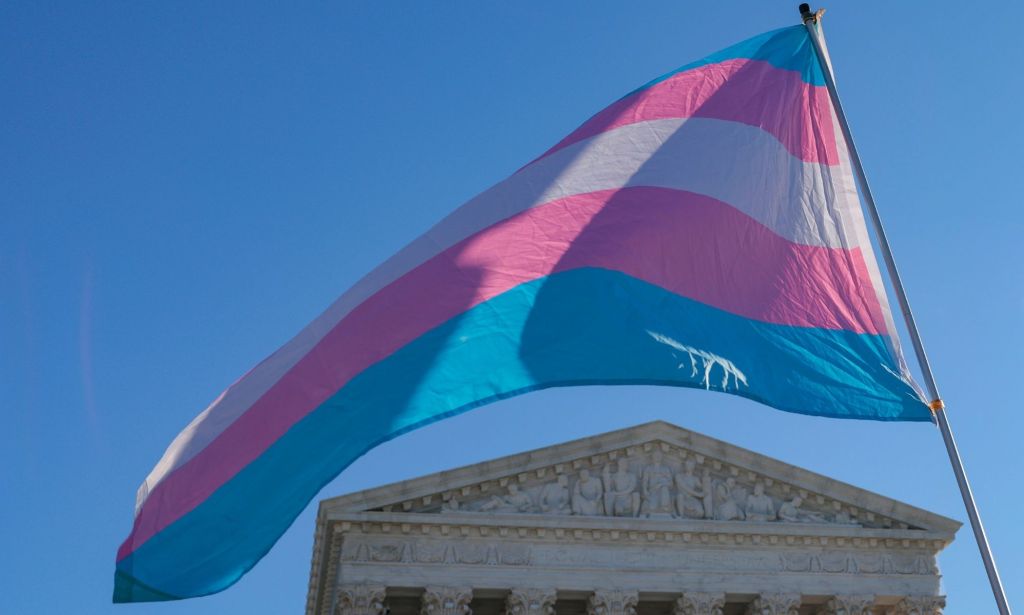
The bill was effectively a copy of one that Governor Ayotte vetoed last year over concerns that it was “overly broad” and “impractical”.
She told the New Hampshire Bulletin on Monday that she overturned the latest GOP bill because it contained “minimal difference” to its predecessor.
“I made it clear this issue needed to be addressed in a thoughtful, narrow way that protects the privacy, safety, and rights of all Granite Staters,” she said.
Republican governor’s veto a ‘huge relief’ activists say
The move is unprecedented for a Republican governor given that anti-trans rhetoric has become the party line over the past few years.
While GOP lawmakers in the state have vowed to override the governor’s veto, it’s unlikely they will gain the votes necessary to do so, according to LGBTQ+ Nation.
New Hampshire LGBQ+ organisation 603 Equality’s executive director, Aimee Terravechia, celebrated the win for LGBTQ+ rights, saying that the governor’s decision is a “huge relief” for all trans people within the state.
“In a time of unrelenting legislative attacks and misinformation campaigns around transgender people and their rights, Gov. Ayotte’s veto affirms the basic rights and dignity for all Granite States,” they said. “Transgender and gender nonconforming people deserve safe access to public spaces as they go about living, working, and contributing to our communities.”
While the move is undoubtedly a win for trans rights, the governor has said she intends to pass any future bills that restrict trans people’s rights more specifically.
“I believe there are important and legitimate privacy and safety concerns raised by biological males using places such as female locker rooms and being placed in female correctional facilities,” she said last year.
Share your story! Do you have an important, exciting or uplifting story to tell? Email us at news@pinknews.co.uk
The post Republican governor vetoes anti-trans bill… yes, really appeared first on PinkNews | Latest lesbian, gay, bi and trans news | LGBTQ+ news.

Fabledom Repack Updated
This is just a notice for my subscribers about freshly updated Fabledom repack. Now it’s updated to v1.084.
The post Fabledom Repack Updated appeared first on FitGirl Repacks.
Incognito Market : 30 ans de prison pour l’administrateur taïwanais de 24 ans
Thomas Lacoste : « Créer un pare-feu autour de ceux qu’on a érigés en “écoterroristes” »
Super Bowl : Bad Bunny défie joyeusement l’Amérique trumpiste
The Best USB To VGA Converter For The Job

There are many adapters, dongles, and cables designed for interfacing display standards, and no doubt some of you have them in the glue of your entertainment system or work space. They’re great for standards, but what about something that’s not quite standard? [Stephen] has an arcade cabinet with a CRT that runs at an unusual 336 by 262 pixel resolution. It can be driven as 320 by 240 but doesn’t look great, and even that “standard” resolution isn’t supported by many dongles. He’s shared the story of his path to a unique USB to VGA converter which may have application far beyond this arcade machine.
We follow him on a path of discovery, through RP2040 PIOs, simple resistor ladder DACs, and home-made kernel modules, before he arrives at GUD, a USB display protocol with its own upstreamed Linux kernel driver. It’s designed to be used with a Raspberry PI deriving an LCD or HDMI display, but for his task he implemented the protocol on one of the more expensive STM32 series microcontrollers. The result after several false starts and some fiendish PCB routing is a standalone GUD-based USB-to-VGA converter that delivers perfect 34-bit colour at this unusual resolution, and also presumably others if required. It’s a worthwhile read for the many hints it gives on the subject of driving displays, even if you’re not driving an odd cabinet monitor.
Interpellé pour détention de pédopornographie, un psychologue pour enfants se suicide
15 février : atelier créatif avec The Chomeuse Go on au Shakirail à Paris
« Soulèvements », le bien commun en héritage
L’État de New York veut que les contenus générés par IA soient signalés comme tels
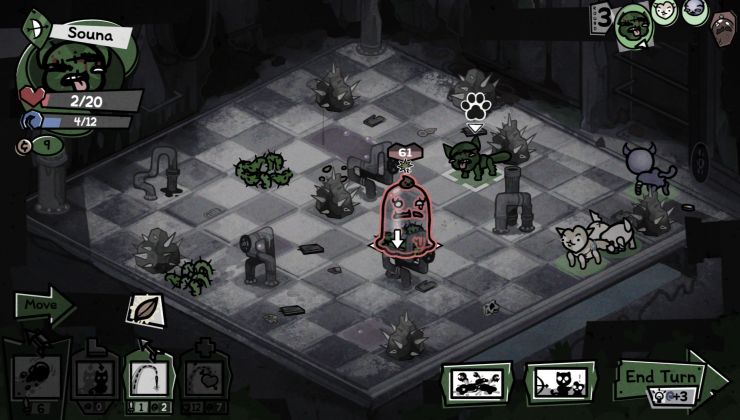
Mewgenics is weird, completely chaotic and it's out now
Read the full article on GamingOnLinux.
Trump excludes the only gay man and Black governors from White House dinner
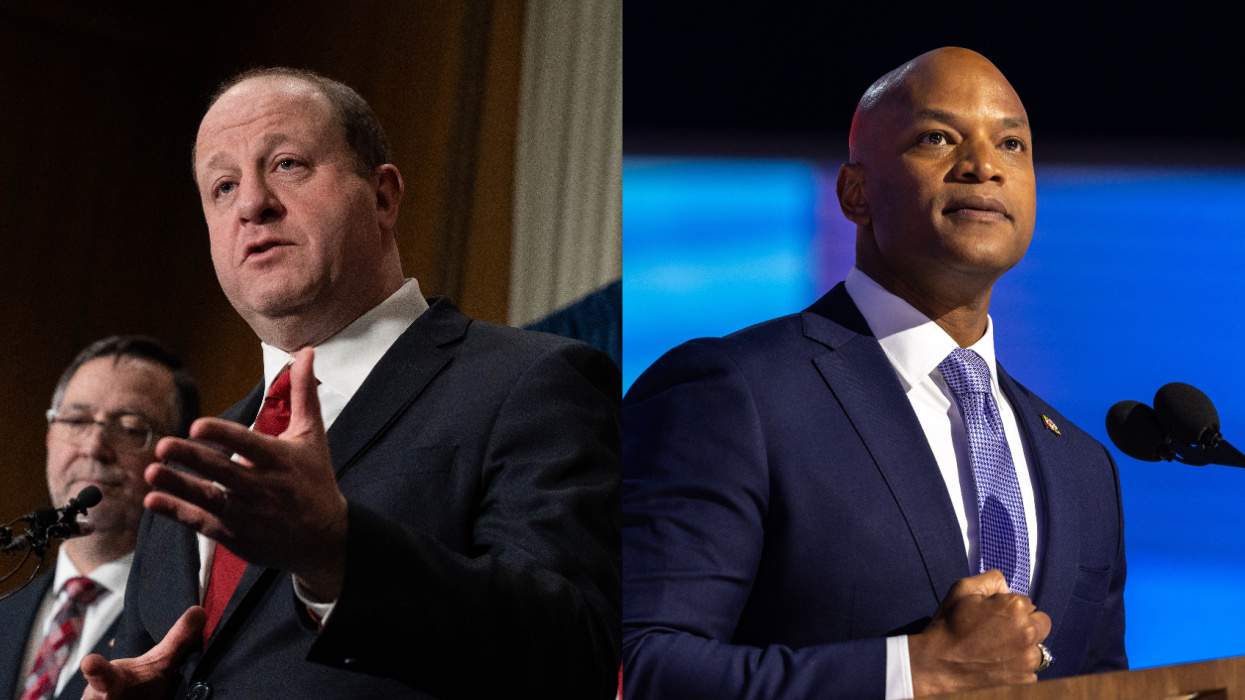 After announcing that he will only host Republicans during the annual presidential meeting with governors, Donald Trump has excluded the only out gay man and only Black governors from the following dinner event.
 Je vous met la plnache complète. Sur la 3 case il y a un detail caché pour comprendre ce qui est arrivé, 😘 : r/BDFrancophone
(Permalink)
Demi Lovato cancels tour dates over health concerns
Demi Lovato has cancelled five of their upcoming concerts to “protect my health.”
The singer-songwriter, 33, said in an Instagram story on Tuesday (10 February) that she was cancelling five dates on the It’s Not That Deep tour over concerns they had “overextended” themselves.
Originally set to begin on 8 April in North Carolina, the tour will now begin on 13 April in Florida.
“My Lovatics – I am so excited to get back on stage this year and visit you in as many cities as I can,” they said. “While starting to prepare for the tour, I realised that I have overextended what may be possible.
“To protect my health, and ensure I can give you my all at each show, I need to build in more time to rest and rehearse and ultimately adjust to a schedule with some more time off that will allow me to handle the entire run of the tour.”

Among the tour dates to be cut are shows in Charlotte, Nashville, Atlanta, Las Vegas, and Denver.
“I am so sad to say that I will no longer be able to see you on this tour, and I am so sorry to those who planned to be there,” she continued.
The singer noted that refunds were already being processed for tickets bought through Ticketmaster or AXS. Those who received tickets from a third-party reseller, such as StubHub or SeatGeek, must reach out to the site directly for a refund.
Additional tickets for available tour dates were also put up for sale on Lovato’s website, they said.
“I am so excited for this tour and am looking forward to seeing so many of your faces singing with me!” they said. “Thank you for your support as always. I love you and I cannot wait to see you soon.”
Share your story! Do you have an important, exciting or uplifting story to tell? Email us at news@pinknews.co.uk
The post Demi Lovato cancels tour dates over health concerns appeared first on PinkNews | Latest lesbian, gay, bi and trans news | LGBTQ+ news.


AFRINIC says it's back on track and will soon deliver the plan that proves it
As the governance policy designed to protect regional internet registries nears completion
APRICOT 2026 After years of strife, the African Network Information Centre (AFRINIC) is weeks away from signing off on a budget and action plan, activity that one of the organization’s newly appointed executives believes demonstrates it is back on track.…
Europe's $24 Trillion Breakup With Visa and Mastercard
Wero (pour le moment seulement actif en France, Belgique et Allemagne) va probablement prendre un bon gros coup de pouce. C'est bien.
(Permalink)
Minneapolis is still aching. Trans state Rep. Leigh Finke says America must not look away.

The streets of Minneapolis are eerily quiet.
Minnesota state Rep. Leigh Finke (D) describes a palpable absence of people out and about. Restaurants are closed (some indefinitely), and shops are devoid of both employees and customers. Some residents won’t even take their garbage to the alley, let alone venture beyond their property lines.
Related
“Dystopian”: Trans radio host Ellie Krug explains what it’s like in Minnesota right now
The trucks, on the other hand, are out.
“You’ll be driving down 280 and a very large pickup truck will be going 75 miles per hour, bobbing and weaving through the cars, and you just know that’s someone who’s headed to detain someone,” Finke tells LGBTQ Nation.
Insights for the LGBTQ+ community
Subscribe to our briefing for insights into how politics impacts the LGBTQ+ community and more.
Subscribe to our Newsletter today
The city, known for its vibrancy through even the coldest of winters, is aching. Even after the relentless, ongoing anti-ICE protests drove the Trump administration to demote former border patrol commander Greg Bovino and (slightly) reduce the massive number of ICE agents in the area, Finke says the situation on the ground has not improved.
“They’re still taking people,” says Finke. “My constituents, our communities, our neighbors are still in hiding, and the story is really becoming that people aren’t accessing healthcare now for 2 months. People aren’t paying their rent… The long-term effects of having people being in hiding, unable to care for their families, unable to receive therapy, go to the doctor, take your children to the doctor, the impacts of that are going to be generational.”
Finke – who made history in 2022 as the state’s first out trans lawmaker – has been relentlessly speaking out against the administration’s Operation Metro Surge since ICE first began flooding the streets of Minneapolis about three months ago, fresh from terrorizing Chicago, Portland, and Los Angeles.
Republicans have called her “unhinged” and accused her of encouraging “domestic terrorism” for supporting peaceful protestors. They have purposefully misgendered her and lobbed hateful attacks because she introduced legislation to rein in ICE. One colleague, state Rep. Mary Franson (R), blasted Finke’s bill mandating ICE agents remove their masks by calling her “a man who attempts wearing women face each and even [sic] day.”
But Finke has not let the insults distract her from the fight. She is also determined not to let her Republican colleagues distract the American people from the government-sponsored cruelty they are standing behind.
“Yes, Rep. Everyone knows I’m trans,” she replied to Franson. “Now what about the policy? Are we going to work together to bring accountability to those empowered to use force on our neighbors, or not?”
What Minnesotans are made of

Despite the ongoing ICE occupation, Finke acknowledges that for a president incapable of admitting even a modicum of defeat, Bovino’s firing, and the reduction in agents are not nothing. Even if it’s all grandstanding, a concern with image at all means the protestors have struck a nerve.
“I hesitate to call it a victory because this is still happening,” she says, “like it’ll be a victory if people can come back to their lives, and I don’t know when that’s going to happen. But it is a shift. It is a recognition on the part of the federal government, the actors of state violence, that they cannot just enforce their will upon the people as they, I think, expected to.”
But it’s far from over, she emphasizes, and the rest of the country must keep its eyes on the city, even as the administration continues its firehose strategy to flood the news cycles.
There is one change Finke does feel, though. While data is hard to come by, she says it feels like there’s been a reduction in clashes between ICE agents and legal observers (folks who film encounters between agents and the people they target).
But those observers are still out there, Finke said, and just because there aren’t as many viral videos doesn’t mean their determination has waned. “What’s happening in the streets, what’s happening in our communities, the mutual aid work, that’s where the real support effort is taking place.”
Finke praised the “unparalleled” community infrastructure that enabled such a strong, decentralized protest network to form so quickly. She believes a “knowledge memory” existed within the city due to the Black Lives Matter protests that erupted after the murder of George Floyd, which occurred only a few blocks from where ICE agents killed queer wife and mother Renee Nicole Good in January.
It is that infrastructure and that spirit that allows many on the left – including Finke – to keep fighting.
Finke said Minnesota has a reputation for being mostly white flyover country, but it actually has the highest percentage of resettled refugees in the country and also the highest number of out trans adults. Of course, that diversity is one of the main reasons the federal government has targeted Minneapolis in the first place, but Finke says it’s a superpower.
“People have no idea what Minnesotans are made of,” she said, though she acknowledged that at this point, maybe folks are starting to understand.
Collateral damage

Finke is careful when she speaks about the outsized danger queer and trans people face at the hands of ICE. While it’s absolutely true that being visibly queer makes people bigger targets, she doesn’t want to take away from the fact that the most vulnerable right now are Black and brown people, regardless of gender or sexual identity.
But queer folks, she explains, have become collateral damage in a system that empowers white supremacy. “One of the things that sort of underlies the people who are enforcing this is that they are adherents of a certain kind of structure of power which puts targets on women and queer people, and you saw that with the murder of Renee Good, right? Renee and [her wife] Becca were a visibly queer couple. The people who were there knew who they were, and you also knew it because they executed her point-blank and then immediately called her a f**king b**ch.”
Finke says she has been contacted by multiple constituents about their trans loved ones being targeted and/or arrested by ICE.
“There’s just this gender-based element to the enforcement of law that has always been there, and it’s not the point, it’s not the purpose. The purpose is to get rid of Black and brown people because the project is white supremacist, but one of the enforcement tactics is, we’re going to punish people who are outside of what we think of as normativity, right? You could see this going back throughout authoritarian movements in history.”
“The point of the Nazi Party was not to destroy trans people, but they destroyed trans people on their way to meeting their objective.”
She said it’s not hard to observe that queer people are more vulnerable because queer folks in the city are “active resistors.”
“We are on the front lines,” she said. “For better or worse, trans people are out there f**king fighting every day.”
Evil & awful

On January 19th, Martin Luther King Day, Finke posted a message of praise for the protestors who disrupted services at St. Paul’s Cities Church, where the pastor is also involved with ICE. The protest caused national outrage among right-wingers – who claimed the actors violated the churchgoers’ freedom to worship – and also led to the arrest of gay journalist Don Lemon.
On social media, Finke compared the action to the famed die-in at a cathedral staged by ACT UP and WHAM in 1989. “Actions like this—nonviolent resistance in the face of government inaction or oppression—are essential,” she wrote. “And they must continue until I.C.E. is out of our state, the administration is out of the White House, and dignity and humanity for all of our neighbors is achieved.”
Republicans were enraged.
State Sen. Michael Holmstrom (R) called the post “despicable and unhinged.” Misgendering Finke, he said she was “advocating for… (D)omestic terrorism,” an ironic statement considering the violence being perpetrated by ICE on the streets.
“In our Country, America, people are free to worship!” state Rep. Pam Altendorf (R) wrote on X. “We’re in a dangerous place when elected Dems are encouraging illegal activities.”
Finke shrugged it off, saying that Republicans find some reason to come after her about once a quarter. “It was spun as me demanding more protests in churches, which is stupid,” she said. “I’m an easy target for Republicans. They have said every single thing that is evil and awful about me.”
While she doesn’t enjoy being a punching bag, she points out that it’s not really about her, that it’s “symptomatic of something else, which is that they don’t have a moral vision of social progress.”
“The ability for change is really absent from the current MAGA Republican structure. It hasn’t always been true, but at this moment, the idea that the sort of populist Republican project is going to reflect upon what’s happening outside of their doors – it’s not happening.”
She lamented that Republicans in the state have shown very little inclination to break from Trump on immigration. Even state House Speaker Lisa Demuth (R), who Finke describes as having once been a more reasonable Republican, has remained devoted to the president now that she is running for governor.
After Demuth appeared on Minnesota Public Radio to defend the administration’s actions, Finke said on Instagram that the party is “incapable of speaking on behalf of the people of Minnesota.”
The triage administration

ICE’s rampage hasn’t slowed the Trump administration from its attacks on transgender people. Through it all, Finke has been devoting as much energy as possible to advocating for trans rights, too, including speaking up for gender-affirming care, as even in the sanctuary state of Minnesota, trans kids are losing health care access due to federal threats.
But it’s a lot to play defense for at once. Finke said the goal of authoritarian leaders is to flood the people with so much chaos that they become too overwhelmed to fight back. Like all of us, Finke is doing her best, but it isn’t easy.
“You can’t have an emergency in every part of your life every single day and just give all of the attention to all of it,” she said. “I take very seriously the idea that we promised to protect transgender people and kids and to provide them healthcare access, and the difficulty is that we need to not forget everything else [as ICE continues its occupation].”
What it has unfortunately come down to, she said, is figuring out who is the most vulnerable group at each moment, and right now, that’s Black and brown people who are hiding in their homes.
“The things that are right in front of us, the life and death moments that the community faces or the family destructions, that has to be where we put our minds right now, and I’m not gonna forget about or do any less work to protect trans people. We are committed to that. The attorney general is committed to that, our governor [is, too], but it’s just like trying to stack a five-alarm fire on top of another one on top of another one, and you have to try to just triage.”
We will win

Despite the immense challenges the city faces, Finke hasn’t lost her optimism that ultimately, the protestors will come out on top.
“The idea that the resistance movement is going to stop is just impossible to believe, and I think that the administration is starting to understand that.”
But winning, she emphasized, doesn’t mean driving ICE out of their city and into another. It means stopping the agency for good.
“I don’t think that we are almost out of the muck… but I totally believe fully that this authoritarian moment will pass. This is my place, but many people in many places will have the same resolve, and the only outcome I can imagine is that this hateful effort is defeated. Now, that may take a few years or more, and when they’re gone, it’s going to take several more years to rebuild what has been broken. But 100%, I believe that we will win.”
Subscribe to the LGBTQ Nation newsletter and be the first to know about the latest headlines shaping LGBTQ+ communities worldwide.
