Vue lecture

Il y a de nouveaux articles disponibles, cliquez pour rafraîchir la page.

Republican lawmakers want to take away drivers licenses from trans people in Kansas with new bill

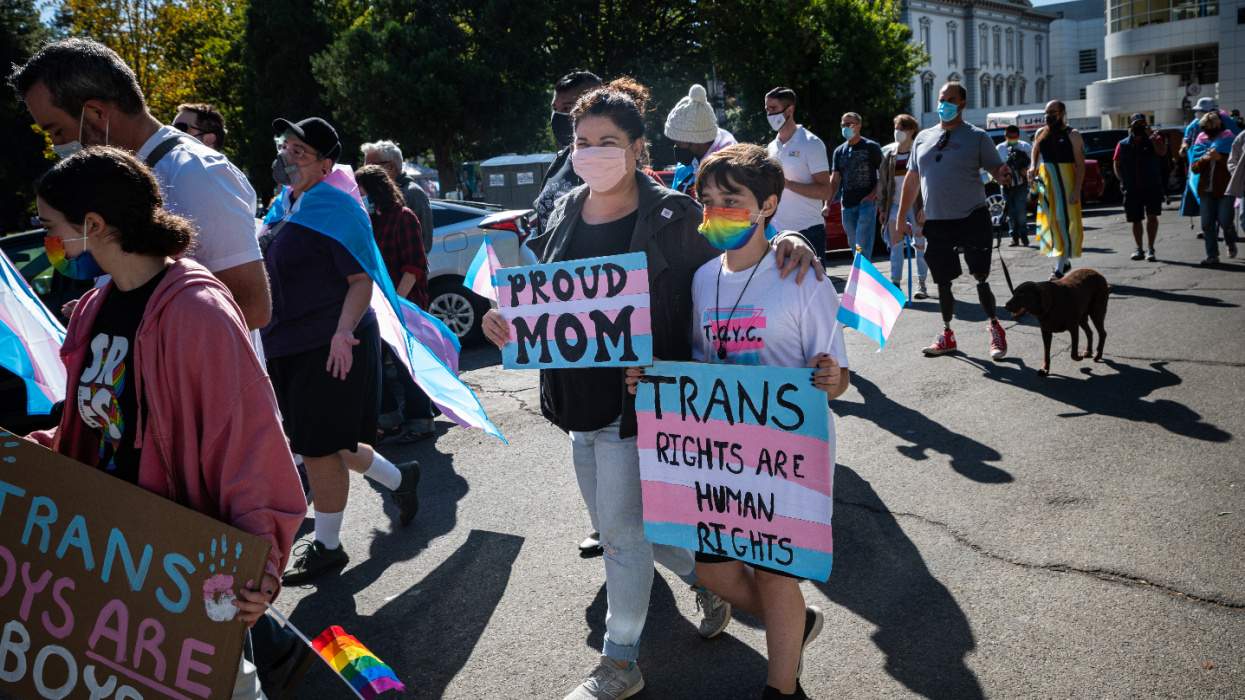
Kansas Republicans are trying to take away currently valid driver’s licenses from transgender people in the state if they have corrected the gender marker on them in a new bill that has also been expanded – under a sneaky maneuver that allows changes to a bill without a public hearing – to be one of the “most extreme” bathroom bills in the nation.

H.B. 2426 was already very anti-trans. It defines “gender” under the law in terms of “chromosomes,… hormones, gonads and nonambiguous internal and external genitalia present at birth” and says that driver’s licenses can only have someone’s sex assigned at birth on it. The bill instructs the state government to invalidate all driver’s licenses that do not have a gender marker on them that reflects a person’s sex assigned at birth and to reissue new driver’s licenses.

Related

GOP lawmakers pass “most extreme anti-LGBTQ+ bill” as protestors explained how it’s unworkable

But state Republican lawmakers expanded the bill last week, adding a strict anti-trans bathroom ban to a bill already seeking to ban trans Kansanians from changing the gender markers on their driver’s licenses.

The legislators used a state procedure called gut-and-go, which allows lawmakers to completely replace an existing bill’s language with pretty much anything they want while bypassing a public hearing.

Insights for the LGBTQ+ community

Subscribe to our briefing for insights into how politics impacts the LGBTQ+ community and more.
Subscribe to our Newsletter today

Even before the addition of the bathroom amendment, Kansas lawmakers were already trying to push the bill through with as little public input as possible.

Republicans introduced the gender marker aspect of the bill with less than 24 hours’ notice before a public hearing. But residents nonetheless rose to the occasion, submitting hundreds of testimonies opposing the bill.

“You had a bill introduced one day at 3:58 p.m., it was scheduled for a hearing the next day, less than 24 hours notice,” state House minority leader Brandon Woodard (D) told the Topeka Capital-Journal. “Testimony had to be submitted by 10 a.m., and yet Kansans cobbled together hundreds of pieces of testimony that we were still able to print and submit.”

Republicans, Woodard said, “do those sorts of things in an attempt to shield. They know that the public’s not on the side with them. That’s not civil. When we delivered those pieces of testimony, the committee assistant said, ‘Oh my goodness, this is going to take me days and days to upload.’ I said, ‘Next time, the chair should consider giving people and Kansans a couple of days notice.'”

After all that, the Republicans weren’t done. Democrats are enraged over the addition of the bathroom amendment, proposed by State Rep. Bob Lewis (R). “We all thought that this bill was probably a bathroom bill, and now it’s showing its true colors,” state Rep. John Carmichael (D) told the Kansas Reflector.

“What this bill is about, with this amendment, is making it so that people who are transgender or people who are intersex have no safe place to go to the bathroom.”

“This is an attempt to obfuscate what we’re doing here,” Carmichael added. “If you’re in favor of a lack of transparency, if you’re in favor of taking bill numbers and playing them like a shell game, this is the amendment for you.” 

Lewis claimed the amendment was “for privacy concerns and for public safety concerns.”

“I think this is a necessary bill,” he told the Capital-Journal.

Trans journalist Erin Reed called the bill “the most extreme anti-transgender measure in the United States,” explaining that it could punish trans people who use the bathroom that does not align with their sex assigned at birth with a misdemeanor with possible jail time.

But what “turbocharges it,” she said, is a provision allowing individual people to sue trans people for using the bathroom they deem “incorrect.”

“Critically, nothing in the provision limits its application to publicly owned buildings,” Reed explained. “As written, it would not only be the first bathroom bounty law to target transgender people directly, but also the first to extend a bathroom ban into private spaces—effectively creating the nation’s first private bathroom ban if enacted by empowering bounty hunters to search for trans people in bathrooms.”

Reed said she confirmed with multiple legal experts and lawmakers that, despite the bill appearing to only target public spaces, it would also apply to private bathrooms.

The bill is supported by Kansas Attorney General Kris Kobach (R). Republicans have made it a major priority and are trying to pass it as quickly as possible. Democratic Kansas Gov. Laura Kelly will likely veto it if it makes it to her desk.

“If passed,” Reed said, “what follows would be the bill’s most consequential test: an effort to override that veto in a Legislature where Republicans currently hold a veto-proof majority, but where some may view the bill as too extreme. For transgender people in the state, that effort may be the most consequential in years.”

Subscribe to the LGBTQ Nation newsletter and be the first to know about the latest headlines shaping LGBTQ+ communities worldwide.

Saga OpenClaw (ClawdBot, Moltbot) : enjeux techniques, juridiques et éthiques d’un assistant IA open source

Né en novembre 2025, Clawd, un projet open source IA, a été renommé Moltbot sous la pression juridique de Anthropic (Claude), puis OpenClaw rapidement.

Nous passerons en revue dans cet article la chronologie des faits, les enjeux techniques, juridiques et éthiques, dans un monde open source, projet dont la diffusion a explosé pour bien des raisons…

Logo OpenClaw

Sommaire

Chronologie

ClawdBot de novembre 2025 au 27 janvier 2026

Le projet débute en novembre 2025 sous le nom de Clawdbot, lancé par l'ingénieur autrichien Peter Steinberger, développeur autrichien et fondateur de PSPDFKit. Ce prototype de « WhatsApp Relay » connecte l'IA aux applications de messagerie pour automatiser des tâches système. Le succès est immédiat avec 60 000 étoiles GitHub en seulement trois jours. Le nom fait initialement référence à l'outil Claude d'Anthropic. En outre, le nom et le logo évoquent le homard, symbole repris dans l’identité visuelle du projet.

ClawdBot connaît une adoption rapide dès sa publication sur GitHub. Le projet vise explicitement une alternative locale et contrôlée aux assistants IA centralisés.

MoltBot du 27 au 29 janvier 2026

Le 27 janvier 2026, la firme Anthropic demande un changement de nom pour éviter toute confusion avec sa marque « Claude ». Peter Steinberger rebaptise alors le projet Moltbot, évoquant la mue du crustacé. Ce changement intervient dans un contexte de couverture médiatique maximale. La transition est techniquement précipitée, et elle met en lumière les fragilités organisationnelles liées à une croissance trop rapide. On voit apparaître des clones, des faux dépôts et des tentatives d’escroquerie, par exemple le vol de comptes sociaux par des escrocs et le lancement d'un faux jeton de cryptomonnaie nommé $CLAWD.

OpenClaw depuis 30 janvier 2026

Le 30 janvier 2026, le projet adopte son identité définitive : OpenClaw. Une vérification juridique préalable est effectuée. Les domaines et identités associées sont sécurisés. Ce nouveau nom souligne l'ancrage dans le logiciel libre tout en conservant l'hommage au homard d'origine. La transition est cette fois sécurisée par des recherches de marques et le blocage des noms de domaines. Le projet se stabilise et dépasse rapidement les 124 000 étoiles GitHub.

La phase OpenClaw marque une stabilisation. Plusieurs correctifs de sécurité sont publiés. La gouvernance s’ouvre à de nouveaux mainteneurs issus de la communauté.

OpenClaw

Description et définition

OpenClaw est un assistant IA personnel appartenant à la catégorie des agents autonomes. Il est conçu pour être installé et s'exécuter sur la machine de l'utilisateur (auto-hébergé). Contrairement aux chatbots classiques, il peut prendre des décisions et effectuer des actions concrètes sur un système d'exploitation sans supervision humaine constante. Le logiciel agit comme une couche d’orchestration entre modèles IA et services locaux. Il vise un usage personnel ou organisationnel. L’autonomie fonctionnelle est au cœur de sa proposition de valeur.

Le site web décrit OpenClaw de cette manière :

OpenClaw
The AI that actually does things.
Clears your inbox, sends emails, manages your calendar, checks you in for flights.
All from WhatsApp, Telegram, or any chat app you already use.

Installation

L'installation se passe en ligne de commande : téléchargement, puis lancement de la procédure d'installation, choix du LLM, choix du chat, et voilà.

One-liner

# Works everywhere. Installs everything. You're welcome. 🦞
curl -fsSL https://openclaw.ai/install.sh | bash

npm

# Install OpenClaw
npm i -g openclaw
# Meet your lobster
openclaw onboard

Hackable

# For those who read source code for fun
curl -fsSL https://openclaw.ai/install.sh | bash -s -- --install-method git

Fonctionnalités

L'agent exécute des commandes shell, lit et écrit des fichiers locaux, ou gère les courriels et agendas. Il peut piloter un navigateur web pour remplir des formulaires ou effectuer des recherches. Le système dispose d'une mémoire persistante lui permettant de conserver le contexte des conversations à long terme (context window). Il peut également initier des interactions de manière proactive via des notifications.

Architecture

Le logiciel repose sur Node.js et TypeScript. Son architecture est divisée en trois couches : une passerelle locale (Gateway), un agent qui gère le raisonnement (découpage et séquencement), et le moteur d'IA (LLM). Il utilise des protocoles WebSocket pour la communication bidirectionnelle entre ses composants. Les interactions s'effectuent via des applications tierces comme WhatsApp, Telegram, Slack ou Discord. Il connecte des modèles IA à des applications tierces. Le système est extensible via plugins. Plus de cinquante intégrations sont disponibles. L’architecture privilégie la modularité plutôt que l’intégration verticale.

Licence

OpenClaw est distribué sous la licence MIT. Cette licence permissive, reconnue par l’Open Source Initiative et la Free Software Foundation, autorise l'utilisation, la modification et la distribution du code, y compris à des fins commerciales. La seule obligation est d'incorporer la notice de licence et de copyright dans toutes les copies.

Dépendances

Le projet combine des briques libres et propriétaires. Les dépendances libres incluent Node.js, Puppeteer et Ollama pour l'exécution locale (inférence d'IA). En revanche, le fonctionnement optimal nécessite souvent des API propriétaires comme celles d'Anthropic (Claude) ou d'OpenAI (GPT). L'utilisation de ces services externes entraîne des coûts d'abonnement pour l'utilisateur, et l'envoi et éparpillement de données sur des clouds étrangers (pouvant être soumis aux lois extra-territoriales).

Succès communautaire et médiatique

Dynamiques et amplifications

Le projet a bénéficié d'un engouement lié au mouvement du « vibe coding » (développement assisté par IA). Des figures influentes comme Andrej Karpathy ont soutenu publiquement l'initiative.

Les réseaux sociaux et médias amplifient le phénomène. Des contributeurs rejoignent le dépôt en masse. Des usages spectaculaires sont massivement partagés. Une véritable sous-culture est née autour de l'achat de serveurs Mac mini dédiés pour faire tourner l'agent 24h/24. La mascotte du « homard spatial » devient un mème.
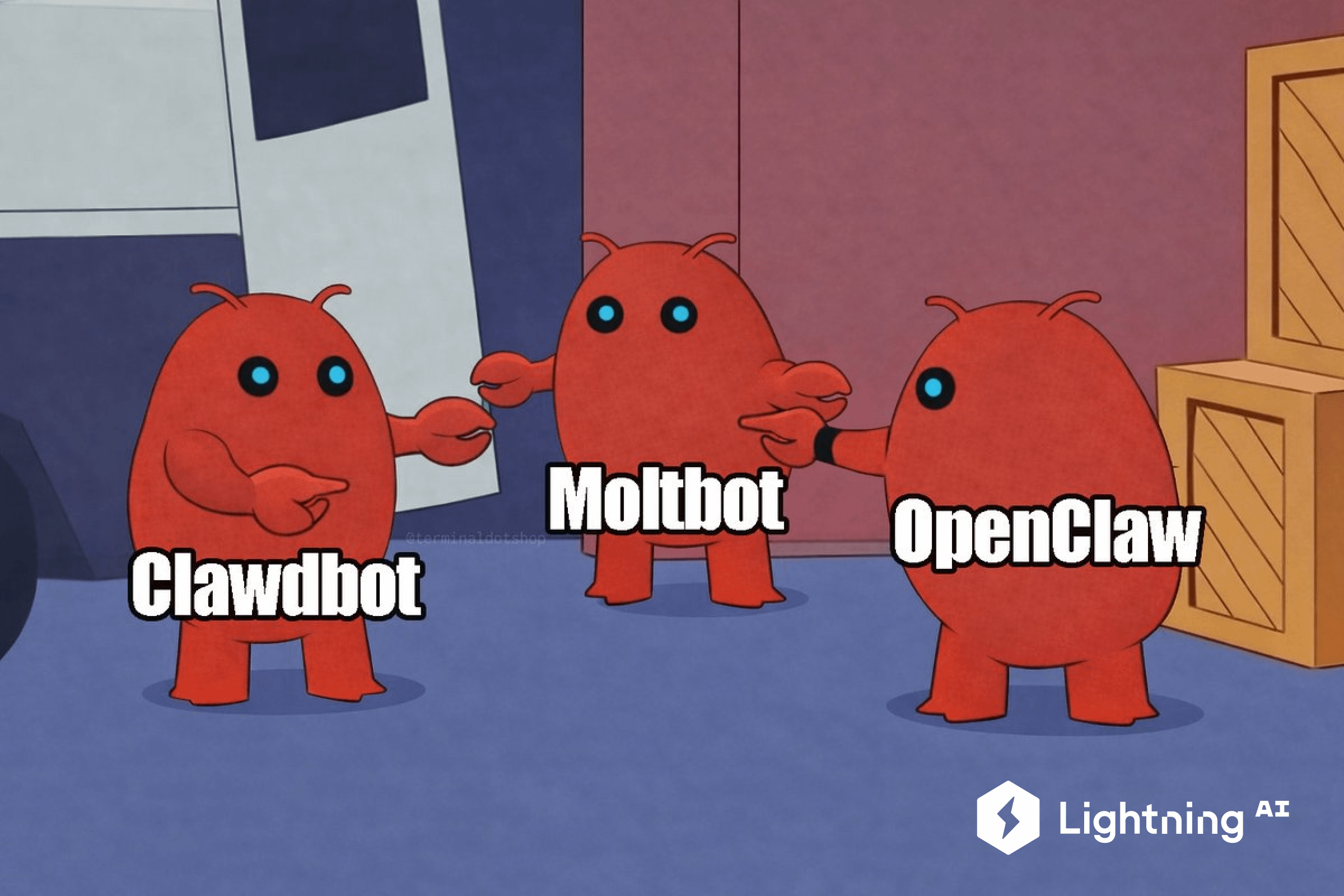
Mème inspiré de "Spider-Man Pointing at Spider-Man"

Métriques

La croissance a été l'une des plus rapides de l'histoire de l'open source:

  • Le dépôt GitHub atteint une visibilité exceptionnelle avec plus de 100 000 étoiles GitHub en une semaine.
  • Le projet a attiré plus de 2 millions de visiteurs en sept jours.
  • La communauté a développé plus de 500 extensions ou « skills » partagées sur Clawhub.

Des milliers d’instances sont déployées en quelques semaines. Un réseau social Motlbook dédié aux agents autonomes sans humains est créé, et plus de 2 100 agents y sont recensés en 48 heures.

La popularité précède largement la maturité technique.
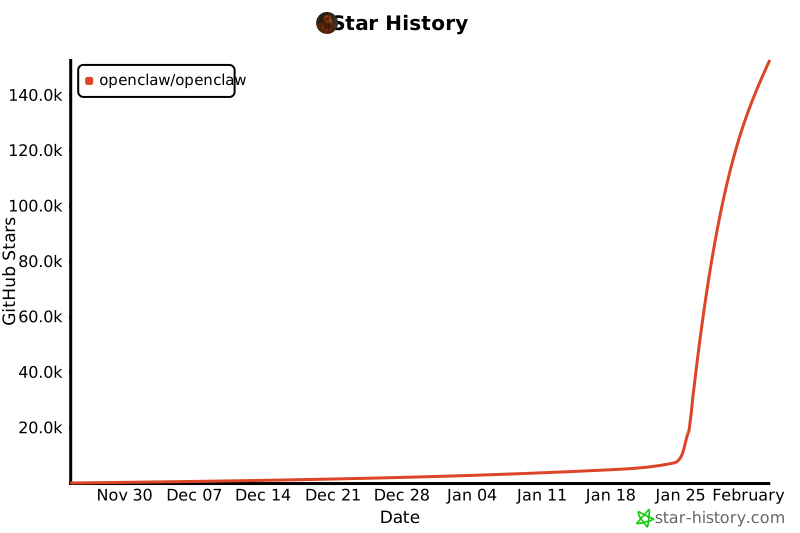
courbe des étoiles pour OpenClaw sur github

Aspects juridiques et légaux

Licences

La licence MIT ne pose pas de contrainte juridique majeure. Elle ne protège cependant ni le nom ni l’image du projet. L'utilisateur est responsable de l'installation et des conséquences de l'exécution de l'agent.

Cette licence n’encadre pas l’usage des modèles sous-jacents : bien que le code d'OpenClaw soit libre, les modèles d'IA qu'il appelle restent pour la plupart régis par les conditions d'utilisation strictes de leurs éditeurs respectifs. Cela limite l’indépendance réelle du projet. La licence du code ne garantit pas la liberté de l’ensemble de la chaîne.

Marques

La saga démontre la vigilance des entreprises face à la proximité phonétique des noms de projets. Anthropic a exercé son droit de marque pour protéger l'intégrité de son produit Claude. L’absence d’intention commerciale n’est pas déterminante. Peter Steinberger a dû consulter OpenAI avant le renommage final pour éviter de nouveaux conflits. Ce renommage illustre l’asymétrie entre acteurs : les projets libres restent vulnérables aux marques déposées.

Cadre réglementaire : RGPD et Cloud Act

Paradoxalement, l'auto-hébergement de la chaîne entière favorise la conformité au RGPD et la souveraineté, car les données restent sous le contrôle direct de l'utilisateur (responsable du traitement). Cela permet également d'éviter les risques du CLOUD Act américain en évitant le stockage et la transmission de données sur des serveurs étrangers. Toutefois, l'usage possible des services tiers et clouds publics de l'agent peut classer le système comme « à haut risque » selon l'AI Act européen, les données passant par des clouds soumis aux réglementations extra-territoriales.

Sécurité et vie privée

Stockage et fuite

L'architecture initiale stockait les clés d'API et l'historique des conversations en texte clair sur le disque. Des chercheurs ont identifié des milliers d'instances exposées sur Internet, divulguant des données sensibles. La concentration d'informations locales crée un point de défaillance unique (SPOF) en cas de compromission de la machine.

Authentification

Les premières versions ne requéraient pas d'authentification forte par défaut. Des interfaces d'administration étaient accessibles publiquement à cause de proxies/pare-feux mal configurés. Des correctifs récents ont supprimé les modes de connexion sans authentification pour durcir le système.

Injection de prompts

L'injection de prompts est la menace la plus critique et reste un problème non résolu dans l'industrie. Un attaquant peut insérer des instructions malveillantes dans un courriel ou un site web consulté par l'agent. L'IA peut alors exécuter des ordres indésirables, comme l'exfiltration de fichiers, en croyant obéir à son propriétaire.

Contrôle et privilèges

OpenClaw agit comme un super-utilisateur virtuel avec des accès profonds au système : l’agent dispose de privilèges élevés, il peut exécuter des commandes système, et il agit parfois avec des droits excessifs. Il combine l'accès aux données privées, l'exposition à des contenus non vérifiés et la capacité de communication externe. La séparation des privilèges est insuffisante par défaut, l’isolation reste complexe, et le risque augmente avec l’autonomie. Ce mélange de privilèges et autonomie transforme l'assistant en un vecteur d'attaque puissant s'il est détourné.

Durcissement et mitigation

Des correctifs ont été publiés après coup, nombre de commits concernent la sécurité, et la documentation actuelle reconnaît l’absence de configuration parfaite. La communauté recommande donc l'utilisation de conteneurs Docker pour isoler les sessions de l'agent. L'accès à distance doit être sécurisé par des tunnels comme Tailscale ou VPN. L'usage des droits « root » est désormais désactivé par défaut et nécessite une activation explicite (principe du moindre privilège).

Ces pratiques restent encore peu suivies, car difficiles à appliquer pour des non-experts, dans un contexte de déploiement rapide. La sécurité et la vie privée dépendent fortement du niveau technique de l’utilisateur, ne sont pas encore des acquis structurels.

Impact et enjeux de l'IA

Court terme

OpenClaw accélère la productivité en éliminant les tâches de manipulation de données entre applications, en automatisant et en autonomisant les processus via IA et agents. Cependant, il introduit un risque d'IA fantôme (Shadow AI) dans les entreprises où les employés déploient l'outil sans supervision de la direction informatique, ou d'alignement à une charte. La vitesse de diffusion a largement dépassé la maturité des mesures de sécurité initiales.

OpenClaw démocratise les agents autonomes : il rend accessibles rapidement et facilement des capacités jusque-là expérimentales, et il remet en cause d'une certaine manière le monopole des plateformes centralisées. Il expose aussi des utilisateurs non avertis à des risques élevés, la diffusion foudroyante dépasse la capacité de montée de connaissances. Le projet agit comme un révélateur.

Moyen terme

On peut amplement anticiper que le succès rapide du projet pourrait influencer la régulation et une standardisation des protocoles avancés d'agents, pour rendre ces assistants interchangeables. Le cadre réglementaire européen (voire mondial ?) obligera probablement à des certifications de sécurité plus strictes. Les grandes entreprises et organisations gouvernementales pourraient publier des versions sécurisées et certifiées du logiciel pour leurs besoins internes.

Ces nouveaux agents autonomes posent des questions inédites et à grande échelle. La sécurité pourrait devenir une obligation normative. Des outils d’audit spécialisés émergent, les pratiques de durcissement se structurent, OpenClaw sert de cas d’école.

Long terme

L'IA agentique pourrait redéfinir la souveraineté numérique en permettant à chacun de posséder son propre assistant local. Les agents autonomes pourraient devenir les principaux utilisateurs des systèmes numériques, rendant obsolètes certaines tâches manuelles de gestion. Cela transforme l’organisation du travail. L'enjeu éthique et social majeur sera l'imputabilité légale en cas de préjudice causé par une décision autonome de l'IA. La dépendance technologique augmente. La gouvernance devient centrale.

Prisme du logiciel et IA libre et open source

Ouverture

Le code source d'OpenClaw est totalement ouvert et auditable, respectant les critères du logiciel libre. Toutefois, l'ouverture est limitée par la dépendance aux modèles propriétaires dont les poids, les données et processus d'entraînement restent secrets et privateurs. Par exemple, le code ne contient à ce jour pas de télémétrie cachée. L’ouverture favorise l’innovation rapide par l'intelligence collective et l’appropriation communautaire, tout en facilitant bien évidemment les usages détournés.

Gouvernance

Le projet est passé d'une initiative solitaire à une gouvernance plus structurée intégrant plusieurs mainteneurs communautaires. Cette gestion collective ouverte renforce la résilience et l'anti-fragilité mais complexifie la coordination technique et sécuritaire. Les décisions critiques sont désormais partagées, et la sécurité est un enjeu majeur : la maturité dépendra de cette gouvernance.

Éthique

L'autonomie de l'IA pose des questions de responsabilité et met en évidence le risque d'erreurs invisibles ou noyées sans supervision humaine en temps réel et prise de décision sans humain. La frontière entre outil et acteur s’estompe. La transparence opérationnelle et l'auditabilité sont essentielles pour prévenir les usages malveillants tout en protégeant les données personnelles. L’éthique ne peut être entièrement déléguée aux modèles, elle dépend des choix d’architecture des développeurs et également dépend aussi des usages des utilisateurs.

Par conséquent, le fantasme d’une IA omniprésente inquiète et interroge sur la dépendance technologique. À long terme, on peut légitimement craindre que cette automatisation et autonomisation de tâches et processus à la complexité croissante prenne de l’ampleur. Ainsi la probabilité s’accroît de voir la remise en cause non seulement l'existence même de certains métiers, mais plus généralement de voir une dépendance de masse.

Souveraineté

L'auto-hébergement complet permet aux utilisateurs de rester maîtres de leur infrastructure et de leurs données. Cela réduit la dépendance envers les géants technologiques et évite le verrouillage propriétaire. Cela est à mettre en perspective avec l'utilisation des clouds publics et services centralisés, par exemple les modèles d'IA et messageries instantanées propriétaires et étrangers.

Intelligence collective

La force du projet réside dans son écosystème de compétences développées par des contributeurs du monde entier. Cette collaboration expérimentale et novatrice permet d'enrichir l'agent et l'écosystème. Nombre de failles ont pu être identifiées publiquement.

Au-delà du code

Une véritable IA open source devrait inclure les poids du modèle, les données d'entraînement et les processus d'apprentissage et de raffinement. OpenClaw est une infrastructure libre, mais n'est pas une « IA open source » au sens strict, en particulier lorsqu'il utilise des modèles fermés et opaques. Cette asymétrie limite l’auditabilité globale réelle. Elle interroge la notion d’IA libre et/ou open source

Résilience et anti-fragilité

Malgré son jeune âge, OpenClaw a déjà survécu à une crise majeure, et le projet s’étant restructuré, la communauté ayant absorbé le choc. Cette résilience dépendra de la capacité à réagir aux risques majeurs et à grande échelle, la sécurité devant précéder le succès. Le logiciel libre n’immunise pas contre les risques. L'architecture ouverte permet par exemple de basculer immédiatement vers d'autres modèles en cas de changement de politique d'un fournisseur d'API. Si le créateur abandonne le projet, la communauté peut forker le code pour assurer la pérennité de l'outil.

La saga OpenClaw renforce le débat sur la nécessité de surveiller et contrôler ces agents et de mettre garde-fous à tous niveaux.

Liens

Commentaires : voir le flux Atom ouvrir dans le navigateur

Syrie : la froide logique d’Ahmed Al-Charaa

Le président syrien a pris à revers tous les préjugés occidentaux. Venant du jihadisme, il ne pouvait être qu’un psychorigide sectaire, voire fanatique. Il se révèle être un réaliste froid. Il n’a pas hésité à lancer ses troupes dans les territoires kurdes sous Administration autonome du nord et de l’est de la Syrie (AANES). Puis, […]

Epstein : l’onde de choc

La nouvelle salve de documents liés à l’affaire Jeffrey Epstein, celle de trafic sexuel pédocriminel, ravive le scandale. Aux États-Unis, à l’aune d’archives plus massives et détaillées, les révélations font peser une pression directe sur Donald Trump. En Europe, et notamment en France, plusieurs noms issus des sphères politique, économique et culturelle apparaissent dans les […]

IA : Deux plateformes mises en demeure de supprimer le clonage de voix de doubleurs français

Deux plateformes américaines ont été mises en demeure par huit comédiens français de supprimer sous huit jours les clonages par intelligence artificielle de leurs voix. Huit comédiennes et comédiens de doublage français ont mis en demeure deux sociétés américaines, VoiceDub et Fish Audio, de retirer de leurs plateformes tous les « modèles de clonage exploitant [leur] […]

Gaza : Israël vire Médecins sans frontières

Chantage morbide. Israël a décidé que Médecins sans frontières ne pourra plus continuer ses activités dans la bande de Gaza. La raison ? L’ONG (et 36 autres sont concernées par le même motif) n’a pas voulu donner la liste de ses employés palestiniens. Et l’on comprend pourquoi : depuis le 7 octobre 2023, plusieurs centaines ont été tués par […]

« Sale arab » : dans les casernes de pompiers, des syndicats face à un racisme « décomplexé »

L’affaire éclate en quelques jours. Le 20 janvier, puis le 22 janvier, deux sapeurs-pompiers (1) ouvrent leurs placards personnels et font cette découverte : du jambon recouvert de messages racistes et islamophobes : « #2027 », « sale arab », « allah ». La direction du Sdis (service départemental d’incendie et de secours) du Val-d’Oise et les syndicats sont informés rapidement. Les agents portent plainte. […]

A Texas university just scrapped its women’s and gender studies course

Texas A&M announced on Friday (30 January) that it will be eliminating its women’s and gender studies academic courses.

In a letter sent to faculty and staff obtained by KBTX, Provost and Executive Vice President Dr. Alan Sams said the decision was made “as part of the broader implementation of the recently updated Systems policy”.

He claimed that the Texas university “made the difficult decision to begin winding down the Women’s and Gender Studies (WGST) academic programs, including the BA, BS, Graduate Certificate and the Minor”, claiming it was due to “enrolment over the past several years”.

READ MORE: University professor banned from teaching about Plato over ‘sexuality’ rules

The program currently has 25 students seeking a major and 31 seeking a minor. Students already enrolled will be allowed to complete their programs over the next six semesters, but no new students will be accepted.

This comes after Texas A&M University System Board of Regents passed a policy last autumn restricting how race and gender could be discussed in class and ordered a sweeping review of course offerings.

It outlined that faculty may not advocate “race or gender ideology” or topics related to sexual orientation or gender identity unless a campus president grants a written exception for certain non-core or graduate-level courses that serve a necessary or educational purpose.

Share your thoughts! Let us know in the comments below, and remember to keep the conversation respectful.

The post A Texas university just scrapped its women’s and gender studies course appeared first on PinkNews | Latest lesbian, gay, bi and trans news | LGBTQ+ news.

Robotics will break AI infrastructure: Here's what comes next

Robotics is forcing a fundamental rethink of AI compute, data, and systems design

Partner Content Physical AI and robotics are moving from the lab to the real world— and the cost of getting it wrong is no longer theoretical. With robots deployed in factories, warehouses, and public settings, large-scale simulation has become tightly coupled with real-world operations.…

The Graph Theory of Circuit Sculptures

A cuboctahedron (a kind of polyhedron) made out of LED filaments is being held above a man's hand in front a computer screen.

Like many of us, [Tim]’s seen online videos of circuit sculptures containing illuminated LED filaments. Unlike most of us, however, he went a step further by using graph theory to design glowing structures made entirely of filaments.

The problem isn’t as straightforward as it might first appear: all the segments need to be illuminated, there should be as few powered junctions as possible, and to allow a single power supply voltage, all paths between powered junctions should have the same length. Ideally, all filaments would carry the same amount of current, but even if they don’t, the difference in brightness isn’t always noticeable. [Tim] found three ways to power these structures: direct current between fixed points, current supplied between alternating points so as to take different paths through the structure, and alternating current supplied between two fixed points (essentially, a glowing full-bridge rectifier).

To find workable structures, [Tim] represented circuits as directed graphs, with each junction being a vertex and each filament a directed edge, then developed filter criteria to find graphs corresponding to working circuits. In the case of power supplied from fixed points, the problem turned out to be equivalent to the edge-geodesic cover problem. Graphs that solve this problem are bipartite, which provided an effective filter criterion. The solutions this method found often had uneven brightness, so he also screened for circuits that could be decomposed into a set of paths that visit each edge exactly once – ensuring that each filament would receive the same current. He also found a set of conditions to identify circuits using rectifier-type alternating current driving, which you can see on the webpage he created to visualize the different possible structures.

We’ve seen some artistic illuminated circuit art before, some using LED filaments. This project doesn’t take exactly the same approach, but if you’re interested in more about graph theory and route planning, check out this article.

Unicancer table sur la réforme de la tarification de la radiothérapie pour valoriser les apports de l'IA

GENOLIER (Suisse) (TICsanté) - Le réseau Unicancer, qui réunit les 18 centres de lutte contre le cancer (CLCC) français, espère que la réforme de la tarification permettra de valoriser les innovations en radiothérapie, dont l'intelligence artificielle (IA), a expliqué sa déléguée générale, Sophie Beaupère, lors d'un voyage de presse qu'il organisait avec Accuray, au Genolier Innovation Hub en Suisse le 15 janvier.

AOC slams Republicans for trying to politicize Epstein investigation

Rep. Alexandria Ocasio-Cortez (D-NY) slammed Republicans for trying to politicize the investigation into late child sex trafficker Jeffrey Epstein’s associates.

The House investigation into Epstein resulted in a subpoena of former President Bill Clinton and former Secretary of State Hillary Clinton, with some Republicans saying on social media that Democrats will be scared to pursue an investigation into Epstein because the Clintons might be implicated. Moreover, Republicans are hoping to draw attention away from the current president’s long friendship with Epstein and all the times he’s mentioned in the Epstein files that have been released so far by focusing on the Clintons.

Related

Trump had Epstein killed because he was going to “name names,” Epstein’s brother claims

Ocasio-Cortez did not seem scared yesterday when asked about the Clintons agreeing yesterday to testify in the House about Epstein, stressing that the investigation should be bipartisan.

“Why haven’t so many people been prosecuted? Why have they continued to not be prosecuted?” she said, bringing up how the House passed a bill to get the Department of Justice to release the Epstein files, which still have not been fully released.

Insights for the LGBTQ+ community

Subscribe to our briefing for insights into how politics impacts the LGBTQ+ community and more.
Subscribe to our Newsletter today

“Why is Pam Bondi and the Department of Justice continuing to hide the majority of the Epstein files still, which they admit to the public contain much more, even more direct evidence of shocking, genuinely shocking crimes and sexual abuse of women, minors, and also increasingly men that are saying they were trafficked in connection to the Epstein orbit? And so we need to get to the bottom of it.”

Ocasio-Cortez said that she doesn’t care about what party a perpetrator belongs to; she wants people to be brought to justice. “I think at the end of the day, it does not matter if you are a- in terms of who is implicated in this, you’re a Republican, you’re a Democrat, you’re a donor, you’re a- I don’t, it doesn’t matter. We are talking about sexual crimes and trafficking of children, women, and victims of all kinds.”

AOC: Why haven’t so many people been prosecuted? Why are Pam Bondi and the DOJ continuing to hide the majority of the Epstein files, which they admit contain even more direct evidence of genuinely shocking crimes and abuse of women, minors, and increasingly men who say they were… pic.twitter.com/HhglKyXRM9

— Acyn (@Acyn) February 3, 2026

Subscribe to the LGBTQ Nation newsletter and be the first to know about the latest headlines shaping LGBTQ+ communities worldwide.

Bridgerton boss responds to Benedict bisexual backlash as he falls for woman

Netflix’s hit period drama Bridgerton returned to screens last week, as the first four episodes of Season 4 were released 29 January.

This season details LGBTQ+ character Benedict Bridgerton, played by Luke Thompson, and a mysterious woman known as the Lady in Silver, with whom he gets caught up in a love affair with. Viewers know that she is actually a maid, Sophie Baek (Yerin Ha).

As Season 3 of Bridgerton highlighted Benedict’s relationships with both men and women, some fans were surprised to see this new pairing. However, his bisexuality was hinted at in the first episode of season four, which left fans branding Benedict an “icon”.

READ MORE: Jonathan Bailey makes Bridgerton return as Anthony and Kate introduce baby

Speaking in an interview with Variety on 29 January, showrunner Jess Brownell addressed Benedict’s bisexuality and how the show has navigated his character ending up with a woman.

“It’s really important that just because someone might end up in a heterosexual-presenting relationship, that does not negate their queerness.

“I think Benedict’s queerness will always be a piece of his identity.

“And when we were talking about representation, I don’t think there’s a lot of representation that I’ve seen of bisexual men,” Brownell said.

Bridgerton is available to stream on Netflix.

Share your thoughts! Let us know in the comments below, and remember to keep the conversation respectful.

The post Bridgerton boss responds to Benedict bisexual backlash as he falls for woman appeared first on PinkNews | Latest lesbian, gay, bi and trans news | LGBTQ+ news.

Hollyoaks star pitched cross-dressing story himself for important reason

Hollyoaks actor Jonny Labey has opened up about suggesting a cross-dressing storyline for his character and why it made sense to do.

Labey stars as Rex Gallagher, a former gang member and the son of Fraser Black (Jesse Birdsall) and the late Grace Black (Tamara Wall). Rex has not been the nicest person to the residents of Hollyoaks but is trying to make amends whilst also processing his grief over Grace’s death.

As part of a new storyline, Rex was seen admiring his mother’s clothes and put on her lipstick. That story will continue as Rex explores this side of himself with the help of Ro Hutchinson, a trans character played by Leo Cole.

Speaking to Metro about introducing the storyline, Labey said he wanted to make sure the show’s portrayal was sensitive. “I didn’t want it to be a storyline where they just decided, ‘Now it’s this’,” he said. “It has to make sure it’s also coherent to what Rex has been through and make sense to that,” he added.

Labey then explained he pitched the idea as a way of Rex dealing with a “lost identity” from his childhood. “I thought there needed to be something where he was able to express his freedom,” Labey said.

Jonny Labey as Rex Gallagher in Hollyoaks. (Lime Pictures)

“I thought that as a gay younger boy and teenager, Rex probably was very dancey and liberal and a lot more queer in terms of his acceptance and how he physicalised himself and presented himself. Then all of these layers of gangs and stuff was built on top of it.”

Rex and Ro will bond in future episodes over questions around identity and offer themselves as pillars to each other.

Hollyoaks and the LGBT Foundation are collaborating on the storyline. Matthew James Banfield, the organisation’s Head of Marketing, Communications and Editorial also spoke to Metro.

“What we didn’t want with this storyline, and what Hollyoaks were really open about, was that they were really keen to avoid falling into tropes and things like that,” he said.

Banfield continued: “They were really open about the feedback and really wanted to work with LGBTQ+ people, non-binary people and gender diverse people as well to get this right. They were very open about where they needed our support, our knowledge and our lived experience as well.”

Earlier this year it was announced that John Paul McQueen (James Sutton), a pioneering gay character in British soap history, is leaving the show. McQueen’s exit will reportedly be “explosive”.

Share your thoughts! Let us know in the comments below, and remember to keep the conversation respectful.

The post Hollyoaks star pitched cross-dressing story himself for important reason appeared first on PinkNews | Latest lesbian, gay, bi and trans news | LGBTQ+ news.

Azure outages ripple across multiple dependent Microsoft services

Managed Identity and virtual machine failures triggered knock-on problems throughout cloud platform

Microsoft has reported two Azure service wobbles in as many days, including a disruption affecting Virtual Machine management ops yesterday and a Managed Identity for Azure resources outage in East US and West US regions today.…

An AI plush toy exposed thousands of private chats with children

Bondu’s AI plush toy exposed a web console that let anyone with a Gmail account read about 50,000 private chats between children and their cuddly toys.

Bondu’s toy is marketed as:

“A soft, cuddly toy powered by AI that can chat, teach, and play with your child.”

What it doesn’t say is that anyone with a Gmail account could read the transcripts from virtually every child who used a Bondu toy. Without any actual hacking, simply by logging in with an arbitrary Google account, two researchers found themselves looking at children’s private conversations.

What Bondu has to say about safety does not mention security or privacy:

“Bondu’s safety and behavior systems were built over 18 months of beta testing with thousands of families. Thanks to rigorous review processes and continuous monitoring, we did not receive a single report of unsafe or inappropriate behavior from Bondu throughout the entire beta period.”

Bondu’s emphasis on successful beta testing is understandable. Remember the AI teddy bear marketed by FoloToy that quickly veered from friendly chat into sexual topics and unsafe household advice?

The researchers were stunned to find the company’s public-facing web console allowed anyone to log in with their Google account. The chat logs between children and their plushies revealed names, birth dates, family details, and intimate conversations. The only conversations not available were those manually deleted by parents or company staff.

Potentially, these chat logs could been a burglar’s or kidnapper’s dream, offering insight into household routines and upcoming events.

Bondu took the console offline within minutes of disclosure, then relaunched it with authentication. The CEO said fixes were completed within hours, they saw “no evidence” of other access, and they brought in a security firm and added monitoring.

In the past, we’ve pointed out that AI-powered stuffed animals may not be a good alternative for screen time. Critics warn that when a toy uses personalized, human‑like dialogue, it risks replacing aspects of the caregiver–child relationship. One Curio founder even described their plushie as a stimulating sidekick so parents, “don’t feel like you have to be sitting them in front of a TV.”

So, whether it’s a foul-mouth, a blabbermouth, or just a feeble replacement for real friends, we don’t encourage using Artificial Intelligence in children’s toys—unless we ever make it to a point where they can be used safely, privately, securely, and even then, sparingly.

How to stay safe

AI-powered toys are coming, like it or not. But being the first or the cutest doesn’t mean they’re safe. The lesson history keeps teaching us is this: oversight, privacy, and a healthy dose of skepticism are the best defenses parents have.

  • Turn off what you can. If the toy has a removable AI component, consider disabling it when you’re not able to supervise directly.
  • Read the privacy policy. Yes, I knowall of it. Look for what will be recorded, stored, and potentially shared. Pay particular attention to sensitive data, like voice recordings, video recordings (if the toy has a camera), and location data.
  • Limit connectivity. Avoid toys that require constant Wi-Fi or cloud interaction if possible.
  • Monitor conversations. Regularly check in with your kids about what the toy says and supervise play where practical.
  • Keep personal info private. Teach kids to never share their names, addresses, or family details, even with their plush friend.
  • Trust your instincts. If a toy seems to cross boundaries or interfere with natural play, don’t be afraid to step in or simply say no.

We don’t just report on privacy—we offer you the option to use it.

Privacy risks should never spread beyond a headline. Keep your online privacy yours by using Malwarebytes Privacy VPN.

[Tuto] Comment certifier gratuitement une adresse IP avec Let’s Encrypt

Après une phase de test, Let’s Encrypt permet désormais à tout le monde de certifier une adresse IP, permettant ainsi d’y accéder de manière sécurisée en HTTPS, comme c’est possible depuis des années avec un nom de domaine. Il reste quelques bugs, mais ça marche avec le serveur web caddy. On vous explique comment faire. […]

Remember when Trump’s lawyer said he has the power to fire all women & people over 40 if he wants

A lawyer for the Trump administration argued that the president has the authority to fire all women and people over 40 from federal positions if he so chooses.

“Could the president decide that he wasn’t going to appoint or allow to remain in office any female heads of agencies or any heads over 40 years old?” Judge Karen Henderson of the D.C. Circuit Court of Appeals asked Deputy Assistant Attorney General Eric McArthur, according to a transcript from the Daily Beast.

Related

Federal judge blocks “highly unusual” & “chaotic” anti-trans military ban

“I think that that would be within the president’s constitutional authority under the removal power,” McArthur said. “There would be separate questions about whether that would violate other provisions of the Constitution.”

Insights for the LGBTQ+ community

Subscribe to our briefing for insights into how politics impacts the LGBTQ+ community and more.
Subscribe to our Newsletter today

The conversation took place during oral arguments regarding the president’s firing of Merit Systems Protection Board (MSPB) member Cathy Harris and National Labor Relations Board member Gwynne Wilcox, both of whom were nominated to their positions by former President Joe Biden. Wilcox was the first member of the National Labor Relations Board ever removed by a president and is also the first Black woman on the board.

Two district judges have already ruled separately that Trump illegally fired both Wilcox and Harris, but the administration has appealed.

In response to McArthur’s question on whether firing women and people over 40 at will would violate other parts of the Constitution, Judge Justin Walker brought up the 14th Amendment.

Judge Patricia Millett responded, “What about the over 40 part? All you need is a rational basis under the Constitution. Is ‘I desire to exercise my removal power’ a rational basis?”

“I think it might well be a rational basis,” McCarthur said.

He continued, “I don’t wanna get out over my skis here. Obviously, all of these are sensitive questions. When the department makes decisions about this, this is made to the very top — the acting solicitor general. And I do not wanna get out in front of the president or the acting solicitor general on any of these issues.”

The Trump administration has been firing federal workers in droves with no regard for the law. Harris, for example, can only be removed from her position for cause rather than at the president’s will. When she received an email that she had been terminated, no cause was given.

In his 35-page opinion earlier this month, U.S. District Judge Rudolph Contreras declared Trump’s termination of Harris “unlawful” and that the administration did “not dispute that Harris has been efficient and effective in her role at the MSPB.” Contreras ordered she be reinstated.

Judge Beryl A. Howell’s ruling regarding Wilcox was even more pointed.

“The President does not have the authority to terminate members of the National Labor Relations Board at will, and his attempt to fire plaintiff from her position on the Board was a blatant violation of the law.”

Howell also declared, “An American president is not a king.”

Subscribe to the LGBTQ Nation newsletter and be the first to know about the latest headlines shaping LGBTQ+ communities worldwide.

New data shows gay and bi folk have shorter life expectancies than straight people

A new data analysis report from the Office for National Statistics has shown that gay, lesbian and bisexual people typically have shorter life expectancies than heterosexual people.

The results found that gay and bisexual men lived on average 1.2 years less than straight men, while lesbian and bisexual women lived 0.9 years less than straight women.

This marks the first time the ONS has estimated life expectancy by sexual orientation for England and Wales, following orientation being included in the national census in 2021.

READ MORE: Drug and alcohol deaths significantly higher among queer people, study finds

The ONS has confirmed that it cannot determine if sexual orientation is the driver of the difference in life expectancy at this time.

It follows worrying data released this week which found that one in six children who died by suicide in England between April 2019 and March 2025 were LGBTQ+.

The figures, obtained by QueerAF via a Freedom of Information request to the National Child Mortality Database, showed that 107 out of the 647 children who died by suicide during that time were LGBTQ+, with 46 being transgender.

Readers affected by the issues raised in this story are encouraged to contact Samaritans free on 116 123 (www.samaritans.org) or Mind on 0300 123 3393 (www.mind.org.uk). Readers in the US are encouraged to contact the National Suicide Prevention Line on 1-800-273-8255.

The post New data shows gay and bi folk have shorter life expectancies than straight people appeared first on PinkNews | Latest lesbian, gay, bi and trans news | LGBTQ+ news.

Palantir declares itself the guardian of Americans' rights

CEO Alex Karp meets criticism with soaring revenues and a sermon

Opinion Palantir had a whopper of a Q4, showing accelerating revenue growth, beating Wall Street's profit estimates, and enjoying a share price jump of as much as 11% during pre-market trading on Tuesday before coming back down to earth.…

Russian man fined for “destroying family values” after posting old photo of Queen in drag

A 22-year-old Russian man has been fined under the country’s “LGBT Propaganda” law for posting a photo on social media showing members of the rock band Queen dressed in drag.

David Gevondyan lost his appeal to the Moscow City Court, which declared the photograph – a still from the music video for the song I Want to Break Free – showed a “positive assessment of the rationale for non-traditional sexual relations, characterized as natural.”

Related

Russian publisher closes imprint known for selling LGBTQ+ books after government raid

The court ruled his actions “distort” the concept of a heterosexual relationship and are akin to “destroying family values.”

The photo in question (shown on Instagram below) was part of a promo shoot for the music video. It shows the four band members posing by a stairwell inside a feminine home.

Never Miss a Beat

Subscribe to our newsletter to stay ahead of the latest LGBTQ+ political news and insights.
Subscribe to our Newsletter today

Under Russian law, so-called LGBTQ+ “propaganda” has been banned in the presence of minors since 2013. In late 2022, Russian President Vladimir Putin signed legislation expanding the 2013 law to effectively outlaw any public expression of LGBTQ+ life in the country. And in 2023, Russia’s Supreme Court declared the “international LGBT social movement” an “extremist organization.”

“Public approval and the promotion of the attractiveness of non-traditional sexual relations is dangerous not only for children and young people who are not yet capable of critical thinking, but also for society as a whole,” the ruling stated, as reported by Russia’s Verstka Media, “as it poses a threat to the country’s demographic growth and economic development.”

The court also slammed Gevondyan for having previously posted photos of men in skirts and two men kissing.

Gevondyan has been fined for three administrative offenses. He has also been charged with a fourth, “displaying extremist symbols,” after displaying a Ukrainian Insurgent Army flag.

Last year, independent news outlet Meduza reported that Russian officials and state-aligned media regularly describe Russia’s LGBTQ+ community as a network of “paramilitary groups” calling for an “open gender war,” who engage in “dehumanization” and “devil worship.”

The country has been cracking down on so-called “LGBT propaganda” as of late. In January, authorities charged executives at some of the country’s top streaming services with violating the law, which some have posited is connected to the success of gay hockey romance Heated Rivalry in the country.

Also in January, a young adult-focused imprint of Russia’s largest book publisher, Eksmo, shut down after being targeted by the government.

And in December, Russian officials  blocked access to U.S. children’s online gaming platform Roblox, claiming that it is “rife with inappropriate content that can negatively impact the spiritual and moral development of children.”

Subscribe to the LGBTQ Nation newsletter and be the first to know about the latest headlines shaping LGBTQ+ communities worldwide.

The Surprising Hackability Of A Knock-Off Chinese Toy Camera

My colleague Lewin on the other side of the world has recently bought himself a new camera. It’s a very cute little thing, a Kodak Charmera, the latest badge-engineered device to carry the venerable photography company’s name. It’s a keyring camera, not much bigger than my thumb, and packing a few-megapixel sensor and a little fixed-focus camera module. They’re all the rage and thus always sold out, so when I saw something similar on AliExpress for just under a tenner I was curious enough to drop in an order. How bad could it be?

A Blatant-Knock-Off With Interesting Internals

My G6 Thumb Camera arrived a few days later, as straightforward a copy of a branded product as I have seen, and while it’s by any measure not a high quality camera, I am pleasantly surprised how bad it isn’t. I’ve received a three megapixel camera with image and movie quality that’s far better than that of the kids toy cameras I’ve played with before at a similar price, and that’s something I find amazing. This isn’t a review of a cheap camera, instead it’s an investigation of what goes into a camera like this one. How can they make a camera that’s almost useful, for under a tenner?

If I were setting out to make this camera, I would reach for a microcontroller and one of the variety of cheap all-in-one camera modules on the market. You can buy just that for a similar price, the so-called ESP32-cam module, which pairs the Tensilica version of the microcontroller with a parallel-interface camera module. You can do all manner of hacks with an ESP32-cam and I have too, but unlike my knock-off Kodak it’s not quite fast enough for usable video. Plus, it doesn’t come with a battery and screen.

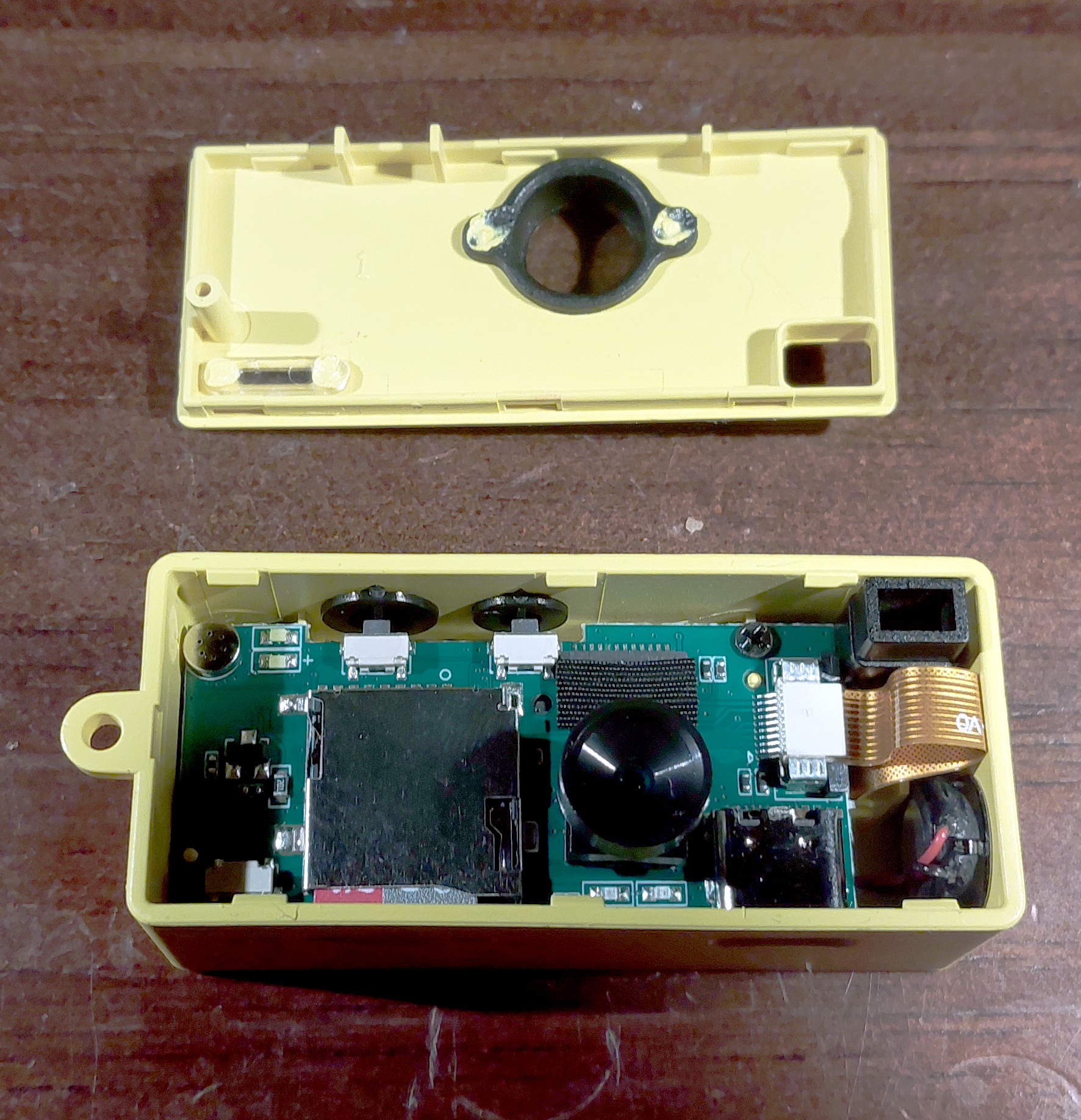
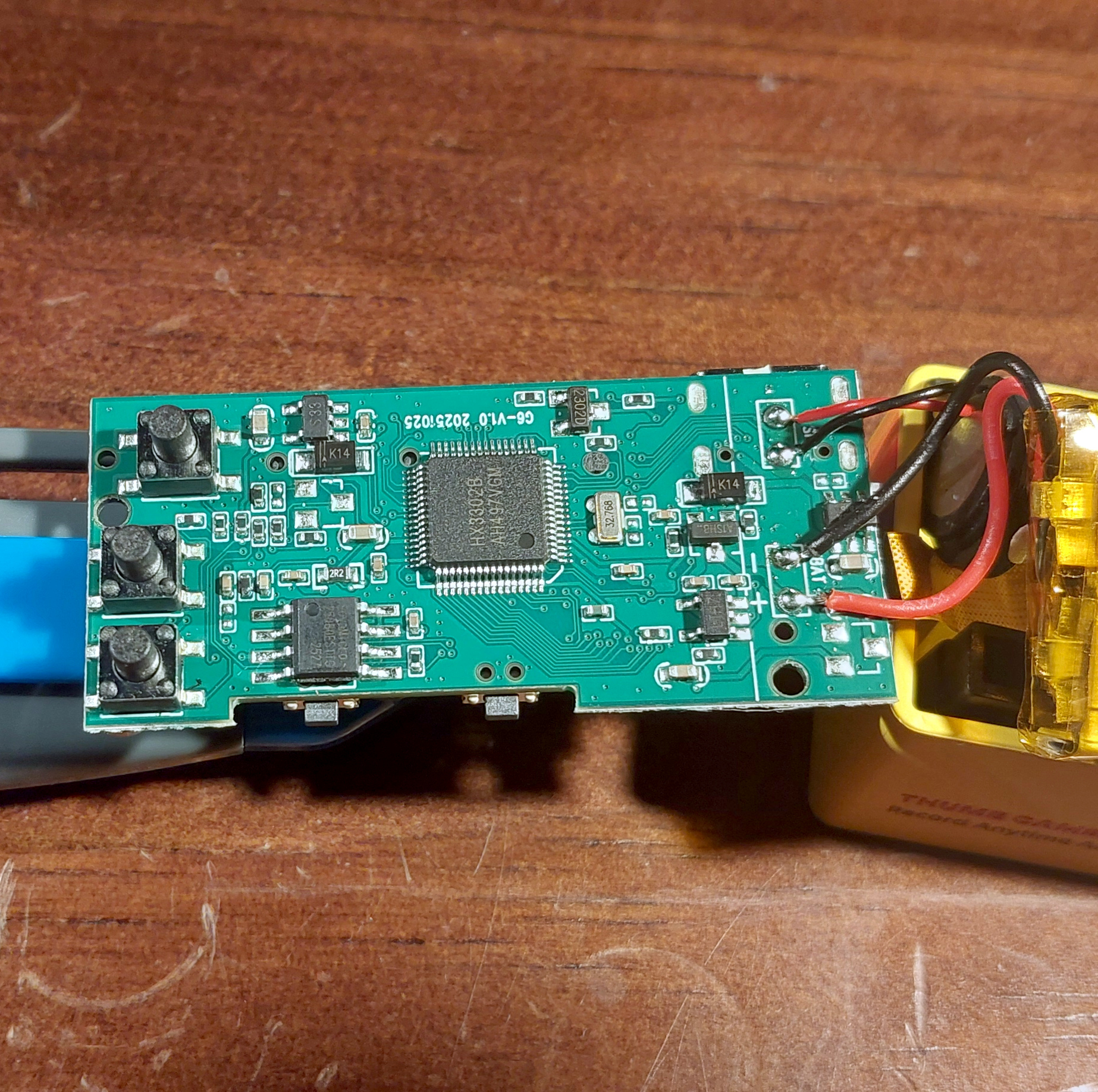
The little thumb camera is easy enough to crack open, and doing so reveals a small PCB with as expected a camera module dangling from it on a flexible PCB. It’s got a lens with an M8 mount which technically makes it an interchangeable lens camera, but we doubt anyone’s going to change lenses on this thing. Undoing a couple of screws, the board comes out along with the battery, speaker, and display connection, and on the reverse is the SoC, and a Flash memory chip. It’s an HX-Tech HX3302B, a dedicated IC for small cameras which appears in so many of these devices, but one which is sadly one of those Chinese chips for which almost no info can be found online. Oddly some of the best info comes from a familiar source, Sprite_TM has done a little hacking here and discovered that it has an openRISC 1000 core and the firmware is usually accessible, but beyond that no handy data sheets are to be had.

Just Good Enough To Be A Camera-As-A-Module

A 3D printed Super 8 cartridge inside a movie camera. On the right is a green Raspberry Pi Zero module, while in the foreground is an M12 lens camera module focusing on the film gate towards the back of the scene.
The focal plane focusing technique in action, in my digital Super 8 cartridge.

My camera then can be software-hacked, but not easily. If that were all then we’d be at the end of it, and I’d have merely another trinket. But there’s another reason I bought this thing, and that’s because I wanted a hardware hackable camera, not a software one. I want to use a small sensor like this behind all manner of custom lenses and mirrors in projects featuring repurposed 1970s snapshot cameras, and while I can and have used Raspberry Pi cameras and those ESP32s to do the job, that introduces annoying things like software and power systems to the equation. This camera has the germ of a digital camera as a module; I can take away the M8 lens and surround to replace it with my own optics, and in an instant I have a digital camera of my own without the hassle. Suddenly a just-good-enough novelty camera becomes rather interesting.

So my knock-off novelty integrates a package I would struggle to replicate for the price, and holds the promise of many creative camera hacks to come. I’ll probably follow the path I have with Pi cameras of fitting an M12 macro lens, and rear-focusing on the focal plane of a full-frame film camera for retro digital fun.

In the ten days or so since the work for this article started, the G6 Thumb Camera has been removed from AliExpress in Europe. You can still find it by switching your country to somewhere far-flung, but given that as you can see from the photos above it really is a blatant knock-off of the Kodak product it is hardly surprising that some lawyers have probably made a call. The good news is though that for hacking it doesn’t matter what the case says. I’ll be looking out for the inevitable follow-up, a thumb camera that’s not such a knock-off but which packs the same internals, and if you’re enjoying camera hacking, I suggest you do too.

❌