La Ville de Bordeaux s’apprête à céder cet hôtel particulier classé Monument historique au groupe LFPI REIM, qui prévoit un projet mêlant activités culturelles, restauration et espaces tertiaires, avec une ouverture partielle du site au public.
The UK now mandates that fuel prices are logged every 30 minutes. I put together a very quick map that uses this data to show the prices with relative colours.
PARIS (TICsanté) - Une expérimentation de télésuivi mise en place aux Hospices civils de Lyon (HCL) a permis d'améliorer la collaboration avec des infirmiers libéraux pour prendre en charge des patients présentant des plaies du pied diabétique, avec un bon taux de cicatrisation et une réduction des hospitalisations, selon les résultats présentés au congrès de la Société française et francophone des plaies et cicatrisation (SFFPC), qui a eu lieu du 18 au 20 janvier à Paris.
Cuts out the Azure middleman with multi-year deal for 'tighter alignment'
Snowflake plans to spend as much as $200 million with OpenAI to bring its models and chatbot into the database vendor's sandbox and toolset. Features such as Cortex AI and Snowflake Intelligence will get a boost from the house of Altman.…
There are a few possible ways to do a teardown of new electronics like the Apple AirTag 2 tracker, with [electronupdate] opting to go down to the silicon level, with die shots of the major ICs in a recent teardown video. Some high-resolution photos are also found on the separate blog page.
First we get to see the outside of the device, followed by the individual layers of the sandwiched rings of the device, starting with the small speaker, which is surrounded by the antenna for the ultrawide band (UWB) feature.
Next is the PCB layer, with a brief analysis of the main ICs, before they get lifted off and decapped for an intimate look at their insides. These include the Nordic Semiconductor nRF52840 Bluetooth chip, which also runs the firmware of the device.
The big corroded-looking grey rectangle on the PCB is the UWB chip assembly, with the die shot visible in the heading image. It provides the localization feature of the AirTag that allows you to tell where the tag is precisely. In the die analysis we get a basic explanation of what the structures visible are for. Basically it uses an array of antennae that allows the determination of time-of-flight and with it the direction of the requesting device relative to it.
In addition to die shots of the BT and UWB chips we also get the die shot of the Bosch-made accelerometer chip, as well as an SPI memory device, likely an EEPROM of some description.
As for disabling the speaker in these AirTag 2 devices, it’s nestled deep inside, well away from the battery. This is said to make disabling it much harder without a destructive disassembly, yet as iFixit demonstrated, it’s actually fairly easy to do it non-destructively.
Queer artists and LGBTQ+ allies made a strong showing at the 68th Annual Grammy Awards Sunday night, with several using their acceptance speeches to blast Immigration and Customs Enforcement’s (ICE) brutal enforcement of immigration policies.
“Before I say thanks to God, I’m gonna say: ICE out,” Bunny said while accepting the award for Best Latin Urban Album. “We’re not savage, we’re not animals, we’re not aliens. We are humans and we are Americans.”
“The only thing that is more powerful than hate is love,” he continued. “So, please, we need to be different. If we fight, we have to do it with love.”
Later in the night, Bunny closed his Album of the Year acceptance speech by dedicating the award “to all the people that had to leave their homeland, their country to follow their dreams.”
While accepting the award for Song of the Year alongside brother and songwriting partner Finneas, Billie Eilish delivered an even more direct call to action.
“As grateful as I feel, I honestly don’t feel like I need to say anything but that no one is illegal on stolen land,” she said. “I feel really hopeful in this room, and I feel like we just need to keep fighting and speaking up and protesting and our voices really do matter, and the people matter. And f**k ICE, is all I wanna say.”
Similarly, queer singer-songwriter Kehlani, who won their first-ever Grammy for Best R&B Performance for their song “Folded,” used their speech to call on the powerful people at last night’s ceremony to “speak against all the injustice going on in the world right now.”
“I hope that everybody is inspired to join together as a community of artists, and speak out against what’s going on,” Kehlani said. “F**k ICE!”
Kehlani, Eilish, and Finneas were just a few of the high-profile stars to wear “ICE Out” pins at the Grammys. As The Hollywood Reporter notes, Carole King, Justin and Hailey Bieber, Jason Isbell, Margo Price, Rhiannon Giddens, and Songwriter of the Year winner Amy Allen were all spotted wearing the pins, which were distributed as part of a campaign organized by the American Civil Liberties Union, Maremoto, the National Domestic Workers Alliance, and Working Families Power.
The night’s other big LGBTQ+ winners included British singer-songwriter Lola Young (Best Pop Solo Performance), Doechii (Best Music Video), and Cynthia Erivo, who won Best Pop Duo/Group Performance along with LGBTQ+ ally Ariana Grande for “Defying Gravity” from Wicked.
Lady Gaga scored trophies for Best Pop Vocal Album and Best Dance Pop Recording. Following Bad Bunny’s win for Album of the Year, Entertainment Tonight asked the “Abracadabra” singer about why she appeared to tear up during his acceptance speech.
“I thought what he said was incredibly important right now and so inspiring,” Gaga told the outlet. “What’s happening in this country is incredibly heartbreaking and we’re so lucky to have leaders like him that are speaking up for what is true and what is right.”
Lady Gaga shares why she had such a tearful reaction to Bad Bunny’s historic Album of the Year win at the #GRAMMYs. pic.twitter.com/wFeJTBSGRC
Other queer and queer-adjacent highlights included out pop star Chappell Roan’s extremely revealing dress and a wild appearance by Cher. After accepting a special lifetime achievement award, the 79-year-old gay icon had to be called back to the stage by host Trevor Noah to present the award for Record of the Year. She then announced the late Luther Vandros as the winner, apparently misreading “Luther” by Kendrick Lamar and SZA.
Subscribe to the LGBTQ Nation newsletter and be the first to know about the latest headlines shaping LGBTQ+ communities worldwide.
I’ve never taken comfort in the phrase, “HIV isn’t a death sentence anymore.” Yes, the phrase is meant to honor the hard-won victories achieved by HIV activists so that current generations of newly HIV-positive people could live long and fulfilling lives without fear, but the slogan is only as true if we have access to medication and social services.
The truth is that 4,496 U.S. residents died of HIV-related illnesses in 2023. Of them, 24% were women, 30% were over 55 years old, 43% were Black, and 56% lived in the South, where homophobia, lack of sex education, and poverty run rampant. And the current political situation will only increase those numbers.
It’s now more important than ever to learn lessons from past generations of HIV activists, understand the challenges presently facing today’s HIV advocates, and to forecast the promises (and perils) of future HIV developments in our country.
That’s why LGBTQ Nation’s February 2026 Issue examines the past, present, and future of HIV activism. It’s an issue that affects everyone — whether you yourself have HIV or know someone who is. And, in commemoration of Black History Month, many of our stories will elevate Black voices and experiences to share often-overlooked experiences in the struggle against HIV.
Dive deeper every day
Join our newsletter for thought-provoking commentary that goes beyond the surface of LGBTQ+ issues Subscribe to our Newsletter today
Our cover story this month will look back at the history of Black HIV activism through an anti-racist lens with the assistance of Dr. Aishah Scott, a professor of Black studies and health sciences who is writing a book about the AIDS epidemic in urban Black America.
A cultural piece will examine groundbreaking films about Black people living with HIV and why they remain culturally significant today. We’ll look at how the current administration’s HIV policy is affecting Black communities, how advocates are combating HIV criminalization laws that disproportionately harm Black queer men, and report on a recent roundtable of leading Black HIV activists on the challenges ahead.
Several of our pieces will also focus on women, another oft-overlooked community still impacted by the epidemic, including tales of the lesbians who bravely cared for queer men during the epidemic’s worst days; a look at Zelda Rubenstein, the celebrity ally who helped raise awareness of HIV at a time when few celebrities publicly spoke about it; and an assessment of how HIV continues to impact women today.
Our edition will also provide clear-eyed reasons for hope as well, examining the astonishing stories of people who’ve been cured of HIV, the role that injectable PrEP will play in drastically reducing new infections, and the latest developments in the continued race for an HIV vaccine and cure.
The stakes remain high, and we’re at a crossroads: The federal government wants to turn back the clock, but it’s facing headwinds from visionary activists fighting for a more humane future.
We only arrived at this moment because of the generations of queer HIV activists and researchers before us — many of whom were forced to innovate and create solutions for community care when the government couldn’t have cared less.
It’s this humanity and vision that can see us through to a future where HIV is just another manageable illness and healthcare is for everyone.
Subscribe to the LGBTQ Nation newsletter and be the first to know about the latest headlines shaping LGBTQ+ communities worldwide.
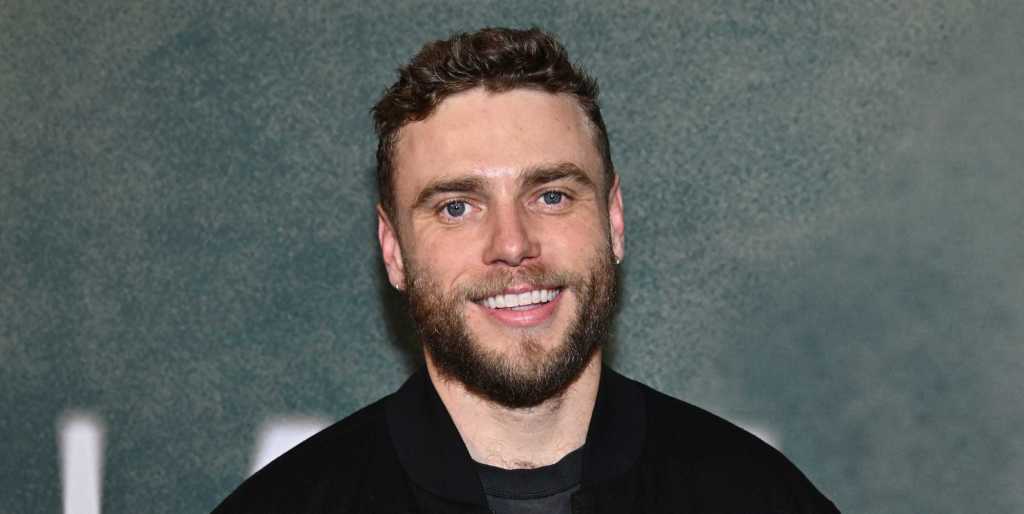
Gus Kenworthy has discussed the reaction to his competing for Team GB at the upcoming Winter Olympics in Italy which has included being called a “traitor”.
The 34-year-old Olympian who has dual British and American citizenship having been born in Chelmsford, Essex and growing up in Telluride, Colorado has come out of retirement to take part in his fourth Olympics. He won silver at the Sochi Winter Olympics in 2014 and also competed in PyeongChang (2018) competing for the US. He took part in the 2022 Winter Olympics in Beijing for Team GB.
“People are like, ‘You’re a traitor,’ and I don’t think of it that way,” he said. “I had this choice in 2014 to go for either country and at that time I was like, ‘Well, I live in the States. I wanna go for the States’ and I did and I won a medal and I represented the States at another games after that,” he said.
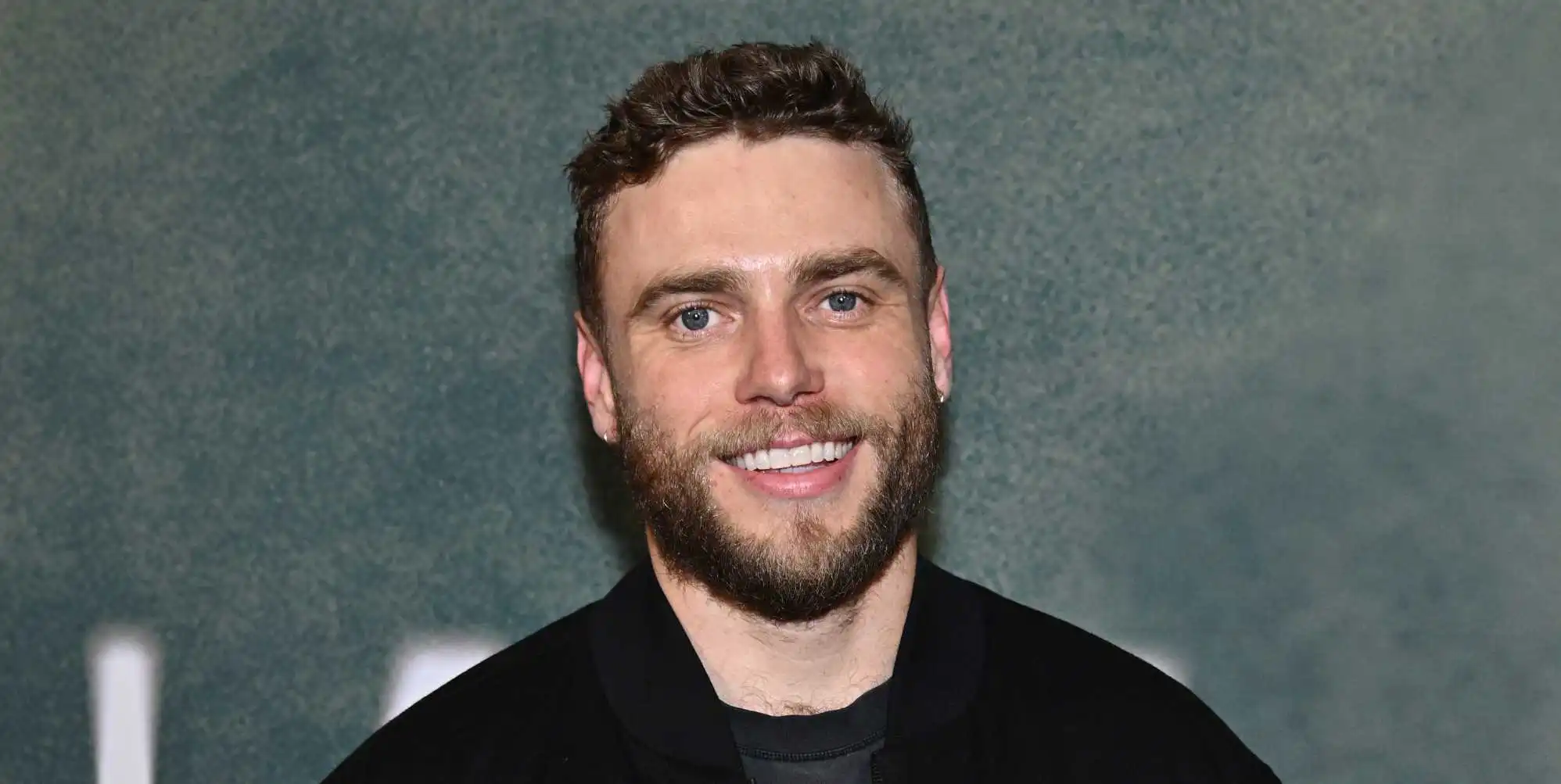
Gus Kenworthy. (Getty)
Continuing, the athlete said: “I don’t owe anybody anything and it’s the path that I chose last time around to do it for my mom and this time around like I came back and had such short timing that even if I had wanted to switch, I wouldn’t have been able to.”
Kenworthy only came out of retirement in May 2025 saying: “It’s this Olympics or nothing. I’m never going to have this opportunity again.”
The out athlete also told People that with the “dog-eat-dog” world of the American team making the cut would have been a “nightmare”. And with only four spots up for grabs means “it results in men not making the US team that are world-class that could be on the podium that don’t get to be there”.
So, he removed himself from that struggle and moved over to Team GB. But he clarified: “I didn’t take that spot from anybody. That spot wasn’t a spot otherwise.” He continued: “If anything, I almost feel like it’s more patriotic I’m letting another American go.”
Kenworthy recently put himself forward for a role on Heated Rivalry season two by advertising his skating and hockey experience.
Share your thoughts! Let us know in the comments below, and remember to keep the conversation respectful.
Vivian Jenna Wilson revealed information she recalls that appears to corroborate details about her estranged father, Elon Musk, appearing in the latest release of the Epstein files on Friday (30 January).
In several posts to her Threads account on 1 February, Wilson wrote “I’m just going to speak directly instead of being vague and cryptic.
“I can confirm we were in St Barth’s at the time specified in the emails, and therefore I believe they are authentic.”
Ava Raine, the daughter of Dwayne ‘The Rock’ Johnson, has made the “difficult” decision to leave World Wrestling Entertainment (WWE) after six years.
Raine – real name Simone Garcia Johnson – joined WWE in 2020. She was also the General Manager of WWE’s development program, NXT, which her partner, Tatyanna Dumas, is also a part of.
Posting on Instagram on Friday (30 January) Raine wrote: “This past Tuesday was my last appearance on NXT and subsequently WWE. Thank you to all who have cheered, watched, and supported me through my journey. While my decision to not renew my contract was very difficult, it’s also new turning point in my life. It has been an honor and a privilege to be Ava.”
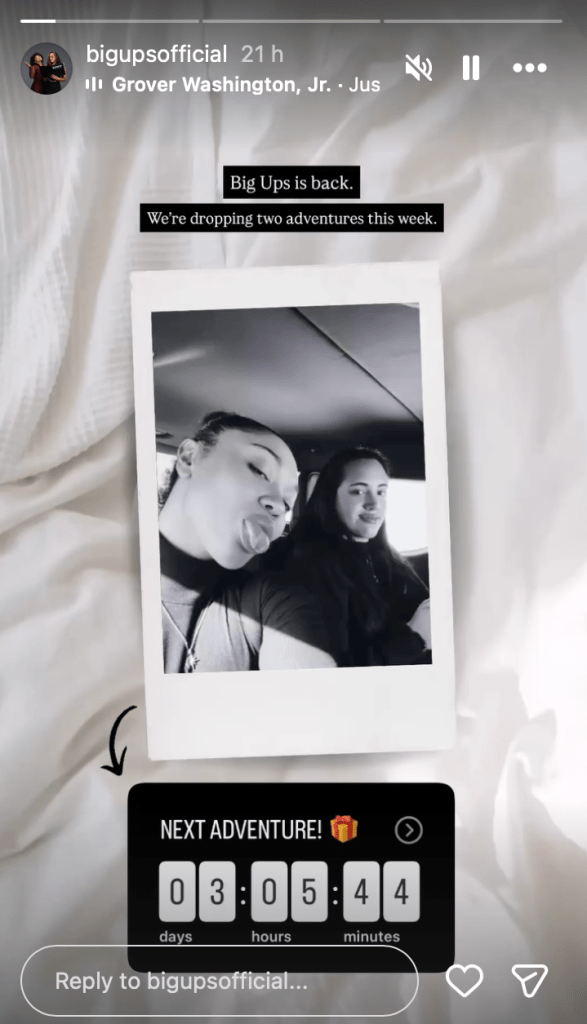
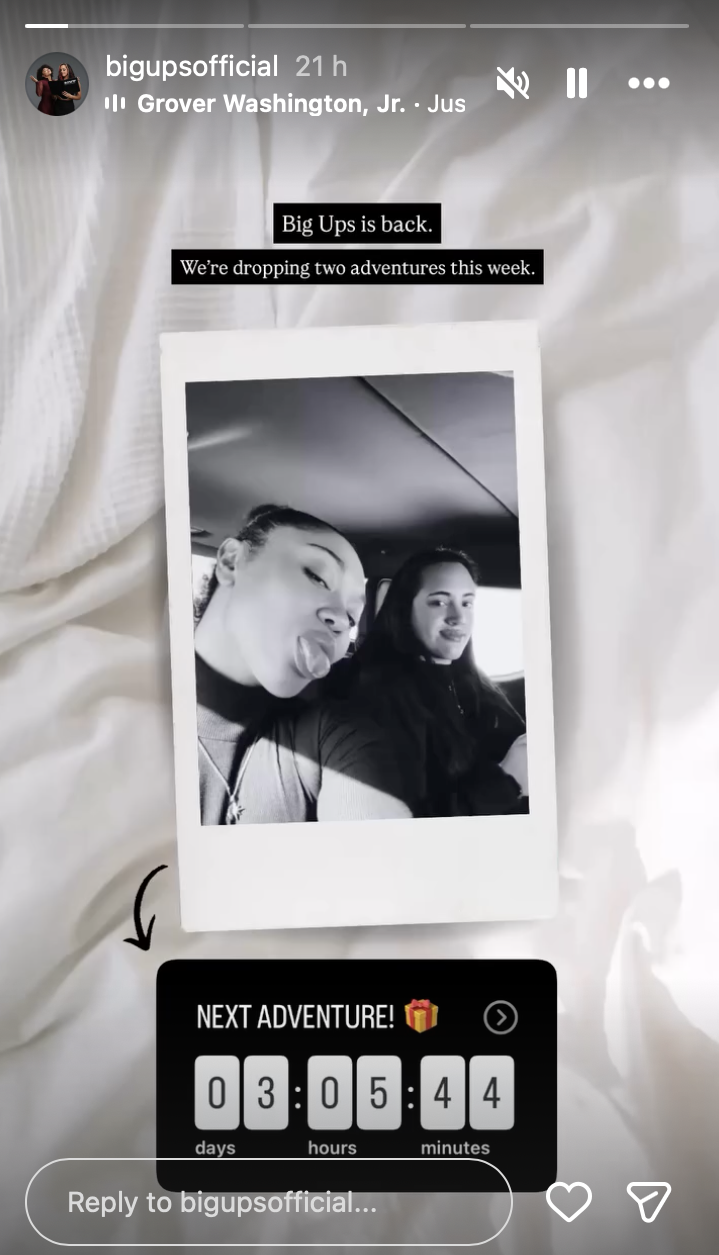
According to E! News, Dumas posted the shared account she and Raine share, Big Ups, would be “pausing all scheduled content” until it was “appropriate” to resume. “We appreciate your continued support and understanding,” she wrote in the since deleted Instagram story. However, on Sunday (1 February) the Big Ups Instagram featured a story saying “Big Ups is back”.
TMZ reports after Raine announced her departure she tweeted: “And now that I can say this with my full chest, [middle finger emoji] ICE and that entire administration.” Raine’s Twitter/X account has now been deleted.
The post has had a variety of reactions, some mocking and deriding Raine. Meanwhile, others have speculated her account was taken down by X, though no proof exists.
Ava is Johnson’s eldest daughter from his first wife, Dany Garcia. Johnson has two younger daughters, Jasmine and Tiana with Lauren Hashian, his second wife.
Dumas is an Australian wrestler and former basketball player. She fights under the nickname ‘Muscle Mommy’.
The pair publicly confirmed their relationship last December with an Instagram reel of highlights set to Charli XCX’s “Everything is romantic feat. Caroline Polachek”.
Speaking of Raine with MTV UK last year, Johnson said he was “so proud of her”. He said: “She’s like, ‘I want to do what you do but I want to carve my own path’. And that’s a difference, that was a big deal that I heard that,” he said of how she didn’t want to use family connections to get ahead.
Share your thoughts! Let us know in the comments below, and remember to keep the conversation respectful.
The biographical show followed the rise of the transgender entertainer and media personality in the 1980s and 1990s before she was diagnosed with HIV. While her on-screen portrayal is a step in the right direction of representation of people living with HIV, it revealed how much more humane and consistent such representation could be.
It’s hard to fathom that almost 40 years after the HIV epidemic, on-screen representation of people living with HIV remains so sparse and uninspired. The situation is even worse for Black people living with HIV.
However, a few films have left their mark on HIV and Black representation, and create a path towards a more inclusive future. So, here are 10 essential films about the Black community, HIV, and why they remain culturally significant today.
In 2009, Precious became one of the most talked-about films of the year. The Lee Daniels-directed film, adapted from author Sapphire’s novel Push, follows Claireece Precious Jones (played by Oscar nominee Gabourey Sidibe in her feature film debut), a teenager experiencing poverty, illiteracy, HIV, pregnancy, and parental abuse in 1980s New York City.
With a star-studded cast that included Mariah Carey, Lenny Kravitz, Paula Patton, and Mo’Nique, who won Best Supporting Actress for the film and became the fourth Black woman to receive the award, Precious became a critical and commercial success. Precious received numerous awards, lauded for its ensemble performances and its uncompromising examination of despair, adversity, grief, and hope.
While not the easiest watch, Precious shines a light on Black youth living with HIV and how a lack of access to resources and education leaves them vulnerable.
Tongues Untied (1989)
Marlon Riggs’ revolutionary 1989 documentary, Tongues Untied, examines the spaces and identities Black queer men inhabit and the unique blend of racism, homophobia, and stigma they experienced during the height of the HIV/AIDS crisis of the late ‘80s/early ‘90s.
Explored through interviews, dance, music, poetry, and performances by writers Joseph Beam and Essex Hemphill, Tongues Untied sparked conversations about Black queer men defying the unique oppression they face. From rejection within queer spaces centering white gay men, apathy towards anti-Black crimes, and traversing the complexities of Black masculinity, Tongues Untied reveals hidden harms within an epidemic disproportionately ransacking the Black LGBTQ+ community.
New York drag queen Consuela Cosmetic in the film Mirror, Mirror | screenshot
1996’sMirror, Mirror is a poignant look into the last year of life of Consuela Cosmetic, a Black, transgender, New York City-based performer and sex worker.
Directed by Baillie Walsh, Mirror, Mirror details the trials and tribulations of navigating ‘90s society while living with HIV. The documentary details Consuela’s daily survival, peppered with humor and wisdom that create a unique window into their world. During that period, with conservative Rudy Giuliani as mayor, many at the margins of society faced police brutality, restrictive sexual health resources, and hostility towards their sexual expression.
Cosmetic died of AIDS-related complications during the film’s post-production, but Mirror, Mirror still leaves a lasting impression.
Life Support (2007)
Queen Latifah’s acting breathes life into filmmaker George Nelson’s 2007 directorial debut Life Support. The film follows Ana Wallace (Latifah), a woman living with HIV who works at a Brooklyn-based nonprofit educating her community about safer sex. Wallace also struggles to rebuild her relationship with her daughter, Kelly (Rachel Nicks), while striving to protect her from the same instability, systemic mistreatment, and substance abuse that led Ana and her husband, Slick, to contract HIV.
Nelson brings the real-life story of his sister, Andrea Williams, to the silver screen, highlighting how HIV education and treatment impact the Black community, disproportionately impacted by the epidemic.
Featuring Tracee Ellis Ross, Wendell Pierce, and produced by Latifah and Jamie Foxx, Life Support earned Latifah a Golden Globe, a Screen Actors Guild Award, and an NAACP Image Award.
Yesterday (2004)
In 2004’s Yesterday, filmmaker Darrell Roodt takes a powerful look at the impact of HIV on South Africa. Through the eyes of the film’s titular character, Yesterday follows a young mother (Leletia Khumalo) living with HIV who is striving to see her child, Beauty (Lihle Mvelase), attend her first day of school.
Yesterday is a powerful examination of how HIV affects communities, and through its lens, we peer inside South Africa’s HIV epidemic. The country has the largest population of people living with HIV, reaching 8 million, with 96% of those being Black South Africans. Additionally, South African women between the ages of 15 and 49 have a higher HIV prevalence rate than men of the same age, making Yesterday’s story even more impactful.
Produced by the Nelson Mandela Foundation, the Oscar-nominated, Peabody Award-winning film is the first of its kind to be presented entirely in the Zulu language.
Ailey (2021)
Groundbreaking choreographer Alvin Ailey’s immense talent lives on in his namesake, the Alvin Ailey American Dance Theater. That talent and its vessel are the subject of the 2021 documentary Ailey.
With unheard audio interviews from the famed choreographer and archival footage, Ailey removes the veil that has shielded the enigmatic artist and follows his journey as a dancer, choreographer, and activist. Ailey founded his eponymously-named dance theater in 1958. With the Civil Rights Movement in the background, Ailey built a platform for Black culture to be seen in its holistic beauty and for Black dancers to have professional dance opportunities that were seldom presented.
His efforts culminated in his magnum opus, Revelations, which drew on Southern roots, Black traditions, and gospel to celebrate the fortitude of Black Americans. Ailey passed away due to HIV-related illness in 1989. His legacy lives on, however, in the paths opened for Black dancers who can now see themselves performing center stage.
Paris Is Burning (1990)
Jennie Livingston’s feature film, Paris is Burning focused on New York City’s ballroom culture. Ahead of its time, Paris Is Burning centers ballroom houses — such as House of LaBeija, House of Ninja, and House of Xtravaganza — alongside each house’s iconic “mothers,” like Pepper LaBeija, Willi Ninja, and Angie Xtravaganza.
The documentary details community building within the various houses and humanizes an underground queer subculture with characters navigating drug use, sex work, HIV, and housing instability.
While Paris is Burning isn’t directly about the impact of HIV, its pervasiveness is felt when you consider that Angie Xtravaganza, Dorian Corey, and Willi Ninja all passed away after its filming due to complications with HIV. Their legacy lives on in the children of their ballroom houses who continue to redefine the beauty, talent, and familial bonds of this vibrant community.
The Lazarus Effect (2010)
Another entry examining the impact of HIV on African countries is 2010’s The Lazarus Effect.
The film follows the stories of four Zambians — a young husband and father, a young mother, and an 11-year-old child — all of whom are living with HIV, as well as an HIV peer educator who lost her children to the epidemic. With the help of antiretroviral therapy, the documentary demonstrates how those impacted by HIV gain a new lease on life, using as a metaphor the Biblical story of Lazarus returning from the dead.
Directed by Lance Bangs, produced by HBO and U2 singer Bono’s HIV-focused nonprofit (RED), and executive produced by Oscar winner Spike Jonze, The Lazarus Effect was just as much of a documentary as a call-to-action. The film featured a promotional campaign — featuring actors Penelope Cruz and Hugh Jackman, pop-rock band the Jonas Brothers, and rapper Ludacris — highlighting what you can buy with 40 cents, the cost of antiretroviral therapy.
The documentary’s importance strikes a hopeful chord, considering that South African countries bear the brunt of the epidemic.
Deepsouth (2012)
The United States’ “Bible Belt,” albeit full of anti-queer animus, is also home to vibrant LGBTQ+ communities deeply impacted by HIV. The 2014 documentary Deepsouth focuses on the stories of a queer college student, a nonprofit founder, and an activist who are all affected by the increasing HIV rates in the American South.
The film’s narrative-forward storytelling and lack of call to action cause the viewer to focus on the minutiae of the subjects’ everyday lives with HIV, with the disease solely in the background.
Deepsouth screened at the Outfest Los Angeles LGBT Film Festival and the Human Rights Watch Film Festival, winning several festival awards.
Even with advancements in HIV education, prevention methods, and treatment, Deepsouth is a poignant reminder that the American South still constitutes the majority of HIV infections in the United States, and that access to these advancements is still hindered by political oppression.
Can You Bring It: Bill T. Jones and D-Man in the Waters (2020)
During the height of the HIV/AIDs crisis in the late 1980s, acclaimed gay choreographer Bill T. Jones created the powerful four-part ballet D-Man in the Waters.
Originally created as a ballet about the movement of water, it evolved into an evocative, physical manifestation of the fear, shame, anger, and hope that came from Jones witnessing members of his Bill T. Jones/Arnie Zane Company fall to the disease, including his partner and co-founder Arnie Zane and dancer Demian “D-Man” Acquavella, both of whom passed away in their thirties.
Jones created D-Man in the Waters at the height of the HIV epidemic in the ‘80s, yet the performance is a testament to Black, queer resistance. With Jones insisting on Acquavella being present at the D-Man’s premiere, it also memorializes a beloved dancer who inspired its creation.
Subscribe to the LGBTQ Nation newsletter and be the first to know about the latest headlines shaping LGBTQ+ communities worldwide.
MAGA influencer Emily Austin has been roasted after recording her scathing response to Billie Eilish’s moving anti-ICE Grammys speech.
The conservative sports journalist took to X on Monday (2 February) to post her live reaction to Eilish going on what she described as a “f*** ICE” rant, which she wrote was “painful to listen to”.
“No one is illegal on stolen land,” Eilish began, adding: ”Yeah, it’s just really hard to know what to say and what to do right now. I feel really hopeful in this room, and I feel like we need to just keep fighting and speaking up and protesting. Our voices really do matter; people do matter. F*** ICE.”
In the clip of Austin recording herself, which has been viewed more than 23 million times, she can be seen pulling faces and mocking Eilish by repeating “f*** ICE” in a snarky tone.
As the crowd roars with applause for the Grammy winner, she adds: “Oh, I’m so edgy. I said f*** ICE. Oh my god.”
Austin’s reaction has received scathing response, with one person noting that her and her sister “both look like cheap MAGA trash”.
Live reaction to Billie Eilish going on a “Fuck ICE” rant Painful to listen to. pic.twitter.com/CuUVjGJKbZ
“And that’s why she’s up there and you’re not HAAHAHHAHAHA,” another comment with more than 90,000 likes read.
“The irony of you thinking you’re edgy while recording this video lmaooo,” a different comment read.
Someone else compared the pair to the White Chicks, while another responded: “Yet she’s on stage accepting her Grammy and you’re in the audience looking a mess and hating.”
“I find it interesting that they allowed two herpes simplex sores into the auditorium,” another comment read, while multiple comments simply reiterated Eilish message: “F*** ICE.”
Others pointed out that this is the same person who posed with selfies of the Epstein Files.
“Says the one posing with selfies of the Epstein Files… then choosing to report on the Grammys instead of its actual contents lol,” one person wrote.
Share your thoughts! Let us know in the comments below, and remember to keep the conversation respectful.
Your favorite menu item might be easy to remember but it will not secure your account
Change Your Password Day took place over the weekend, and in case you doubt the need to improve this most basic element of cybersecurity hygiene, even McDonald's – yes, the fast food chain – is urging people to get more creative when it comes to passwords. …
Microsoft has confirmed that a known issue preventing some Windows 11 devices from shutting down also affects Windows 10 systems with Virtual Secure Mode (VSM) enabled. [...]
While many open-source enthusiasts like to flaunt RISC-V as not having the security challenges as x86_64 CPUs have seen over the past several years with various speculative execution / side-channel attacks and arguing for the benefits of an open-source ISA in stronger security, in practice it's not so clear-cut. Security researchers at Germany's CISPA Helmholtz Center for Information Security have found current RISC-V CPU implementations coming up short for their actual security...
Alors que le Conseil d’État a confirmé l’interdiction « en l’état actuel de la législation » de la vidéosurveillance algorithmique (VSA) qu’avait mise en place le maire de Nice Christian Estrosi (Horizons), l’Assemblée nationale examine le projet de loi proposé par le député Ensemble Paul Midy, qui veut l’autoriser pour les commerces « lorsqu’un mouvement suspect […]
Jensen Huang, patron de NVIDIA, a dû intervenir dans les médias ce week-end pour confirmer que son entreprise avait bien toujours l’intention d’investir de façon significative dans OpenAI. Il n’a toutefois pas renouvelé le chiffre précédemment annoncé d’une enveloppe susceptible d’atteindre 100 milliards de dollars. Investira, investira pas ? Les médias et milieux financiers se […]
While we might see Git 3.0 released around the end of 2026, Git 2.53 is out today as the latest feature release and continuing to make changes with an eye toward that big Git 3.0 milestone...
We called bullshit when Republicans tried to order websites to carry content. We’re calling bullshit now when Democrats are trying to do the same.
We spent years explaining to politicians across both parties why the government can’t dictate how private platforms moderate content. During the Biden admin, GOP governors seemed most aggressive about trying to tell platforms they couldn’t moderate. We wrote many thousands of words words about why Texas’s HB20 and Florida’s SB7072 were flagrantly unconstitutional. We cheered when courts, up to and including the Supreme Court, agreed.
And now California Governor Gavin Newsom has decided to… do the exact same thing, just from the other direction.
NEW: Following TikTok’s sale to a Trump-aligned business group, our office has received reports — and independently confirmed instances — of suppressed content critical of President Trump.
Gavin Newsom is launching a review of this conduct and is calling on the California Department of Justice to determine whether it violates California law.
We could save a lot of taxpayer dollars by just giving him the answer: no, it does not violate California law. It cannot. Because of the First Amendment.
It’s even worse if you dig down one level and see what Newsom is responding to:
That’s a rando X account with just a few thousand followers tweeting that “you can’t even mention epstein lmao” showing a TikTok warning that her trying to post the word “epstein” “may be in violation of our community guidelines.”
Newsom is quote tweeting this saying:
It’s time to investigate. I am launching a review into whether TikTok is violating state law by censoring Trump-critical content.
There’s so much wrong here.
Let’s start with the obvious: these “reports” are sketchy as hell. Beyond it coming from some rando account, TikTok has already explained that there was a data center power outage that caused “a cascading systems failure” affecting content posting and moderation. This happens! Content moderation systems fail all the time. Also, moderation systems make mistakes. All the time! As we’ve discussed approximately ten thousand times, even with 99.9% accuracy, you’re going to have hundreds of thousands of “mistakes” every single day on a platform the size of TikTok. That’s just math.
For the Governor of California to jump from “some rando users reported upload problems during a technical outage” to “we must investigate whether this violates California law” is… not how any of this should work.
But, who even cares about that? There’s a bigger issue here: even if every single one of these reports were accurate—even if TikTok were deliberately, systematically moderating content to favor Trump—that would be totally legal under the First Amendment.
Content moderation decisions are editorial decisions. They are protected speech. A private platform can legally decide to promote, demote, or remove whatever content it wants based on whatever criteria it wants, including political viewpoint. It can decide what it doesn’t want to host. It can do so for ideological reasons if it wants.
This is the same thing we’ve been saying for years when Republicans howled about “anti-conservative bias” on social media. And, arguably, Newsom merely investigating TikTok for its editorial choices creates chilling effects that themselves raise First Amendment concerns.
When Texas passed HB20, which tried to prohibit large social media platforms from moderating based on “viewpoint,” we pointed out that this was flagrantly unconstitutional because it would compel platforms to host speech against their will. The Supreme Court agreed, with Justice Kagan noting during oral arguments that Texas’s law would mean “the government can force you to have certain speech on your platform.”
When Florida passed SB7072 with similar provisions, we said the same thing. The Eleventh Circuit agreed, calling it “an unprecedented attempt to compel private platforms to host speech,” which violates “the First Amendment’s long-held protection for the editorial discretion of private businesses.”
So now Newsom wants to do the exact same thing, just from the other direction? He wants California to investigate whether a platform’s content moderation choices—choices protected by the First Amendment—somehow “violate California law”?
Is he just making up new theories now about how a state can control the editorial decisions of private platforms based on which political direction those decisions allegedly lean?
How is this different from when Josh Hawley or Ted Cruz threatened to strip Section 230 protections from platforms they accused of “anti-conservative bias”? How is this different from when Ron DeSantis tried to punish Disney for political speech he disagreed with?
The answer is: it’s not different. It’s the same unconstitutional impulse to use government power to control private editorial decisions, just wearing the other team’s jersey. We’ve detailed time and time again that both Republicans and Democrats are super quick to reach for the censorship button whenever they see online speech they don’t like, but it’s particularly egregious here because the courts have already ruled on this exact issue.
The Supreme Court already made it quite clear that Newsom can’t do what he’s doing just a couple years ago in the Moody ruling, directed at the governors of Texas and Florida:
But a State may not interfere with private actors’ speech to advance its own vision of ideological balance. States (and their citizens) are of course right to want an expressive realm in which the public has access to a wide range of views. That is, indeed, a fundamental aim of the First Amendment. But the way the First Amendment achieves that goal is by preventing the government from “tilt[ing] public debate in a preferred direction.” Sorrell v. IMS Health Inc., 564 U. S. 552, 578–579 (2011). It is not by licensing the government to stop private actors from speaking as they wish and preferring some views over others.And that is so even when those actors possess “enviable vehicle[s]” for expression.Hurley, 515 U. S., at 577. In a better world, there would be fewer inequities in speech opportunities; and the government can take many steps to bring that world closer. But it cannot prohibit speech to improve or better balance the speech market.
TikTok could, tomorrow, announce that they’re going to remove every single piece of content critical of Trump and promote only pro-Trump material. That would be stupid. It would probably be bad for their business. Users would likely flee to competitors. But it would be legal, because private platforms have the First Amendment right to make their own editorial choices, even bad ones.
Newsom knows this. Or he should. We’ve been explaining it to politicians of both parties for years: the First Amendment protects against government control of speech, including a platform’s editorial decisions about what to host. It doesn’t guarantee anyone a right to have their preferred content amplified on someone else’s platform.
We called bullshit when Republicans tried this. We’re calling bullshit now when Democrats like Newsom are doing the same thing.
The state has no role in dictating editorial practices of any media entity. Period.
Users happy with 19c as experts question AI lock-in
Last week, Oracle announced the general availability of Oracle AI Database 26ai Enterprise Edition for Linux x86‑64, but 13-year support for 19c and the prospect of AI lock-in might make users think twice about upgrading to it.…
I didn't know about the performance improvements in the various string formatting methods in Rust 1.93.0 until I came across this Mastodon post; I'm not sure why this wasn't highlighted in the official blog post, but wanted to share here in case other folks were unaware as well.
Depuis plus de quarante ans, Jean-Michel Baylet contrôle les retombées financières de la centrale nucléaire de Golfech. Une rente qui a permis à l’élu de ce maintenir à la tête d’un territoire captif et d’une clientèle reconnaissante. Un « système » aujourd’hui menacé par l’endettement et les réformes fiscales.
Donald Trump announced over the weekend that he’s going to close down the John F. Kennedy Memorial Center for the Performing Arts, commonly called the Kennedy Center, in order to renovate it. The move comes after the Trump administration’s takeover of the Kennedy Center, partly to stop LGBTQ+-inclusive programming, and many major artists have canceled performancesthere.
Longtime gay Trump hanger-on, Ric Grenell, said that he’s personally “grateful” that Trump will be shutting the center down.
Trump abruptly announced over the weekend that the Kennedy Center, which he is calling “The Trump Kennedy Center,” will close for two years starting in July for “construction, revitalisation, and complete rebuilding.” Trump called the building “tired, broken, and dilapidated,” although it’s not clear what the evidence is for this claim.
This means that the center could be closed during the nation’s semiquincentennial, or 250th birthday, and for much of the remainder of Trump’s second term. The announcement follows the president’s demolition of the White House’s East Wing in order to construct a ballroom.
Grenell, who served as U.S. ambassador to Germany during Trump’s first term, was appointed president of the Kennedy Center last year by Trump, who promised that Grenell’s leadership would lead to “NO MORE DRAG SHOWS, OR OTHER ANTI-AMERICAN PROPAGANDA.” Grenell celebrated Trump’s announcement that the Kennedy Center would be closed for two years.
“I am grateful for President Trump’s visionary leadership,” Grenell posted to X. “I am also grateful to Congress for appropriating an historic $257M to finally address decades of deferred maintenance and repairs at the Trump Kennedy Center. Our goal has always been to not only save and permanently preserve the Center, but to make it the finest Arts Institution in the world.
Grenell said that the center “desperately” needs renovations and said that Trump “has a reputation for delivering large construction projects on time, under budget and beautifully finished.” He did not cite any examples to back up that claim.
Some are criticizing Trump’s decision to “rebuild” the Kennedy Center.
“A reminder that the Kennedy Center is the literal and legal and congressional designated presidential memorial to JFK,” former Politico editor Garrett Graff posted to Bsky. “This would be like Trump tearing down the Lincoln Memorial to build something ‘better.’”
Subscribe to the LGBTQ Nation newsletter and be the first to know about the latest headlines shaping LGBTQ+ communities worldwide.
« L’exploitation dans les usines n’est ni accidentelle ni exceptionnelle : c’est une condition indispensable à la réussite économique de la “fast fashion”. » Ces conclusions de l’enquête menée par les deux ONG ActionAid France et China Labor Watch avaient fait grand bruit à l’été 2025. Le document révélait les conditions de production particulièrement dégradantes et indignes des […]
As a Browser Guard user, you might not have noticed much difference lately. Browser Guard still blocks scams and phishing attempts just like always, and, in many cases, even better.
But behind the scenes, almost everything changed. The rules that govern how browser extensions work went through a major overhaul, and we had to completely rebuild how Browser Guard protects you.
First, what is Manifest v3 (and v2)?
Browser extensions include a configuration file called a “manifest”. Think of it as an instruction manual that tells your browser what an extension can do and how it’s allowed to do it.
Manifest v3 is the latest version of that system, and it’s now the only option allowed in major browsers like Chrome and Edge.
In Manifest v2, Browser Guard could use highly customized logic to analyze and block suspicious activity as it happened, protecting you as you browsed the web.
With Manifest v3, that flexibility is mostly gone. Extensions can no longer run deeply complex, custom logic in the same way. Instead, we can only pass static rule lists to the browser, called Declarative Net Request (DNR) rules.
But those DNR rules come with strict constraints.
Rule sets are size-limited by the browser to save space. Because rules are stored as raw JSON files, developers can’t use other data types to make them smaller. And updating those DNR rules can only be done by updating the extension entirely.
This is less of a problem on Chrome, which allows developers to push updates quickly, but other browsers don’t currently support this fast-track process. Dynamic rule updates exist, but they’re limited, and nowhere near large enough to hold the full set of rules.
In short, we couldn’t simply port Browser Guard from Manifest v2 to v3. The old approach wouldn’t keep our users protected.
A note about Firefox and Brave
Firefox and Brave chose a different path and continue to support the more flexible Manifest v2 method of blocking requests.
However, since Brave doesn’t have its own extension store, users can only install extensions they already had before Google removed Manifest v2 extensions from the Chrome Web Store. Though Brave also has strong out-of-the-box ad protection.
For Browser Guard users on Firefox, rest assured the same great blocking techniques will continue to work.
How Browser Guard still protects you
Given all of this, we had to get creative.
Many ad blockers already support pattern-based matching to stop ads and trackers. We asked a different question: what if we could use similar techniques to catch scam and phishing attempts before we know the specific URL is malicious?
Better yet, what if we did it without relying on the new DNR APIs?
So, we built a new pattern-matching system focused specifically on scam and phishing behavior, supporting:
Full regex-based URL matching
Full XPath and querySelector support
Matching against any content on the page
Favicon spoof detection
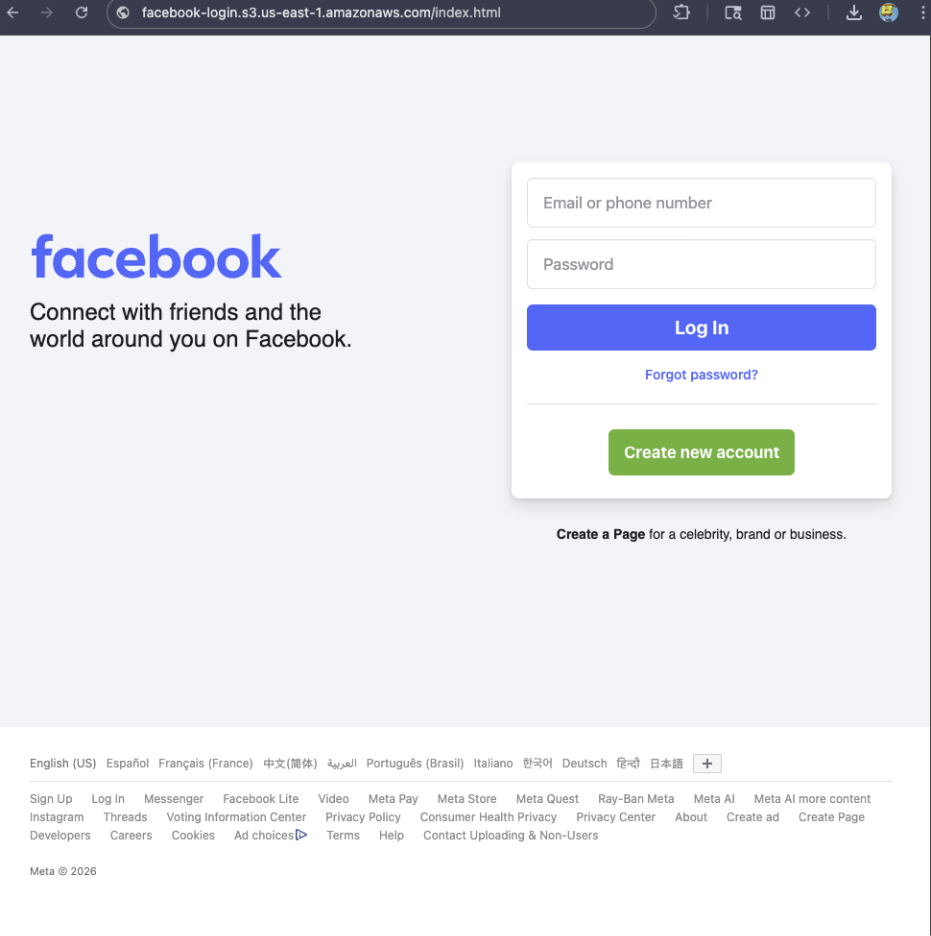
For example, if a site is hosted on Amazon S3, contains a password-input field, and uses a homoglyph in the URL to trick users into thinking they were logging into Facebook, Browser Guard can detect that combination—even if we’ve never seen the URL before.
Why this matters more now
With AI, attackers can create near-perfect duplicates of websites easier than ever. And did you spot the homoglyph in the URL? Nope, neither did I!
That’s why we designed this system so we can update its rules every 30 minutes, instead of waiting for full extension updates.
But I still see static blocking rules in Browser Guard
That’s true—for now.
We’ve found a temporary workaround that lets us support all the rules that we had before. However, we had to remove some of the more advanced logic that used to sit on top of them.
For example, we can’t use these large datasets to block subframe requests, only main frame requests. Nor can we stack multiple logic layers together; blocking is limited to simple matches (regex, domains and URLs).
Those limits are a big reason we’re investing more heavily in pattern-based and heuristic protection.
Pure heuristics
From day one, Browser Guard has used heuristics (behavior) to detect scams and phishing, monitoring behavior on the page to match suspicious activity.
For example, some scam pages deliberately break your browser’s back button by abusing window.replaceState, then trick you into calling that scammer’s “computer helpline.” Others try to convince you to run malicious commands on your computer.
Browser Guard can detect these behaviors and warn you before you fall for them.
What’s next?
Did someone say AI?
You’ve probably seen Scam Guard in other Malwarebytes products. We’re currently working on a version tailored specifically for Browser Guard. More soon!
Final thoughts
While Manifest v3 introduced meaningful improvements to browser security, it also created real challenges for security tools like Browser Guard.
Rather than scaling back, the Browser Guard team rebuilt our approach from the ground up, focusing on behavior, patterns, and faster response times. The result is protection that’s different under the hood, but just as committed to keeping you safe online.
We don’t just report on scams—we help detect them
Cybersecurity risks should never spread beyond a headline. If something looks dodgy to you, check if it’s a scam using Malwarebytes Scam Guard, a feature of our mobile protection products. Submit a screenshot, paste suspicious content, or share a text or phone number, and we’ll tell you if it’s a scam or legit. Download Malwarebytes Mobile Security for iOS or Android and try it today!
A transgender veteran who was forced out of the military refuses to step into the shadows. Instead, she is mustering her anger and her skills to affect change through political engagement.
13 mars 2024, peu après 10 heures du matin. Dieydi B. marche dans l’entrepôt de Clear Express. Cela fait déjà plusieurs mois qu’il travaille dans cette entreprise installée dans la zone de fret de l’aéroport Charles-de-Gaulle. Intérimaire, il enchaîne les missions d’un ou deux jours. Parfois, une simple demi-journée. Irrégulier sur le territoire depuis que la préfecture […]
In response to user feedback on AI integration, Mozilla announced today that the next Firefox release will let users disable AI features entirely or manage them individually. [...]
Ukraine’s CERT says the bug went from disclosure to active exploitation in days
Russia-linked attackers are already exploiting Microsoft's latest Office zero-day, with Ukraine's national cyber defense team warning that the same bug is being used to target government agencies inside the country and organizations across the EU.…
✨ Ça bouge bien, c'est beau, et dynamique : c'est INARI par @1hpstudio.bsky.social, un jeu d'action frénétique qui a tout récemment réussi (et explosé) son Kickstarter.
👀 Un titre à surveiller, mais il faudra vous armer de patience, puisqu'INARI ne devrait pas sortir avant fin 2027 sur PC.

 Connexion






 A
A 