
 Connexion
The History of Tandem Computers
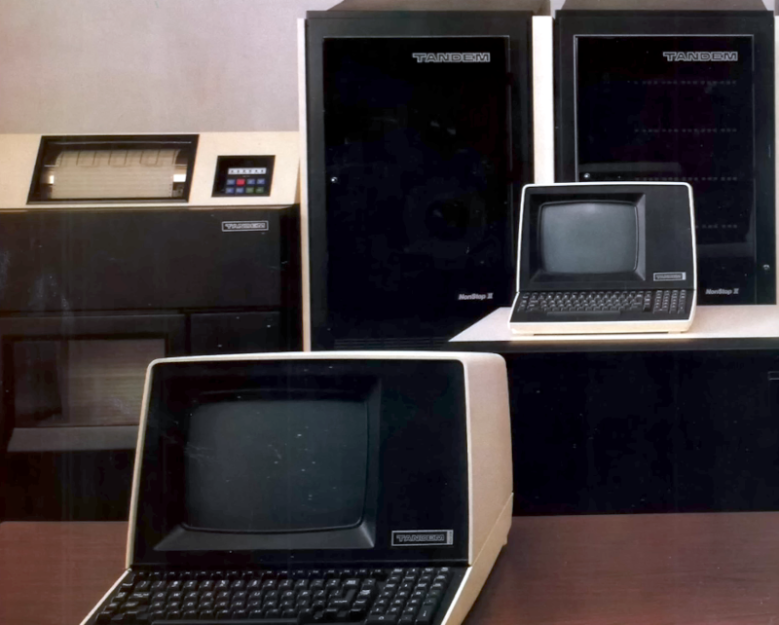
If you are interested in historical big computers, you probably think of IBM, with maybe a little thought of Sperry Rand or, if you go smaller, HP, DEC, and companies like Data General. But you may not have heard of Tandem Computers unless you have dealt with systems where downtime was unacceptable. Printing bills or payroll checks can afford some downtime while you reboot or replace a bad board. But if your computer services ATM machines, cash registers, or a factory, that’s another type of operation altogether. That was where Tandem computers made their mark, and [Asianometry] recounts their history in a recent video that you can watch below.
When IBM was king, your best bet for having a computer running nonstop was to have more than one computer. But that’s pricey. Computers might have some redundancy, but it is difficult to avoid single points of failure. For example, if you have two computers with a single network connection and a single disk drive. Then failures in the network connection or the disk drive will take the system down.
The idea started with an HP engineer, but HP wasn’t interested. Tandem was founded on the idea of building a computer that would run continuously. In fact, the name was “the non-stop.” The idea was that smaller computer systems could be combined to equal the performance of a big computer, while any single constituent system failing would still allow the computer to function. It was simply slower. Even the bus that tied the computers together was redundant. Power supplies had batteries so the machines would keep working even through short power failures.
Not only does this guard against failures, but it also allows you to take a single computer down for repair or maintenance without stopping the system. You could also scale performance by simply adding more computers.
Citibank was the first customer, and the ATM industry widely adopted the system. The only issue was that Tandem programs required special handling to leverage the hardware redundancy. Competitors were able to eat market share by providing hardware-only solutions.
The changing computer landscape didn’t help Tandem, either. Tandem was formed at a time when computer hardware was expensive, so using a mostly software solution to a problem made sense. But over time, hardware became both more reliable and less expensive. Software, meanwhile, got more expensive. You can see where this is going.
The company flailed and eventually would try to reinvent itself as a software company. Before that transition could work or fail, Compaq bought the company in 1997. Compaq, of course, would also buy DEC, and then it was all bought up by HP — oddly enough, where the idea for Tandem all started.
There’s a lot of detail in the video, and if you fondly remember Tandem, you’ll enjoy all the photos and details on the company. If you need redundancy down at the component level, you’ll probably need voting.
