 Connexion
Solar Supercapacitor Lamp Probably Won’t Get You Saved At Sea
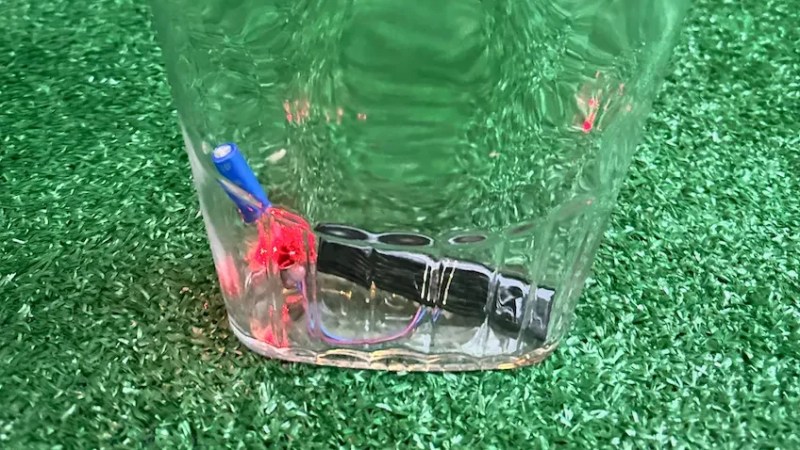
Most solar lights are cheap garbage that exist just to put more microplastics into the environment as they degrade in short order. [Jeremy Cook] built his own solar light, however, and this one might just last a little longer.
Most solar lights rely on the cheapest nickel-cadmium or nickel-metal hydride cells that are available on the market. They don’t tend to have a lot of capacity and they wear out incredibly fast. [Jeremy] went a different route for his build, though, instead relying on a rather tasty supercapacitor to store energy. Unlike a rechargeable battery, that may only last a few thousand cycles, these supercaps are expected to perform over 500,000 charge/discharge cycles without failure. With such longevity, [Jeremy] suggests his build could last a full 1369.8 years, assuming it charged and discharged once a day. Whether the plastic transistor, LEDs, or diode could hold up over such a long period is another question entirely.
Electronically, the build is relatively simple. The solar panel collects light energy and turns it into electricity, charging the supercaps through a diode. The supercaps are only able to discharge through a transistor, which only turns on when the voltage output by the solar panel drops at night time, and the voltage on the base becomes lower than that on the emitter. When current flows through the transistor, it then lights the LED in turn and the device glows in the darkness. As a nice touch, the whole circuit is installed in a glass jug of syrup originally sourced from Costco. Files are on Github for those eager to explore further.
Given the light-in-a-bottle construction, [Jeremy] also playfully imagined that a lamp like this could theoretically be used as a safety device. If lost at sea, you could charge it using the sun and try and use it to signal for help. However, upon casually exploring the concept, he notes that a small solar-powered light will only raise the chance of a far-off ocean rescue from “extremely unlikely” to “still very unlikely.”
You can do all kinds of neat things with free energy from the sun, from mowing your lawn to processing waste products. Video after the break.