Vue lecture

Il y a de nouveaux articles disponibles, cliquez pour rafraîchir la page.

Hackaday Podcast Episode 357: BreezyBox, Antique Tech, and Defusing Killer Robots

In the latest episode of the Hackaday Podcast, editors Elliot Williams and Tom Nardi start things off by discussing the game of lunar hide-and-seek that has researchers searching for the lost Luna 9 probe, and drop a few hints about the upcoming Hackaday Europe conference. From there they’ll marvel over a miniature operating system for the ESP32, examine the re-use of iPad displays, and find out about homebrew software development for an obscure Nintendo handheld. You’ll also hear about a gorgeous RGB 14-segment display, a robot that plays chess, and a custom 3D printed turntable for all your rotational needs. The episode wraps up with a sobering look at the dangers of industrial robotics, and some fascinating experiments to determine if a decade-old roll of PLA filament is worth keeping or not.

Check out the links below if you want to follow along, and as always, tell us what you think about this episode in the comments!

Download this episode in DRM-free MP3 on your ESP32 with BreezyBox for maximum enjoyment.

Where to Follow Hackaday Podcast

Places to follow Hackaday podcasts:

News:

What’s that Sound?

Interesting Hacks of the Week:

Quick Hacks:

Can’t-Miss Articles:

Custom Clamshell Cyberdeck Shows Off Underlighting

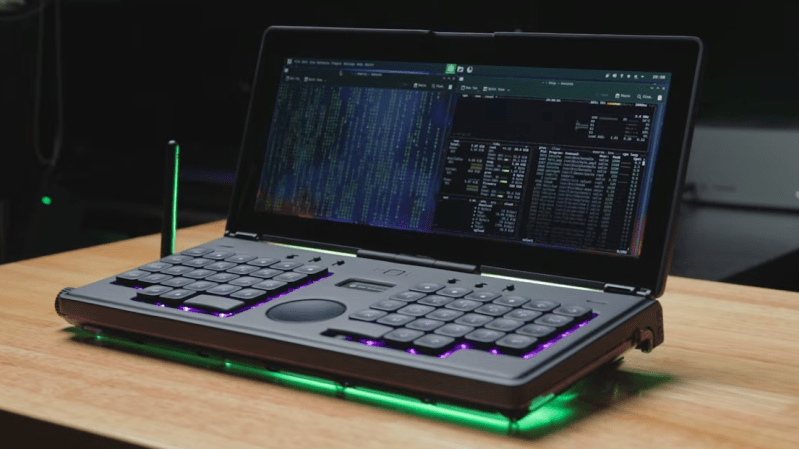
Cyberdecks are great projects, and [Salim Benbouziyane]’s scratch-built CM Deck is a fantastic specimen. It’s a clamshell-style cyberdeck with custom split keyboard, trackpad, optional external WiFi antenna, and some slick underlighting thanks to a translucent bottom shell. There’s even a hidden feature that seems super handy for a cyberdeck: a special USB-C port that, when plugged in to another host (like another computer), lets the cyberdeck act as an external keyboard and trackpad for that downstream machine.

The CM Deck is built around the Raspberry Pi Compute Module 5, which necessitates a custom PCB but offers more design freedom.

Notably, the CM Deck is custom-built around the Raspberry Pi Compute Model 5. When we first peeped the CM5 the small size was striking, but of course that comes at the cost of having no connectors, supporting hardware, or heat management. That’s something [Salim] embraced because it meant being able to put connectors exactly where he wanted them, and not have to work around existing hardware. A custom PCB let him to lay out his cyberdeck with greater freedom, less wasted space, and ultimately integrate a custom-built keyboard (with RP2040 and QMK firmware).

Even the final enclosure is custom-made, with 3D printing being used to validate the design and PCBway providing finished plastic shells in addition to manufacturing the PCBs. [Salim] admits that doing so was an indulgence, but his delight at the quality of the translucent purple undercarriage is palpable.

[Salim]’s video (embedded below) is a deep dive into the whole design and build process, and it’s a great watch for anyone interested in the kind of work and decisions that go into making something like this. Experienced folks can expect to nod in sympathy when [Salim] highlights gotchas like doing CAD work based on the screen’s drawings, only to discover later that the physical unit doesn’t quite match.

The GitHub repository contains the design files for everything, so give it a browse if you’re interested. [Salim] is no stranger to clean builds, so take a moment to admire his CRT-style Raspberry Pi terminal as well.

Thanks [Keith Olson] for sharing the tip!

Inside Raiders of the Lost Ark (Atari Style)

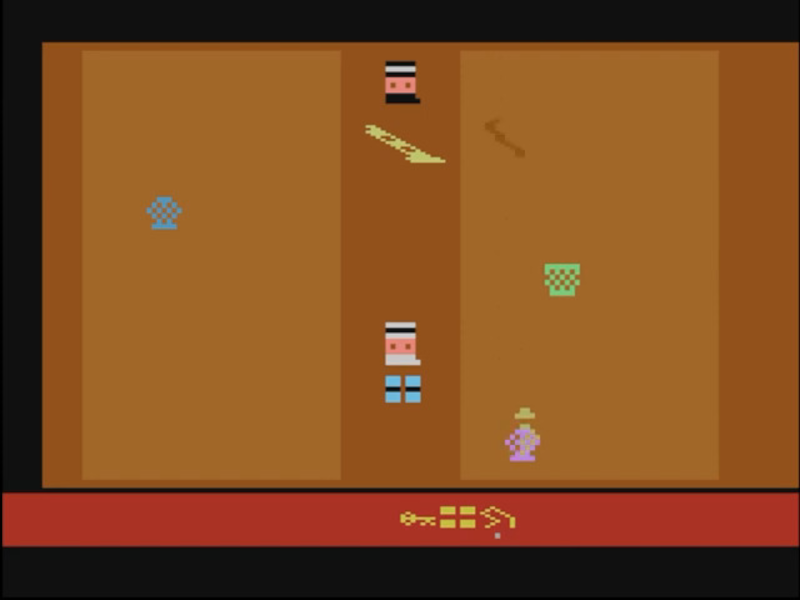
It’s a bit ironic that an Atari 2600 game based on Raiders of the Lost Ark — a movie about archaeology — is now the subject of its own archaeological expedition as [Dennis Debro] and [Halkun] spent time reverse-engineering the game. Luckily, they shared their findings, so you can enjoy it the same way you can visit a king’s tomb without having to discover it and dig for it. If you don’t remember the game, you might enjoy the demo from [Speedy Walkthroughs] in the video below.

If you are only used to modern software, you might think this is little more than someone dumping the program code and commenting it. However, on these old, limited systems, you have to really understand the actual architecture because there are so many things you have to manage that are specific to the hardware.

For example, the game has two 4K ROM banks that use a strange switching mechanism. The entire game is built around the NTSC television signal. Everything is oriented toward generating the 60 Hz frame rate. Game logic runs during the vertical blanking and over-scan sections to prevent strange visible artifacts due to software running.

This is a fascinating look inside game coding as it existed around 1982. Of course, you can also run everything using emulation. Usually, our reverse engineering is more hardware-related. But we do love these old games, too.

R2D2 Gets New Brains

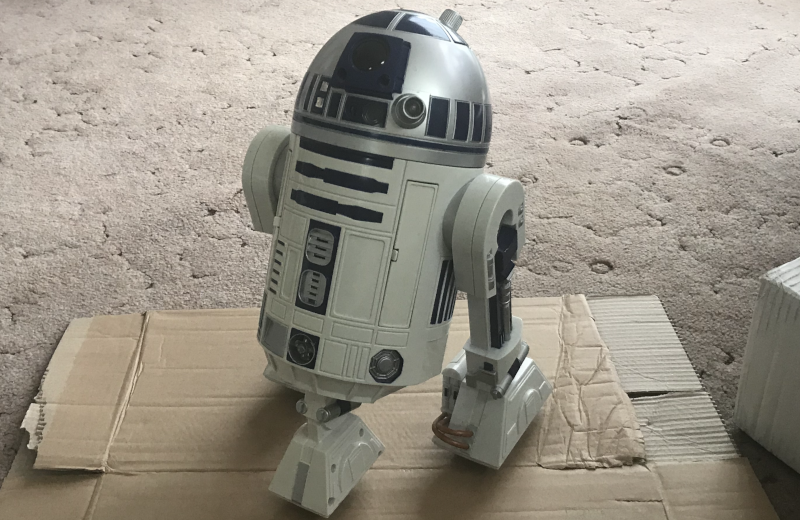
While it is fun to get toys that look like your favorite science fiction props, it is less fun when the electronics in them don’t measure up to the physical design. [Steve Gibbs] took a Hasbro R2D2 toy robot and decided to give it a brain upgrade along with enhanced sensors. You can see a video of the robot doing its thing and some build details below.

In this case, the toy from Hasbro was not working at all, so [Steve] saved it from the dumpster. Instead of a repair, he decided to just gut it and rebuild it with modern electronics. The ultrasonic sensor on the forward toe is a dead giveaway.

The robot responds to voice commands better than the original and can play sound effects and clips from Star Wars. You can also control the robot with a phone app. The new or upgraded sensors include microphones, a PIR sensor, a photoresistor to sense light, a smoke and CO2 sensor, a computer vision camera, and, of course, the ultrasonic range finder.

Some motors and the original speaker are in use, but R2 now sports additional LEDs and servos. All the extras required some surgery on the plastic body. Instead of regular batteries, the ‘bot now uses a LiPo battery, so the old battery compartment was cut out to make more room.

Even if you aren’t a die-hard Star Wars fan, this is a fantastic project, and May the 4th is right around the corner. These toys aren’t cheap, but if you can score one with bad electronics, you might be able to find something cheap or — like Steve — even free.

These toys are popular hacking targets. Now [Steve] needs a pit droid.

Why Diamond Transistors Are So Hard To Make

Many things about diamonds seem eternal, including the many engineering problems related to making them work as a silicon replacement in semiconductor technology. Yet much like a diamond exposed to a stream of oxygen-rich air and a roughly 750°C heat source, time will eventually erase all of them. As detailed in a recent [Asianometry] video, over the decades the challenges with creating diamond wafers and finding the right way to dope pure diamond have been slowly solved, even if some challenges still remain today.

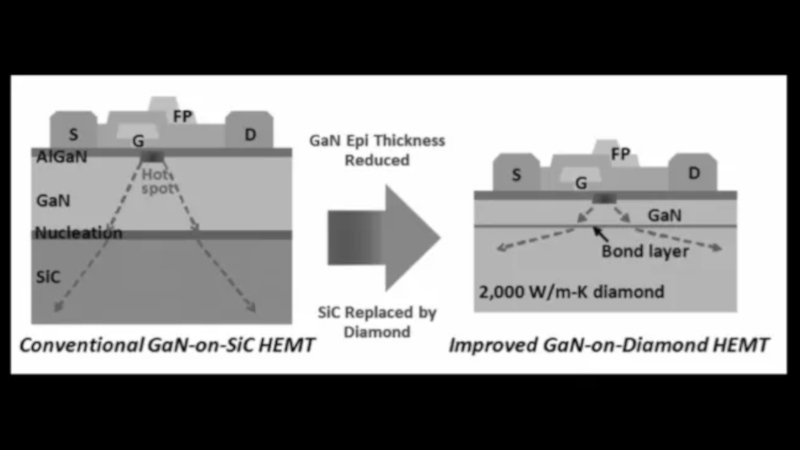
Diamond is basically the exact opposite as silicon when it comes to suitability as a semiconductor material, with a large bandgap (5.5 eV vs the 1.2 of silicon), and excellent thermal conductivity characteristics. This means that diamond transistors are very reliable, albeit harder to switch, and heat produced during switching is rapidly carried away instead of risking a meltdown as with silicon semiconductors.

Unlike silicon, however, diamond is much harder to turn into wafers as you cannot simply melt graphite and draw perfectly crystallized diamond out of said molten puddle. The journey of getting to the state-of-the art soon-to-be-4″ wafers grown on iridium alongside the current mosaic method is a good indication of the complete pain in the neck that just this challenge already is.

Mosaic method of growing a diamond wafer, as filmed by Asianometry.

Doping with silicon semiconductors is done using ion implantation, but diamond has to be special and cannot just have phosphorus and boron implanted like its sibling. The main challenge here is that of availability of charge carriers from this doping, with diamond greedily hanging on to these charge carriers unless you run the transistor at very high temperatures.

Since you can only add so much dopant to a material before it stops being that material, a more subtle solution was sought. At this point we know that ion implantation causes damage to the diamond lattice, so delta-doping – which sandwiches heavily doped diamond between non-doped diamond – was developed instead. This got P-type transistors using boron, but only after we pacified dangling carbon electron bonds with hydrogen atoms and later more stable oxygen.

State-of-the art switching with diamond transistors is currently done with MESFETs, which are metal-semiconductor field-effect transistors, and research is ongoing to improve the design. Much like with silicon carbide it can take a while before all the engineering and production scaling issues have been worked out. It’s quite possible that we’ll see diamond integrated into silicon semiconductors as heatsinks long before that.

Assuming we can make diamond work for semiconductor transistors, it should allow us to pack more and smaller transistors together than even before, opening up many options that are not possible with silicon, especially in more hostile environments like space.

Rock Sphere Machine Produces Off the Charts Satisfaction

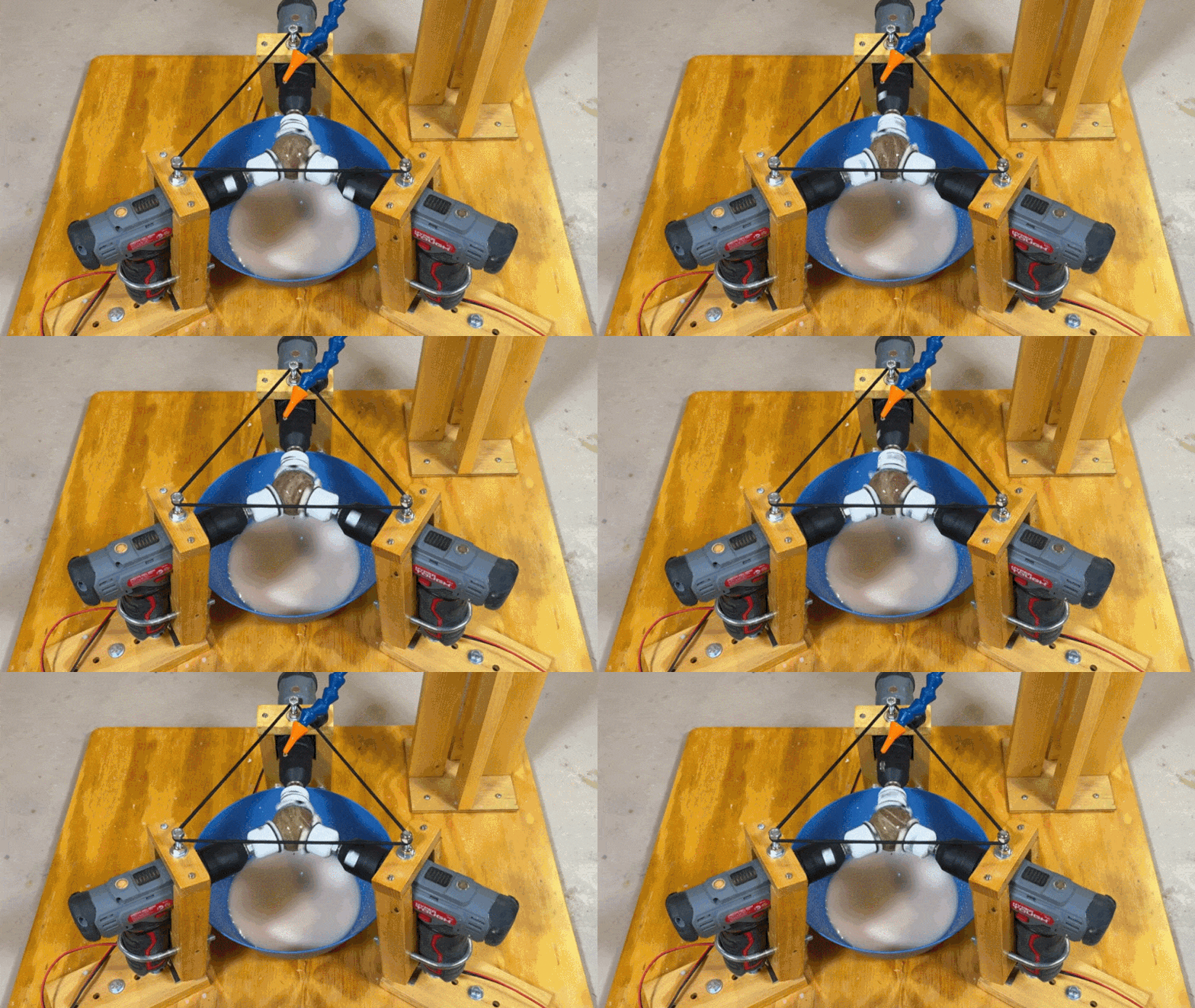
[Michigan Rocks] says he avoided making rock spheres for a long time on account of the time and cost he imagined was involved. Well, all that is in the past in light of the fabulous results from his self-built Rock Sphere Machine! Turns out that it’s neither costly to make such a machine, nor particularly time-consuming to create the spheres once things are dialed in. The video is a journey of the very first run of the machine, and it’s a great tour.

The resulting sphere? Super satisfying to hold and handle. The surface is beyond smooth, with an oil-like glossy shine that is utterly dry to the touch.

The basic concept — that of three cordless drills in tension — is adapted from existing designs, but the implementation is all his own. First a rough-cut rock is held between three diamond bits. The drills turn at 100 RPM while a simple water reservoir drips from above. After two hours, there’s a fair bit of slurry and the rock has definitely changed.

[Michigan Rocks] moves on to polishing, which uses the same setup but with progressively-finer grinding pads in place of the cutting bits. This part is also really clever, because the DIY polishing pads are great hacks in and of themselves. They’re made from little more than PVC pipe end caps with hex bolts as shafts. The end caps are filled with epoxy and topped with a slightly concave surface of hook-and-loop fastener. By doing this, he can cut up larger fuzzy-backed polishing pads and stick the pieces to his drill-mounted holders as needed, all the way down to 6000 grit. He shows everything about the pads at the 11:55 mark, and it’s an approach worth keeping in mind.

What is the end result like? See for yourself, but we think [Michigan Rocks] sums it up when he says “I wish you could feel this thing, it feels so smooth. It’s so satisfying to roll around in your hands. I’m so happy I made this machine. This is awesome.”

We’ve seen machines for making wooden spheres but this one makes fantastic use of repurposed stuff like inexpensive cordless drills, and the sort of wood structures anyone with access to hand tools can make.

Thanks to [AloofPenny] for the tip.

Building the Most Simple Motor in Mostly LEGO

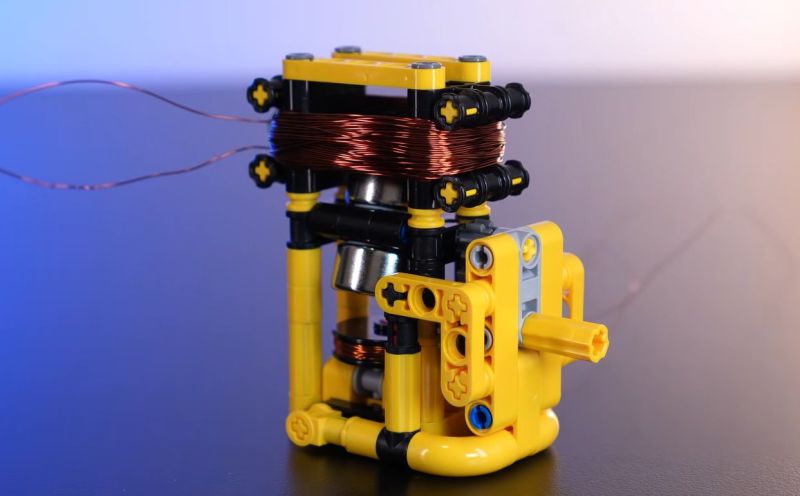
Although [Jamie’s Brick Jams] has made many far more complicated motor design in the past, it’s nice to go back to the basics and make a motor that uses as few parts as possible. This particular design starts off with a driver coil and a magnetic rotor that uses two neodymium magnets. By balancing these magnets on both sides of an axis just right it should spin smoothly.

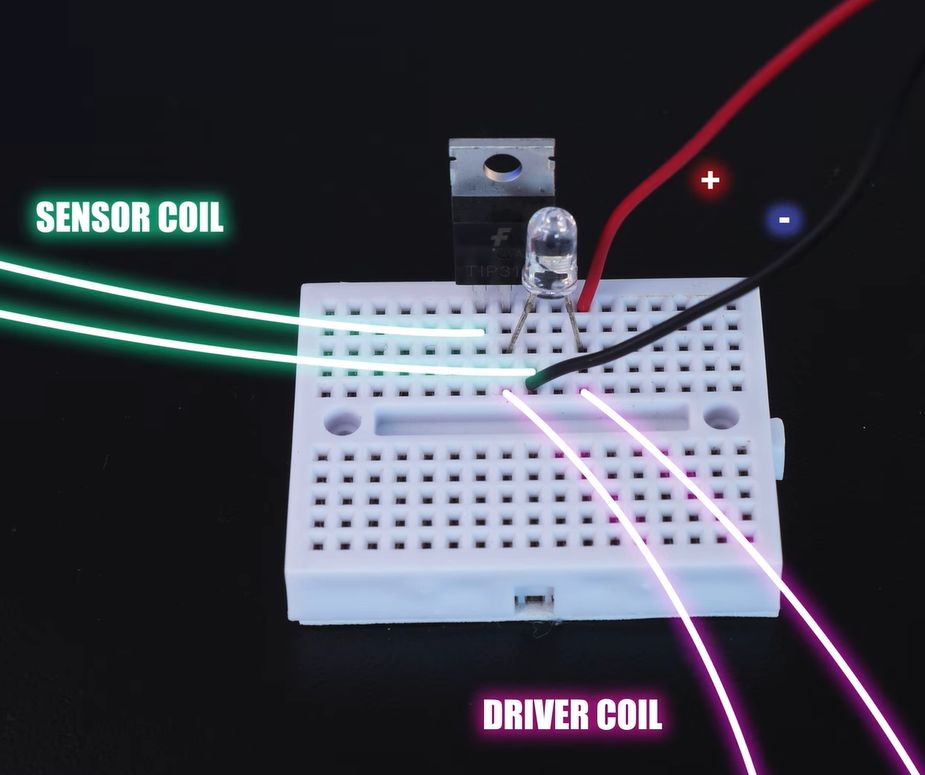
The circuit for the simple motor. (Credit: Jamie's Brick Jams, YouTube)
The circuit for the simple motor. (Credit: Jamie’s Brick Jams, YouTube)

First this driver coil is energized with a 9 V battery to confirm that it does in fact spin when briefly applying power, though this means that you need to constantly apply pulses of power to make it keep spinning. To this end a second coil is added, which senses when a magnet passes by.

This sense coil is connected to a small circuit containing a TIP31C NPN power transistor and a LED. While the transistor is probably overkill here, it’ll definitely work. The circuit is shown in the image, with the transistor pins from left to right being Base-Collector-Emitter. This means that the sensor coil being triggered by a passing magnet turns the transistor on for a brief moment, which sends a surge of power through the driver coil, thus pushing the rotor in a typical kicker configuration.

Obviously, the polarity matters here, so switching the leads of one of the coils may be needed if it doesn’t want to spin. The LED is technically optional as well, but it provides an indicator of activity. From this basic design a larger LEGO motor is also built that contains many more magnets in a disc along with two circular coils, but even the first version turns out to be more than powerful enough to drive a little car around.

There’s Always Room for 3D Printed Batteries

There are many applications where you have limits on how much you can cram into a particular space. There are also many applications where you need as much battery as you can get. At the intersection of those applications, you may soon be able to 3D print custom batteries to fit into oddly shaped spaces that might otherwise go to waste.

Commercial batteries are typically cylindrical or rectangular. In theory, you could build tooling to make batteries of any size or shape you want, but it’s an expensive process in small quantities. [Lawrence Ulrich] on Spectrum talks about a new process, developed by [Gabe Elias], that can print anodes, cathodes, separators, and casings for custom battery shapes with no costly tooling.

As an example, consider an unmanned aerial vehicle crammed with avionics. You could put off-the-shelf batteries in the wings, but you’ll end up wasting a lot of space. A custom battery could fill the wing’s interior completely. The post also mentions batteries shaped like the earpieces of a pair of smart glasses.

A prototype showed that in the space of 48 cylindrical cells, the new process could deliver a printed battery that uses 35% more of the available volume and a 50% boost in energy density.

Could you do this yourself? Maybe, but it won’t be trivial. The current process requires a liquid electrolyte and the ability to produce thin layers of exotic materials. What oddly-shaped battery would you like to see? Us? We’d like to have a battery for a laptop that was spread uniformly so there wasn’t a heavy side that has the battery.

❌