
 Connexion
Inside a Dutch Street Organ: The Art of Mechanical Music-Making
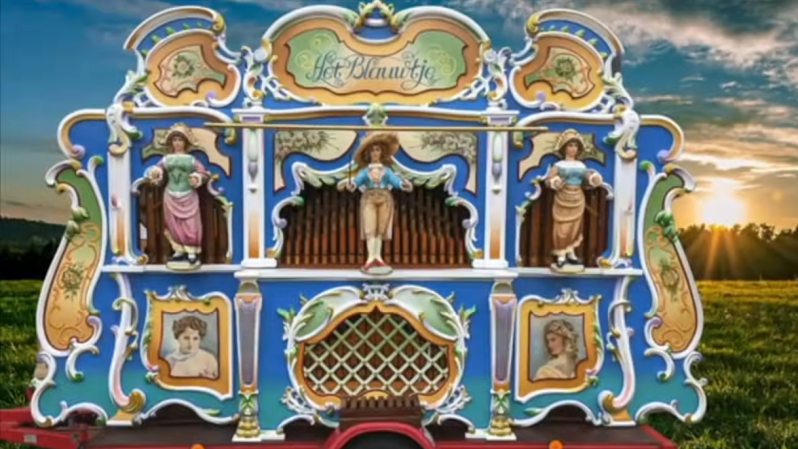
[James]’ Mechanical Organ of Dutch origin has been around longer than he has, but thanks to being rebuilt over the years and lovingly cared for, it delivers its unique performances just as well as it did back in the day. Even better, we’re treated to a good look at how it works.
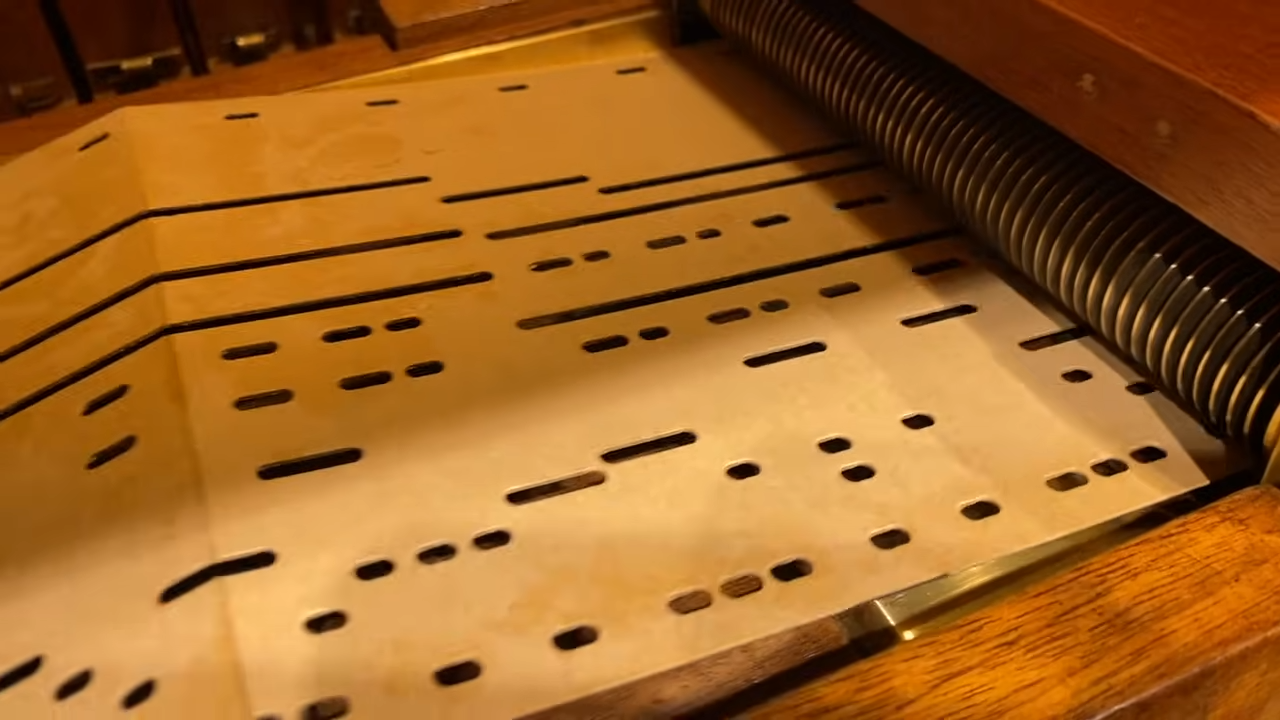
The organ produces music by playing notes on embedded instruments, which are themselves operated by air pressure, with note arrangements read off what amounts to a very long punch card. [James] gives a great tour of this fantastic machine, so check it out in the video embedded below along with a couple of its performances.
The machine is mobile and entirely self-contained. It would be wheeled out to a venue, where it would play music as long as one could keep cranking the main wheel and the perforated cardboard book containing the chosen musical arrangement hasn’t reached its end. As perforations in the card scroll by inside the machine, each hole triggers valves that operate pipes, percussion hits, and even operate animatronic figures.
The air pressure needed to do all this comes from a reservoir fed by two bellows operated by continuous rotation of a large wheel, a job that requires a fair bit of effort. Turning that crank would likely have been the responsibility of the lowest-ranking person within reach. Today, the preferred method is a belt drive and electric motor.
The perforated cardboard arrangements mean that the machine is just as programmable today as it ever was, and happily plays classics as easily as Lady Gaga, Daft Punk, and Queen. [James] has an enormous library of music, so take a moment to listen to it play “Night Fever” by the Bee Gees and Daft Punk’s “Get Lucky”.
One interesting tidbit [James] shares is that there is a bit of artistry and skill involved in arranging music for the machine. Some instruments play immediately when triggered (such as the pipes) while others trigger after a delay (like percussion), so one needs to take all this into account when punching the cardboard. There’s a bit more info on [James]’ website about his machine and its history.
In addition to being a fascinating piece of musical and mechanical history, it is another example of just how effective of a technology punched card was. Many of us might think of early computing or even music when we think of punched cards, but the original use was in running looms and knitting machines.
Thanks [Keith Olson] for the tip!
