Heated Rivalry‘s François Arnaud was left flustered after Kaia Gerber made a joke about tops and bottoms at the Independent Spirit Awards.
On Sunday (15 February), the 41st Film Independent Spirt Awards took place at the Hollywood Palladium in Los Angeles.
Actress and mode Gerber, daughter of supermodel Cindy Crawford and businessman Rande Gerber, joined Arnaud to present the Best New Non-Scripted or Documentary Series category.
During presenting the category, Bottoms star Gerber made a quip about “tops and bottoms” that left Arnaud flustered.
“Who better to present a non-fiction award than two people who play pretend for a living,” Arnaud began.
“Exactly,” Gerber responded, adding: “And we understand that not everything can be about tops and bottoms,” before looking to Arnaud, who awkwardly responded: “Yeah.”
The Best New Non-Scripted or Documentary Series award went to Pee-wee as Himself, which follows the life and career or actor and comedian Paul Reubens.
Arnaud found overnight fame at the tailend of 2025 thanks to his role in steamy queer hockey series, Heated Rivalry. In the series he plays ice hockey pro Scott Hunter, who falls in love with barista Kip Grady, played by Robbie G.K.
He is keeping his new legion of fans fed by stripping off for his next big project, in which he is starring alongside Pascale Bussières in Someone’s Daughter, a nail-biting survival thriller movie which will see the actor’s character, Paul, kidnapped and left on a remote island.
Share your thoughts! Let us know in the comments below, and remember to keep the conversation respectful.
Wicked star Cynthia Erivo has addressed the “strange fascination” fans have with her relationship with co-star Ariana Grande.
In an interview with Stylist, Erivo opened up about the widespread scrutiny of her friendship with Grande, which even led to online misinformation claiming that they were in a “semi-binary” relationship.
“At first, I think people didn’t understand how it was possible for two women to be friends — close — and not lovers,” she said of speculation that their friendship was performative or more than platonic.
“I’ve never really spoken about this, but there was this strange fascination with the two of us, where people either thought we were putting it on for the cameras or that we were lovers.”
‘We are not used to seeing it on camera’
Erivo went on to share that she believes their relationship has received such scrutiny because emotional intimacy between women is rarely discussed in media.
“I think it’s because there’s such little conversation around platonic female friendship that is deep and real, even though it exists everywhere. We’re not used to seeing it on camera, in front of people,” Erivo said.
She added: “A relationship where people are connected sometimes just makes people uncomfortable; we aren’t taught that those relationships are good for us.”
Grande is currently in a relationship with her Wicked co-star Ethan Slater. Erivo identifies as queer and bisexual, and first openly spoke about her sexuality in an August 2022 issue of British Vogue. She is dating Lena Waithe who identifies as a lesbian.
Share your thoughts! Let us know in the comments below, and remember to keep the conversation respectful.
The UK’s asylum system’s designation of Nigeria as a “safe country” poses real risk to queer Nigerians facing persecution, reporter Daniel Anthony outlines for PinkNews.
Under UK asylum policy, Nigeria is treated as a country that is generally stable rather than affected by civil war, active conflict, or a failing government. It is listed as a safe country of origin for men, meaning UK authorities presume that, in general, there is no serious or widespread risk of persecution or indiscriminate violence.
However, for queer Nigerians, this perception of safety is misleading and dangerous.
In Nigeria, safety can disappear with a whisper, a hint of effeminacy, a phone search, a neighbour’s suspicion, or the arrival of police who know that Nigeria’s homophobic laws will protect them and justify whatever horrific fate they are about to impose on you.
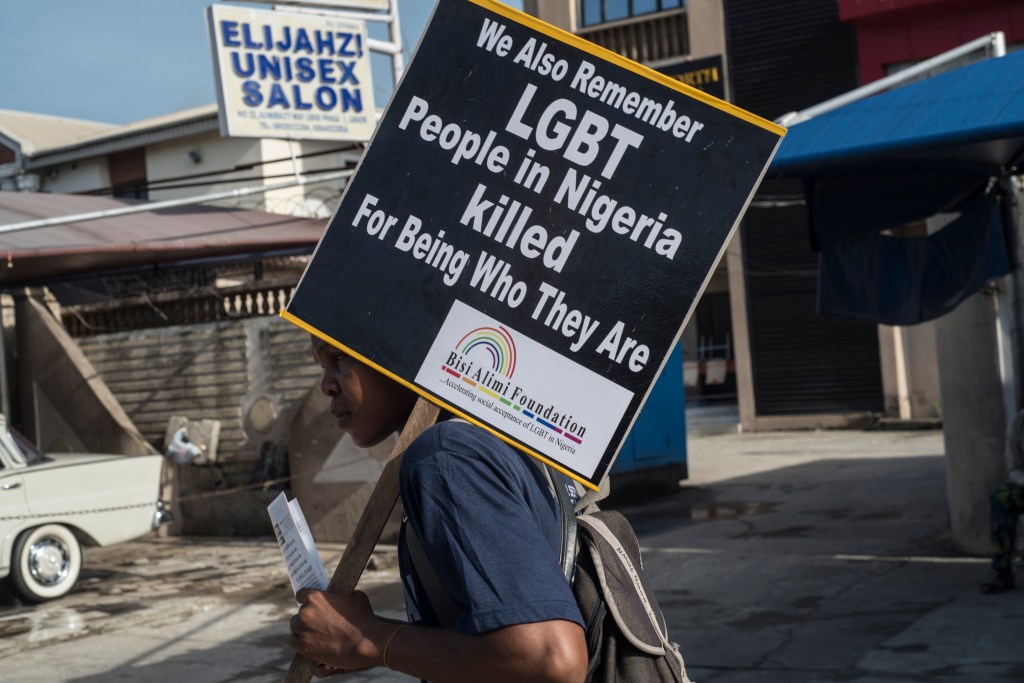
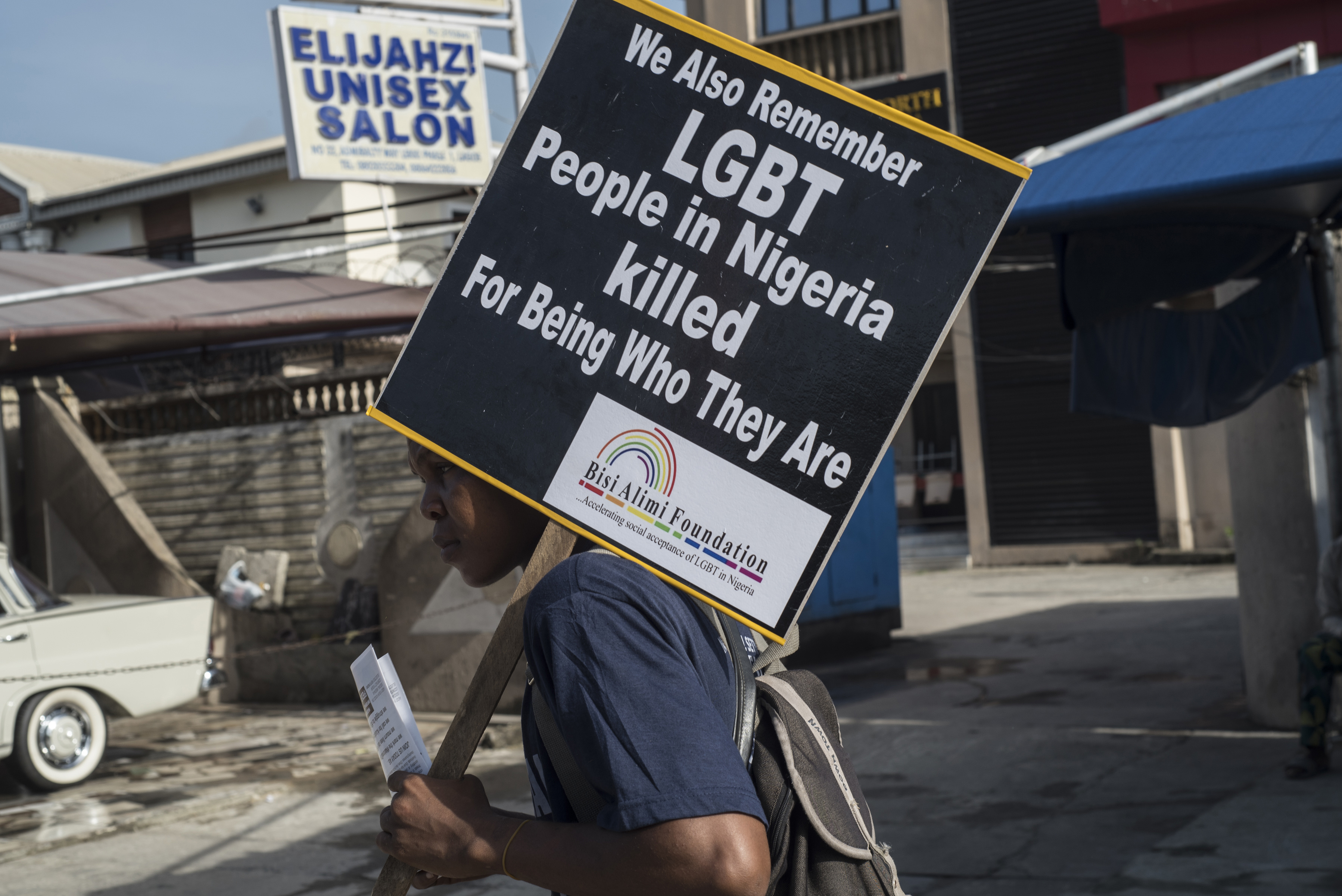
A young man holds a sign questioning LGBTI killings during a march marking the National Day of Mourning on May 28, 2018 in Lagos, Nigeria (STEFAN HEUNIS/AFP via Getty Images)
Nigeria prohibits same-sex relationships under federal law. The Same-Sex Marriage (Prohibition) Act (SSMPA), enacted in 2014, criminalises same-sex relationships and in several northern states, Sharia-based penal codes impose severe penalties, including the death penalty.
Weeks later, in September, a young gay man named Hillary was thrown from a three-story building to his death because of his sexual orientation. Earlier this year, during New Year celebrations in northern Nigeria, two underage girls were stoned to death after being accused of lesbianism, without evidence, trial, or mercy.
Perhaps the most widely reported case is the murder of Abuja Area Mama, a well-known TikTok creator and LGBTQI+ figure. In August 2024, her stabbed and mutilated body was found by the roadside in Nigeria’s capital. No suspects have been identified, and the case remains unsolved — a grim reminder of how easily fatal violence against queer people fades into silence.
Often, violence against queer people in Nigeria is not condemned but celebrated. Videos of beatings, abuse and public humiliation circulate widely online, filmed by bystanders and shared for entertainment. Comment sections fill with applause, mockery, and calls for harsher punishment, signalling that violence against LGBTQI+ people is not only tolerated but socially rewarded. In this environment, harm is learned early, repeated often, and carried out with impunity — collapsing any meaningful distinction between mob violence and state violence.
Rights groups say this is not exceptional. In 2023, more than 1,000 violations based on real or perceived sexual orientation or gender identity were recorded, and in 2024, civil society monitors documented 556 violations affecting over 850 people — a snapshot they believed to represent only a fraction of actual unreported incidents.
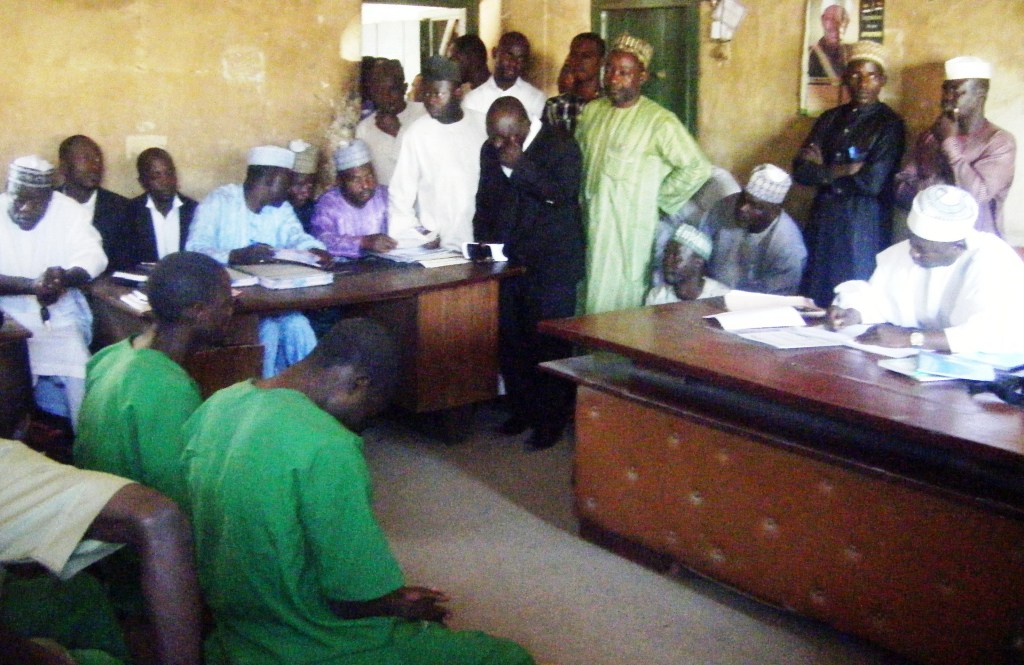
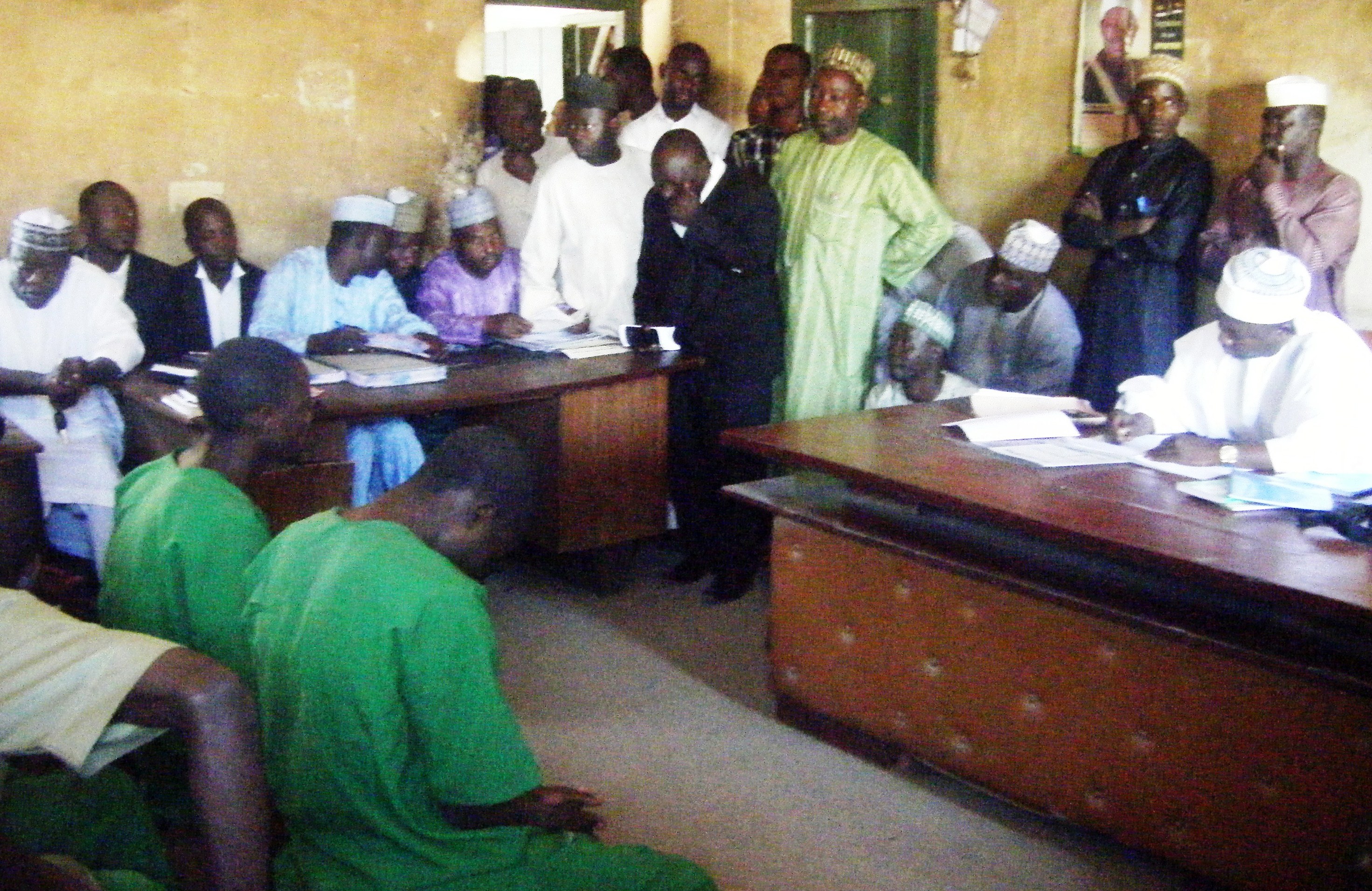
A picture taken on January 22, 2014 shows two men suspected of homosexuality in green prison uniforms (L) sitting before Judge El-Yakubu Aliyu during court proceedings at Unguwar Jaki Upper Sharia Court in the northern Nigerian city of Bauchi. (AMINU ABUBAKAR/AFP via Getty Images)
One common form of abuse is “KITO”, where queer men are lured online, taken to private locations, beaten, filmed, and blackmailed — with videos sent to families and threats of exposure or death if ransoms are not paid.
Survivors report that this cycle of abuse, which accounts for about 70 per cent of the mistreatment of queer individuals in Nigeria, has driven many victims to despair and suicide.
One gay man from Nigeria, now living in the UK after being granted asylum, described how a “KITO” attack permanently altered the course of his life, an experience that left him deeply traumatised and suicidal.
“That incident ruined my life,” he told me. “I tried taking my own life, but it didn’t work. I was depressed and I became a shadow of myself.”
He said the psychological damage outlasted the physical violence. Returning to daily life in Nigeria after his exposure meant living under constant ostracization, repeated attacks, and public scrutiny.
“There was no safety after that,” he said. “You’re just waiting for the next thing to happen.”
With the help of a friend, he eventually fled and sought asylum in the UK.
The contrast, he said, was stark.
“I spent 30 years of my life in Nigeria. But in just over a year here, I’ve had more peace than I ever had back there,” he said. “I would rather jump in front of a speeding bus — than relive that experience again. That kind of life, I wouldn’t wish it on anybody.”
What haunts him most, he added, is not only what he survived, but the people he left behind.
“There are still men like me back there, dealing with this every day,” he said. “That’s what breaks my heart.”
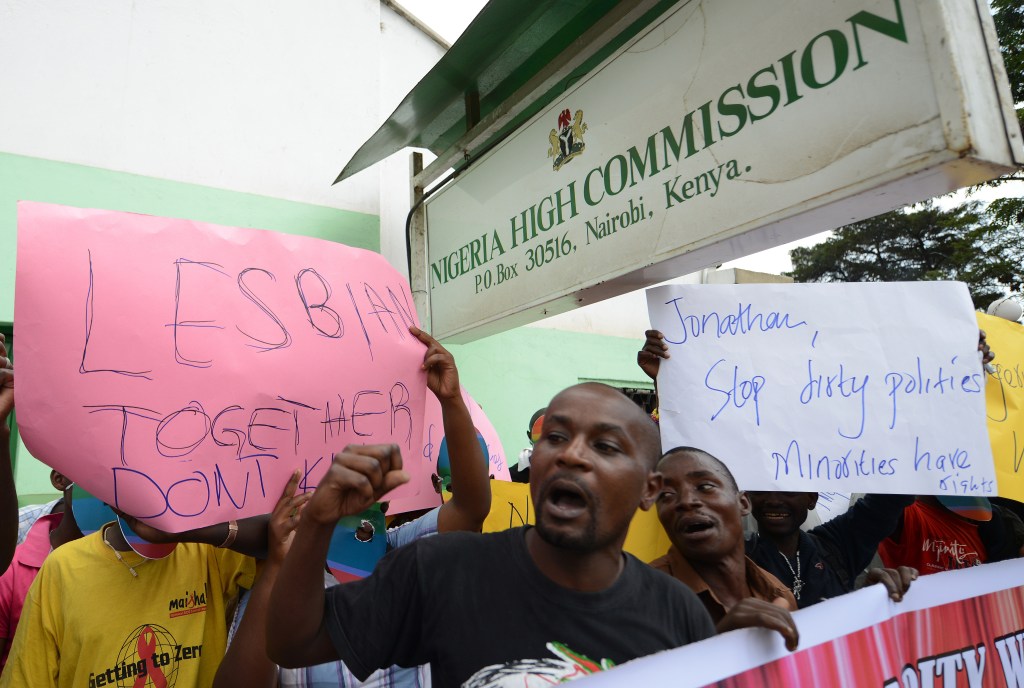
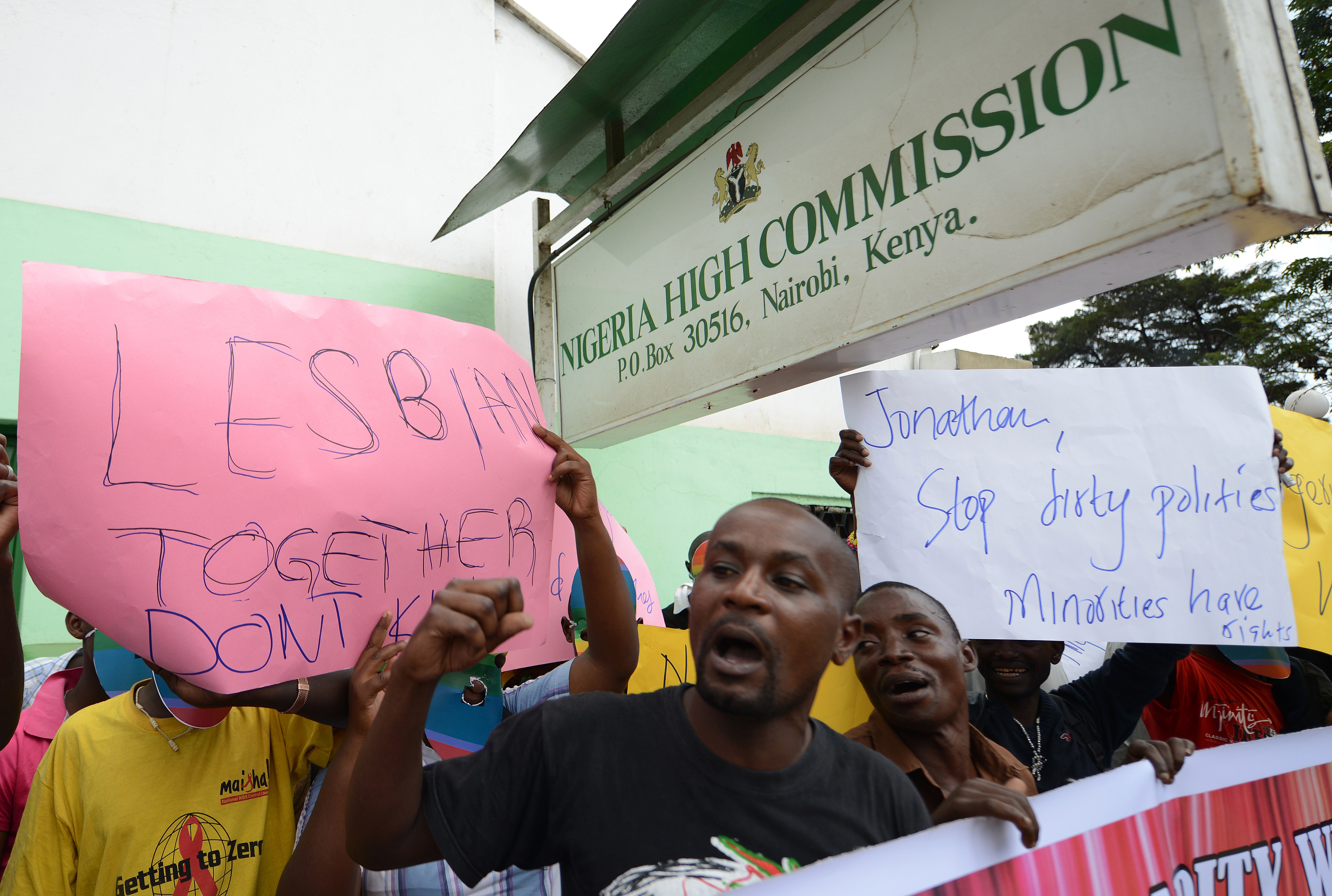
Kenyan gay and lesbian organisations demonstrate outside the Nigerian High Commission in Nairobi on February 7, 2014. (SIMON MAINA/AFP via Getty Images)
This is the reality many queer Nigerians are fleeing — and the context UK asylum policy increasingly fails to account for.
Under the UK government’s proposed asylum reforms, safety is being treated as a fixed for a nation, assessed from a distance and applied broadly. As the asylum system tightens, claims are judged less on lived risk and more on whether a country is deemed generally “safe”.
For LGBTQI+ Nigerians, whose danger is constant and systemic, this approach is especially dangerous.
In practice, this logic misreads how persecution operates. The violence enabled by Nigeria’s Same-Sex Marriage (Prohibition) Act — police extortion, arbitrary arrests, mob attacks — is routinely treated as incidental rather than structural. When asylum seekers raise these experiences in the UK system, they are often dismissed as isolated incidents or deemed insufficiently severe, leaving LGBTQI+ applicants with an almost impossible evidentiary burden.
This is where the UK’s latest reforms, which would make refugee status contingent on a country of origin never becoming safe, become dangerous and further reinforce misconceptions. By relying more heavily on country-of-origin designations, the system shifts away from group-specific risk and toward blanket assessments that assume danger must be universal to be credible.
But queer persecution rarely works that way.
LGBTQI+ people are targeted precisely because they are minorities. Their persecution is localised, informal, and socially enforced — carried out by families, vigilantes, or corrupt officials rather than through formal state channels. These realities rarely leave paper trails and do not fit neatly into asylum frameworks that privilege documentation and national stability over lived risk.
How does one document a lynching that no authority investigated?
How does one prove the constant threat of exposure in a society, where queerness itself is treated as criminal intent?
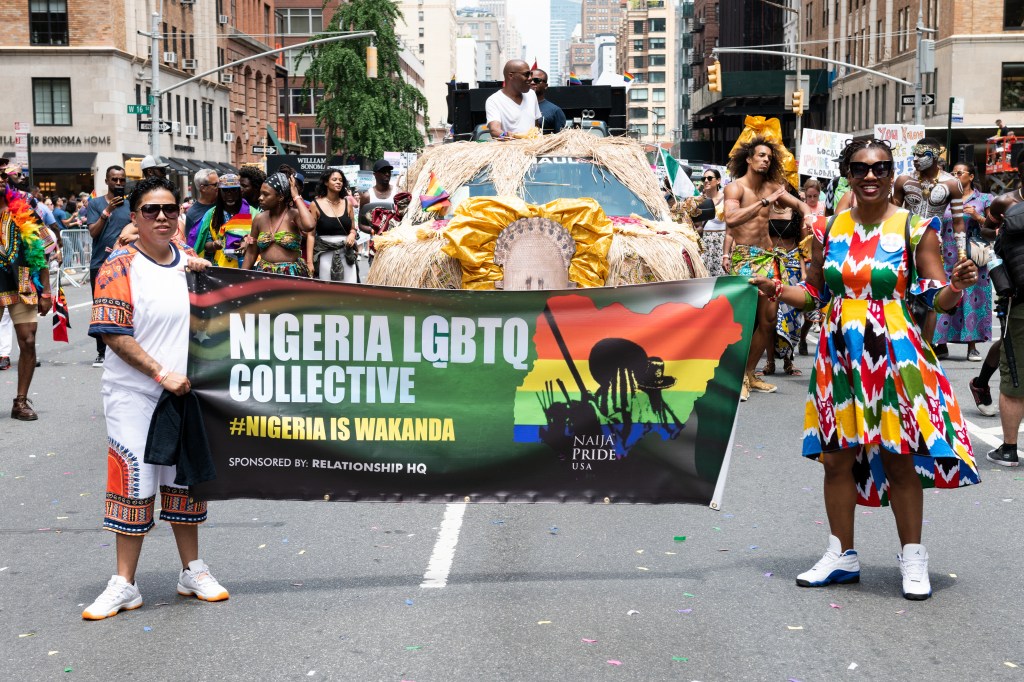
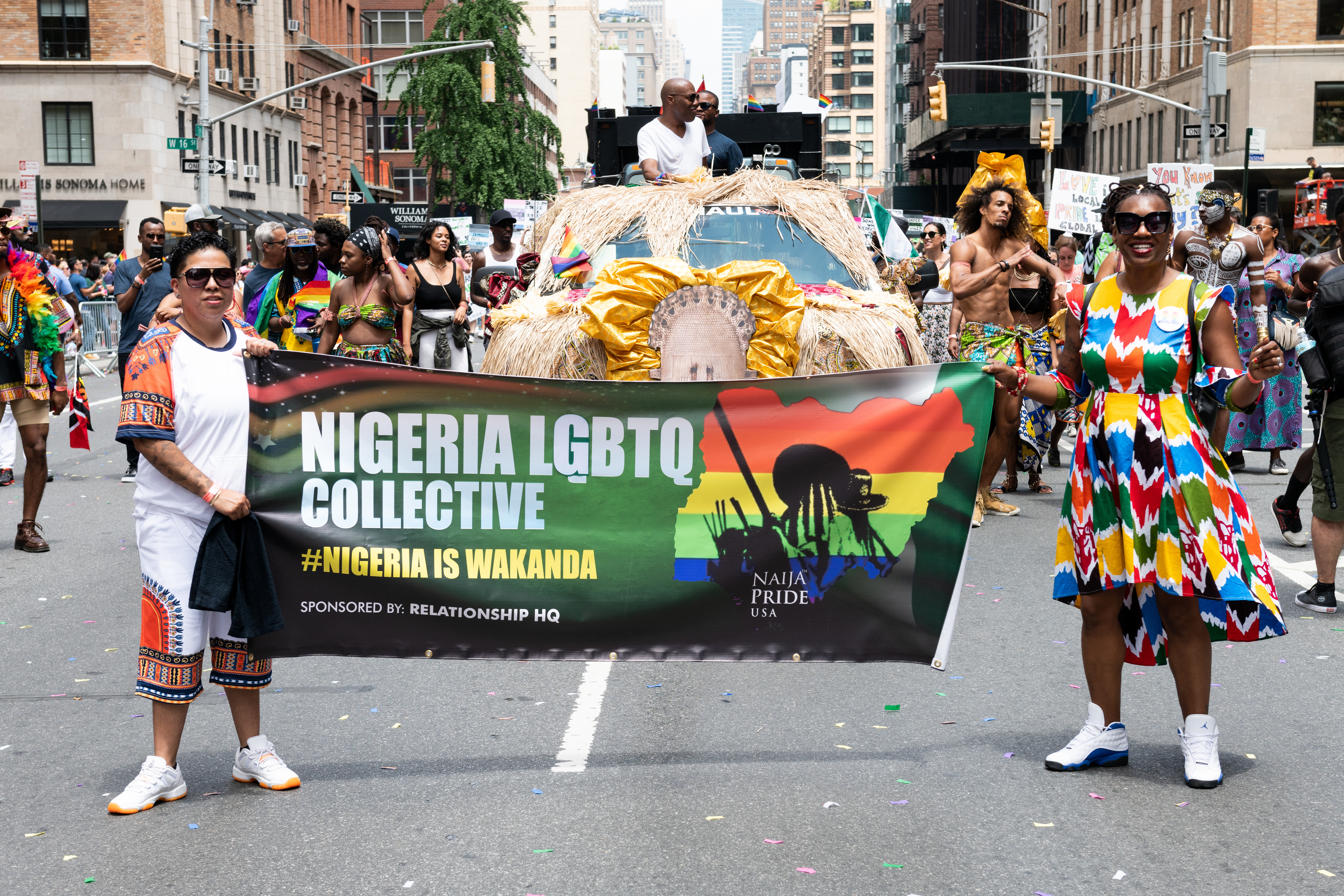
Nigerian LGBTQ Collective taking part at the Pride March in New York City in 2018. (Michael Brochstein/SOPA Images/LightRocket via Getty Images)
Charities supporting LGBTQI+ asylum seekers warn that this gap routinely leads to wrongful refusals, even as the Home Office acknowledges that LGBTQI+ people from countries like Nigeria face persecution. Rainbow Migration has assisted Nigerians whose claims were rejected by the UK government on credibility grounds, overlooking the surveillance, blackmail, and violence faced by queer individuals in the country.
This is both a moral and legal failure. According to the 1951 Refugee Convention, individuals persecuted for their sexual orientation or gender identity are entitled to protection, regardless of their country’s overall safety. International law only requires that the risk of persecution is real and that the state fails to provide protection.
There is also a history that remains largely unacknowledged.
Nigeria’s criminalisation of same-sex relationships is rooted in British colonial rule, which imposed sodomy laws later absorbed into postcolonial legal systems and currently being reinforced by political and religious leaders. Yet when queer Nigerians seek asylum, Britain positions itself as a neutral evaluator of safety — without reckoning with its role in shaping the danger they are fleeing.
If the UK is genuinely committed to its human rights obligations, it must reject the misleading simplicity of “safe country” narratives. The safety of minorities cannot be determined by national averages. Asylum systems should be evaluated not on how effectively they exclude people, but on whether they adequately protect those who are most in need.
For queer Nigerians, asylum is not a policy abstraction. It is a vital lifeline.
A young man holds a sign questioning LGBTI killings during a march marking the National Day of Mourning, aiming at commemorating all the lives lost to violent killings and mass displacement in the country, on May 28, 2018 in Lagos. (Photo by STEFAN HEUNIS / AFP) (Photo credit should read STEFAN HEUNIS/AFP via Getty Images)
A picture taken on January 22, 2014 shows two suspected homosexuals in green prison uniforms (L) sitting before Judge El-Yakubu Aliyu during court proceedings at Unguwar Jaki Upper Sharia Court in the northern Nigerian city of Bauchi. Two Islamic courts in northern Nigeria have been forced to suspend the trials of 10 men accused of homosexuality because of fears of mob violence, judges and officials have said on January 29. An angry crowd last week pelted stones at seven men suspected of breaking Islamic law banning homosexuality after their hearing was adjourned at the Unguwar Jaki Upper Sharia Court in Bauchi. AFP PHOTO / AMINU ABUBAKAR (Photo credit should read AMINU ABUBAKAR/AFP via Getty Images)
Kenyan gay and lesbian organisations demonstrate outside the Nigerian High Commission in Nairobi on February 7, 2014. Nigerian President Goodluck Jonathan in 2013 had signed a bill into law against gay marriage and civil partnerships. The Same Sex Marriage (Prohibition) Bill 2013 imposes penalties of up to 14 years' imprisonment for anyone found to have entered in to such a union. Anyone who founds or supports gay groups or clubs also runs the risk of a maximum 10-year jail term. The legislation, which effectively reinforces existing laws banning homosexuality in Nigeria, has been widely condemned abroad as draconian and against a raft of human rights conventions. AFP PHOTO/SIMON MAINA (Photo credit should read SIMON MAINA/AFP via Getty Images)
NEW YORK, NY, UNITED STATES - 2018/06/20: Nigerian LGBTQ Collective taking part at the Pride March in New York City.
Thousands took part in the annual Pride March in New York City to promote LGBT right. (Photo by Michael Brochstein/SOPA Images/LightRocket via Getty Images)
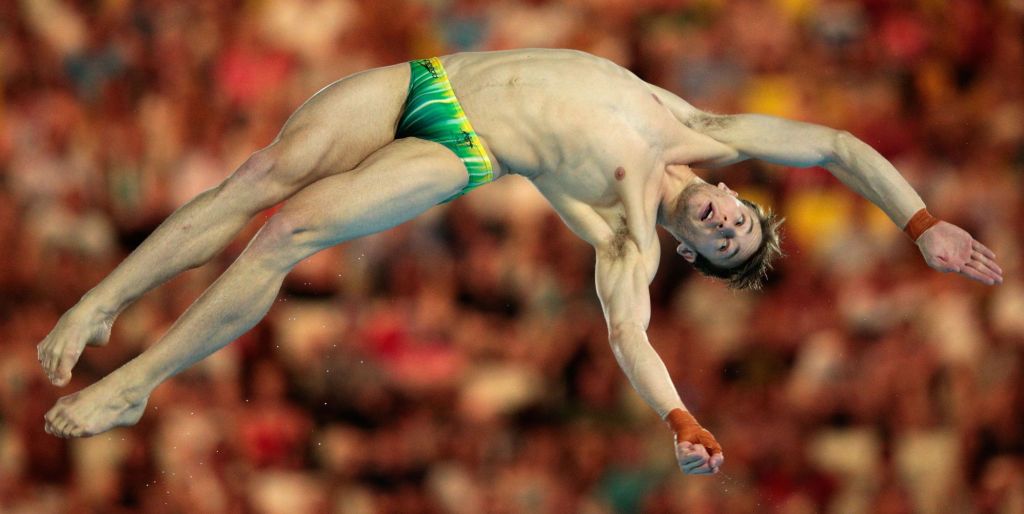
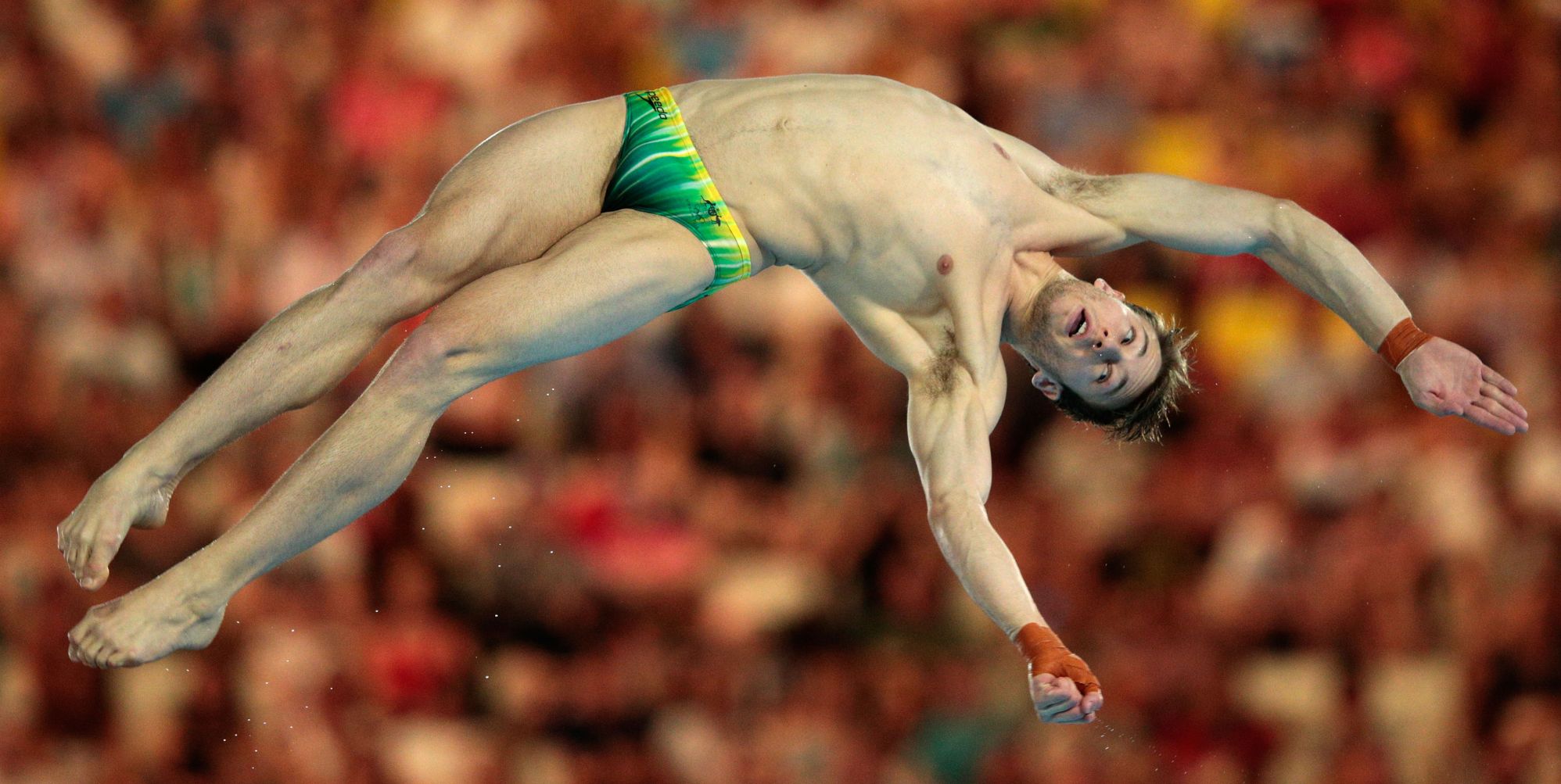
Considering the entirety of Matthew Mitcham’s adult life has played out in public, it’s perhaps unsurprising that there are some things he’d like to keep private. Well, private-ish. For $10 a month, Mitcham’s fans can see the things he wants to keep from public view. “Everything,” his OnlyFans bio reads, “that would be banned on Instagram and TikTok.”
When Mitcham set up his OnlyFans account a few years ago, it would have seemed like an outlandish career move for a former Olympian, one who made history at Beijing in 2008 as the first out gay man to win a Gold medal, for diving. Now though, Mitcham, 37, is one of many athletes turning to the platform. British divers Matty Lee, Jack Laughter and more have followed suit; others are Olympic hopefuls setting up accounts to fund their training.
If you crunch the numbers, it makes sense. Mitcham reportedly told the Associated Press in 2024 that on OnlyFans he was earning “triple” what he earned as a top athlete. Plus, he has full control over the content he posts. “I won’t be doing any sex acts or full frontal nudity for the foreseeable future,” his bio on the platform continues. Sure, he’s showing body-ody-ody, but it’s all very much SFW. “My philosophy has always been that if I can defend it as art then I’ll share it,” he says. “It’s not explicit. It’s about selling the sizzle, not the steak.”
Still, the decision to join the platform took deep contemplation. “People just consider it a not safe for work platform, you know, an explicit sex platform. That was out of my control,” says Brisbane-born Mitcham, calling on Zoom from his home in London, where he moved seven years ago. “Sadly, I don’t think it’s right, but there are people in the world who look down upon it. I had to kind of think, well, some people might assume that I’m doing this not safe for work content, and how do I feel about that?”
Mitcham still works in mainstream entertainment spaces. He’s currently performing in queer play Afterglow in Melbourne, and then in Sydney. In 2023, he was on SAS Australia. The fact he is on OnlyFans often does, naturally, creep into conversations before he signs these contracts. He’s not put out by it. “They have to do their due diligence and see what kind of content is being made,” he shrugs. “They just have to exercise an abundance of caution and I get that.” He’ll load up his page and prove that his content is just a jalapeño on the Scoville spice scale. “I guess that’s the proof in the pudding that you can have an OnlyFans page and continue to work in the mainstream, because I have continued to do so.”
OnlyFans was founded a decade ago, and began as a content subscription site with the aim of attracting artists and influencers who could showcase exclusive work for a price. It may be deemed as being primarily for adult content today, but explicit stuff was initially banned for the site. The ban was lifted in 2017. That year, the company’s revenue was reportedly $2.6million. In 2024, it was $7.2billion.
More athletes and artists are turning to OnlyFans for SFW content. (LightRocket via Getty/ SOPA Images/ Pavlo Gonchar)
Mitcham spent time looking properly into creators on OnlyFans, and realised just how diverse (and SFW) some content creators are. DJ Khaled set up an account in 2021 for motivational talks. Harry Potter actress Jessie Caave plays with her hair on her account. “That made it easy,” Mitcham says. “I don’t have to share anything that I don’t feel comfortable with simply because that’s what’s expected on the platform, because that’s not the case.”
Another factor that made the decision easy was the sheer demand. “There are loads of people who, you know, want to see a little bit more that other platforms censor,” he says. “I am very comfortable with my body, you know, after decades of working on and building this… I guess you could call it an asset.” He’s careful with his words, perhaps conscious of coming across as arrogant, but it’s true: Mitcham does still have the chiseled pecks and beefy arms of a pro athlete, even 10 years after his retirement. “It just makes complete sense,” he continues. “If people want to see it, if I’ve got it and I’m happy to show it, why would I show it for free when I could monetise it?”
Mitcham was 20 when he won a gold medal in the 10m platform diving event at the 2008 Beijing Olympics. He had come out as gay several months prior, to “get that out of the way first” so he could “just get on with doing what I was confident at doing” – that is, diving. “It would have played on my mind,” he continues. “I didn’t want the world to get to know me as one thing or have assumptions about me and then for me to then have to come out to the world.”
Matthew Mitcham competes at the 2012 Olympics in London. (Getty)
His diving days may be very, very far in the rearview mirror now, but he still keeps up with what’s happening in that world. He watched the Paris 2024 Olympics with unbridled joy, seeing the number of out LGBTQ+ athletes jump so dramatically from the apparent 10 that were at the 2008 games (there were at least 175 at Paris). “It’s warmed my gay little heart. It’s made my heart sing,” he beams.
Even back in 2008 the response to him coming out was, mercifully, “99.99 per cent overwhelmingly positive and supportive,” both from the diving community, fans of the Olympics and the media. “It was such a beautifully wonderful, positive experience that really moved me and actually influenced how I continued to interact with the public going forward after that,” he gushes. The experience gave him “trust in the public that” his “openness and honesty” were appreciated.
His relationship with the public continued throughout the 2010s with a slew of TV appearances. Most notably, he finished as a runner-up on Dancing With The StarsAustralia in 2015. His openness and honesty continued too; he wrote in his 2012 autobiography Twists and Turns about previously being addicted to crystal meth, and has spoken about his recovery from alcoholism, his turbulent childhood and mental health battles. In 2024, he navigated publicly splitting from his husband of four years, Luke Rutherford.
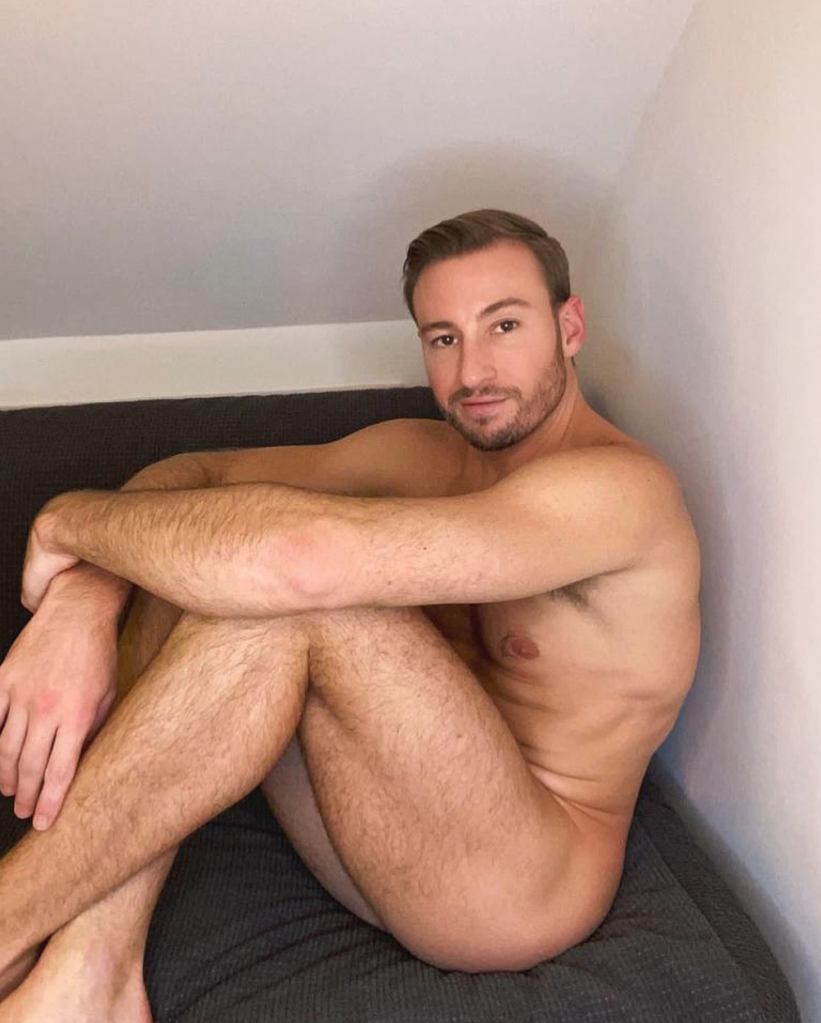
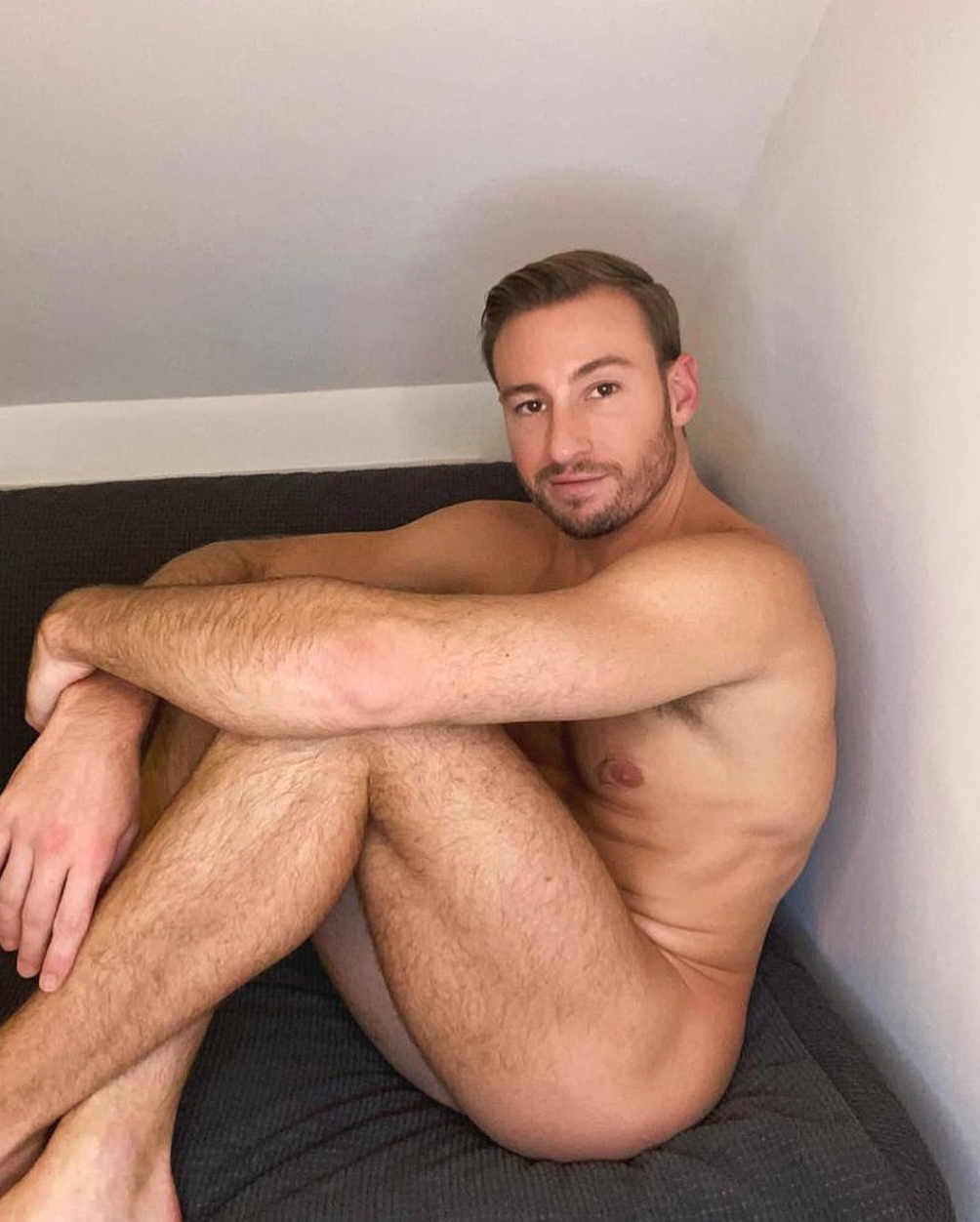
Matthew Mitcham posing nude. (Supplied)
It’s probably why his fans feel like they know him personally. Of course, there’s an abundance of gay men fawning over his cheeky photos – “They love the art of the tease,” he says. “They love the suggestion. They love the sizzle” – but there’s also plenty of women, queer and straight, signing up to his exclusive content.
He answers questions about his general life and career through Q&A sessions. Even the sordid questions he gets asked are mildly so. “The extreme vast majority of people that follow me have been extremely respectful because they respect me as a person,” he says.
“I would never answer anything that I wasn’t comfortable with anyway, but I very rarely get questions that I’m uncomfortable with.” Being able to communicate directly with someone that people have seen on TV for almost two decades feels like a privilege. Most don’t wish to spoil that. “People appreciate having this access to me,” he adds, and “they probably don’t want to jeopardise it and sabotage it by being vulgar.”
Share your thoughts! Let us know in the comments below, and remember to keep the conversation respectful.

 Connexion